

VTDigger posts regular coronavirus updates on this page. You can also subscribe here for daily coronavirus news. Please send your Covid-19 questions to coronavirus@vtdigger.org
A take-out food order in Lamoille County may come with an unexpected message: Go see your doctor.
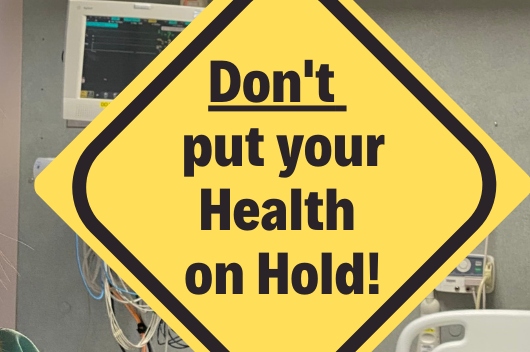
Copley Hospital and four other health care organizations in the area launched a “Don’t put your health on hold,” campaign, putting ads in local newspapers, hanging posters and distributing buttons and flyers — including to local restaurants to place in take-out orders, according to CEO Joe Woodin.
On May 4, after seven weeks of canceled appointments and elective procedures, Gov. Phil Scott permitted hospitals to resume elective procedures. Facilities are not yet allowed to offer surgeries that require patients to spend the night in the hospital.
But as Copley, and other hospitals across the state, resume services, they’re facing a new challenge: Getting patients through their doors.
Hospitals are adapting to a new approach to health care in the wake of Covid-19, with down-sized waiting rooms, social distancing, and temperature checks at the door. They’re also assuring patients that it’s safe to come to the doctor so they can make headway in reducing the backlog of appointments that were postponed during the pandemic.
“It’s a teeter-totter,” said Mel Boynton, medical director and an orthopedic surgeon at Rutland Regional Medical Center. “The Department of Health has asked us to be prepared for Covid outbreaks and at the same time be able to resume care for everybody.”
After the first Vermonters tested positive for Covid-19 in March, hospitals started ramping up capacity in preparation for an influx of cases. Facilities created surge sites, stocked up on personal protective gear, and urged people who didn’t need medical care to stay out of hospitals and emergency rooms. Annual checkups, routine screenings, and all but the most urgent surgeries were all canceled.
The pandemic caused hospitals to lose a majority of their patients and as much as 80% of their monthly revenue, according to Jeff Tieman, president and CEO of the Vermont Association of Hospitals and Health Systems.
Hospital administrators have taken different approaches to prioritize the lost care. At Gifford Medical Center in Randolph, nurses are checking in on the most vulnerable patients by phone, according to Rebecca O’Berry, Gifford’s vice president of operations. They’re providing child immunizations to patients in their cars, when parents aren’t comfortable bringing their kids into the office.

Boynton said Rutland Regional is prioritizing surgeries that affect the patient’s ability to return to work, as well as screening procedures such as mammograms or colonoscopies. Telemedicine is also a key way health care providers are keeping tabs on patients.
Most hospitals around the state reported this week they were seeing between 60% and 70% of their pre-Covid traffic.
Hospitals are simultaneously changing their protocol to reduce risk of Covid-19 exposure.
University of Vermont Health Network announced this week that some patients will be tested for Covid-19 before certain outpatient procedures, and will be asked to self-quarantine between the time of the test and the appointment.
Hospitals continue to bar visitors, though some hospitals make exceptions in cases such as labor and delivery and end of life care.

In more routine situations where patients want company, doctors at Gifford Medical Center have gotten creative by FaceTiming a companion who waited in the car, said O’Berry.
Hospitals are also enforcing policies that allow for social distancing, and continuing use of protective gear for staff and masks for patients. Woodin, the Copley CEO, compared the added layers of security to increased screening in airports after 9/11.
“We might complain about it. It takes more delay, more labor, but it’s probably the safer thing to do,” he said. Woodin said he’s worried about a new, “sub-epidemic” in which patients’ health suffers because they are too nervous to get the care they need.
Last week, doctors at Copley Hospital did six gallbladder surgeries, far above the normal volume, Woodin said. It’s too early to know if that was a fluke or part of a larger trend, he added, but it could be an indication of the increased care patients will soon need.

Already at the UVM Medical Center, more patients are coming into the emergency room with more serious conditions — chest pain or stroke symptoms, said hospital President Steve Leffler.
“Early on in the pandemic, we told people not to come to the hospital if they weren’t really sick. People took that to heart, perhaps a little too strongly,” he said.
That makes messaging all the more important, according to Leffler. Not a single patient at UVM’s six network hospitals contracted the coronavirus while seeking other types of care.
The efforts have been successful; the number of patient appointments is increasing steadily, Tieman said.
“It’s incremental and evolving every day. You can’t flip a light switch, get staff back, implement safety measures,” he said. “As the number of procedures we’re allowed to do and capable to do expands, … the important message is that we are ready to treat patients and hospitals are safe.”
Get the latest statistics and live updates on our coronavirus page.
Sign up for our coronavirus email list.
Tell us your story or give feedback at coronavirus@vtdigger.org.
Support our nonprofit journalism with a donation.
