

Sy Creamer wasn’t surprised when the call she dreaded finally came on May 4. She was informed that she was put on administrative leave from her job as a nurse at Brattleboro Retreat.
Creamer had been cited for a patient privacy violation, after she sent an email on April 30 that included a patient’s medical record number, she said.
But if history’s any indication, Creamer said, her role as president of the nurses union might have had something to do with it. Since last fall, three other union leaders have left the psychiatric facility one by one, after being fired or negotiating an exit. “That makes me the last one standing,” Creamer told VTDigger days before she was put on administrative leave. “I literally do have a target on my back.”
Creamer, who has worked at the Retreat for the past six years, remains on paid leave, waiting to hear whether she will join what has become a mass exodus of employees from the facility. According to data collected by the nurses union, 115 staff members have left since January 11. At least six people have been fired since March 23; nine have been laid off over the same period.
The total number of staff now stands at about 650 employees, plus roughly 100 subcontracts for certain clinicians, housekeeping and kitchen workers, according to Retreat officials. That’s down from 900 when Creamer started six years ago, she said.
Meanwhile, the in-patient census at the Retreat has dropped from about 105 to about 65 due to Covid-19, according to Konstantin von Krusenstiern, the spokesperson for the Retreat.
Interviews with 14 current and former employees show that frustration has risen to a boiling point at the Retreat, fueled by a Gordian knot of internal challenges: the facility’s substantial financial losses, an alleged dysfunctional work environment, and staff shortages that workers describe as dangerous for patients and employees alike.
About a dozen union members, most of whom spoke with VTDigger on condition of anonymity, described a culture of arbitrary punishment and fear of reprisal for missteps.
The Covid-19 crisis has strained the system further, and union members have complained about inadequate personal protective equipment. “You know that resentment that builds up when injustice keeps piling up? It surrounds you. I just couldn’t do it anymore,” said one employee, who quit last month after more than 30 years at Brattleboro Retreat. “I’d work at Aldi before I [return to] work for the Retreat,” he said, referring to the local grocery store.
The remaining workers are under heightened pressure, which the union says has led to a greater likelihood of mistakes by staff and deteriorating patient care. In April, a teenage patient was attacked by other patients and wound up in the hospital, according to five workers. They pointed to the incident as an example of the risks of inadequate staff oversight.
Retreat President and CEO Louis Josephson disputed workers’ characterizations and blamed most of the departures on staff fears about contracting the coronavirus, high turnover rates that are typical for psychiatric facilities nationwide, and the national nursing shortage. “People have been pretty clear [the heightened risk of infection] is not something they were willing to take on,” Josephson said. “I think we’ve done everything that is reasonable to do in this environment,” he added of the facility’s response to Covid-19.
Legislators say the situation merits a closer look. Staff turnover for mental health facilities is “an issue everywhere,” but it’s of particular concern at the Retreat, said Rep. Anne Donahue, R-Northfield. She urged greater state and legislative oversight because employee frustrations will inevitably trickle down to impact patient care. “Ability of staff to give quality care is closely tied to how they’re treated,” she said.
“I continue to ask myself, what is it that we can do to make systemic improvements to the Brattleboro Retreat so that all of these different complaints and concerns start to die down?” said Sen. Ginny Lyons, D-Chittenden, chair of the Senate Health and Welfare Committee.
Financial struggles
When the Retreat was founded in 1834 as the Vermont Asylum for the Insane, it promoted a progressive approach to mental health care. It was one of the first of 10 psychiatric hospitals in the country and featured a gym, swimming pool, patient newspaper and dairy farm.
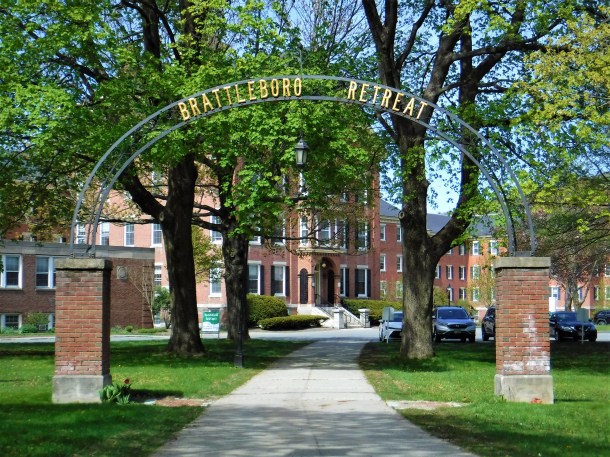
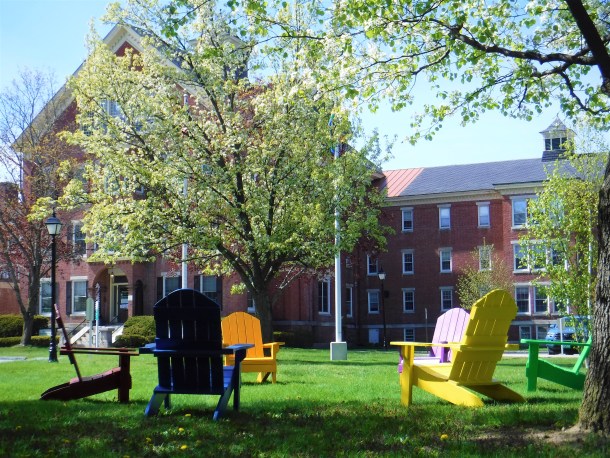
The 190-year-old facility sits on about 300 acres just outside downtown Brattleboro, a complex of dignified brick buildings constructed around a tidy green with Victorian metal gates.
The Retreat has weathered the changes in mental health funding and philosophy over the years. At the peak of institutionalization in 1950, the Retreat served 692 patients. As community-based services became the mental health paradigm in intervening decades, the Retreat added programs for veterans and LGBTQ patients in 2009, as well as an outpatient substance abuse treatment program.
In 2011, the Retreat began serving state patients after Tropical Storm Irene damaged the Vermont State Hospital in Waterbury, and the number of patients at the facility reached 119.

In February, before Covid-19, the in-patient census hovered around 105, according to von Krusenstiern. In March, the facility stopped accepting out-of-state patients as a result of the pandemic and the daily in-patient census dropped by nearly 40%. The Retreat also provides outpatient treatment for about 247 people a day, he said.
The state has come to rely on the Retreat, which has the capacity to treat half of Vermont’s inpatient mental health patients and holds all of the beds for children and teens.
Government officials have acknowledged the critical role the Retreat plays in the state’s system of care, and recently stepped up support for the struggling facility. In January, Agency of Human Services Secretary Mike Smith and the Legislature agreed to give the Retreat $2 million. At the time, Josephson said a quarter of the facility’s beds might be shut down if the state didn’t provide for a bailout. In March, the agency approved an additional $7.3 million in loans and grants to keep the facility afloat during the pandemic.
“Without relief it was clear that the financial viability of the Retreat was in jeopardy,” Mike Smith said at the time.
Teenager attacked by other patients
Historically, the Retreat has also struggled with safety issues. Between 2012 and 2014, four patients committed suicide. The facility underwent significant scrutiny by the state and federal government at the time and was cited for a variety of safety and medical protocol issues, but there were no findings associated with the deaths, according to von Krusenstiern.
Since then the Retreat has stepped up safety protocols and has had no violations in the past two inspections. Last July, the facility received several citations, including one for improper restraint, and another after a patient ate part of a plastic bag in April 2019.
More recently, staff say violent incidents have escalated.
On the weekend of April 18, a patient on the Retreat’s adolescent unit was attacked by two other patients, according to five staff members with knowledge of the situation. The boy was left with a black eye and bruises — one staff member said the attack was so aggressive, she was nervous the patient might have a concussion or neurological damage. He was sent to Brattleboro Memorial Hospital for examination, before he was deemed to be OK, and returned to the Retreat.
Josephson declined to confirm the incident, citing patient privacy concerns. “Why is this of interest?” he asked. But if such an incident had occurred, “Obviously we’d be all over it. All the authorities, everyone would know about it.”
Chris Thibault, spokesperson for the federal Centers for Medicaid and Medicare Services, confirmed on Friday that a report had been filed that weekend.
Nurses and mental health workers say there is not enough staff to provide adequate safety for patients. When the teenager was attacked, only one staff member was at the scene, according to those who saw the incident.
“It’s scary,” said one mental health worker who has been with the Retreat for five years. “We’re on extensively high acuity units right now. We don’t have staff to cover.”
Another mental health worker who works on the unit for teenagers said that when she used to call for back-up after a patient became violent or aggressive, six or seven staff members would show up, in addition to security. When she called for help in late April, two arrived. They managed to de-escalate the situation, but that won’t always be the case, she said. Without enough staff on call, “people are more likely to get hurt.”
“We can’t provide patient care if we have no staff,” Creamer said. “People want to be heard. We are being slaughtered. We’re being crucified.”
Because of staff shortages, Retreat employees report that they no longer have the capacity to take patients out to walk on the grounds or get fresh air. Workers used to run therapy groups for patients. Now when the groups do happen, staff “are so tired and frazzled that it’s lackluster,” said the five-year veteran mental health worker.
He described the latest shortcomings as part of a fall off in the quality of patient care at the Retreat. In 2018, the bathrooms were locked, as were the kitchens, forcing patients to ask staff members to use the restroom or to get a snack. Administrators said it allowed them to better supervise patients; staff found it dehumanizing.
“Patients are saying that ‘This f—ing place doesn’t offer anything other than meds,’” said the mental health worker. “I can’t agree with the patient, but in the back of my mind, they’re absolutely correct. There physically is no care. It’s a warehousing situation.”
Josephson said he believed the staffing level was adequate with the decreased number of patients, but wouldn’t be enough if the Retreat returned to its pre-Covid population. “We need more staff. We need nurses,” he said. “There’s a national nursing crisis.”
‘Exposed and feeling unsafe’
When the pandemic hit, the number of patients at the Retreat fell by more than a third. The facility largely stopped accepting patients from out of state. Around the state, the number of people seeking mental health care during Covid-19 dropped by more than 40%. But staff say they haven’t received the protection they need.
“People feel really unsafe,” said Rob Smith, a mental health worker and the interim union president, adding that 83 people have quit since March 13, including his charge nurse, who had been there for 20 years. “They didn’t sign up to deal with the possibility of someone with a pandemic virus being on the floor and being not protected.”
One staff member, Florence Fitzmorris, said she tested positive for the virus on March 26.
At least one cafeteria worker also tested positive for the virus on April 2.
Union members say they learned of the positive tests via social media, or through the news. In an April 16 interview, Josephson told VTDigger that he had no confirmed Covid-19 cases among staff or patients — only one presumed positive staff member. In a subsequent interview, he said he hadn’t known about the positive tests.
Staff weren’t provided or required to wear masks until April 22 — three weeks after Department of Health Commissioner Mark Levine advised that Vermonters wear masks on April 3.
On April 9, a union member filed a complaint with the Vermont Occupational Safety and Health Administration stating that employees hadn’t been provided masks or protective gear, didn’t know how to use the gear they had, and were concerned about exposure to staff and patients.
The following week, Rob Smith started a campaign to provide protective equipment to get masks for his colleagues. In emails to leadership, he wrote that the lack of PPE made no sense. “It’s left the frontline staff feeling exposed and feeling unsafe.” Staff were eventually required to wear masks on April 22.
A nurse who works on a children’s unit said her patients still aren’t wearing masks. “Every time you get a new admission, you’re holding your breath for two weeks,” she said. “Truthfully, they’d be safer at home.”
Von Krusenstiern, the Retreat spokesperson, said the facility has followed CDC guidelines for wearing masks issued on April 13. “The lag time between announcement and effective date was to allow a few days for the distribution of masks to all employees, and to give time for employees on different schedules (e.g. nights, weekend, etc) to be prepared for the new policy,” he said in an email.
Josephson defended the facility’s response to the virus. The Retreat posted a web page listing Covid-19 safety initiatives, including the prohibition of visitors, twice daily temperature checks, screening of everyone who enters the hospital, required self-isolation of workers who have symptoms, and stockpiling hand sanitizer. “It’s probably 25 things, at least that I could show you that we’ve done,” he said.
Staff at other hospitals had also filed Covid-related safety complaints with VOSHA, he said, adding that the concerns at the Retreat had been addressed. On April 29, CMS conducted an infection control survey in response to the complaint and found no deficiencies in the Retreat’s Covid-19 response.
While the state has provided facility-wide testing at state prisons and 11 nursing homes, they have not tested everyone at the Brattleboro Retreat. The facility had done its own contact tracing of those who were sick, and decided it wasn’t necessary.
Even so, “it’s pretty obvious a potential outbreak risk,” said Donahue, the Northfield rep.

Retreat’s sustainability at stake
In the wake of recent turnover, remaining staff have picked up the slack in overtime.
The Retreat can “mandate” staff members to stay for a second consecutive eight-hour shift. Some staff members said they’re mandated once a week. The staff receive double pay, but mistakes become more frequent, staff acknowledged. Over-tired staff “make poor judgments, and because of their judgment call, they get fired,” said a charge nurse.
Another employee said he worked between 64 and 72 hours a week. He made $140,000 that year. He found it was unsustainable. “I got burnt out,” he said. He quit in April.
Staffing issues have had a direct impact on the Retreat’s finances. The facility has been forced to hire more traveling nurses, which cost about double that of regular staff. Last year, the Retreat paid $8 million for contract labor, including traveling nurses and psychiatrists, according to von Krusenstiern.
The Retreat is not subject to the same financial regulatory oversight as Vermont hospitals, but Mike Smith, Agency of Human Services secretary, maintained the state is paying close attention. Since the state increased funding for the facility earlier this year, AHS officials and Retreat employees have been meeting weekly to assess the long-term sustainability of the facility.
Smith emphasized that while issues around staffing and patient care aren’t the focus of the discussions, he “would not be for anything that compromises patient safety.”
High staff turnover is a challenge across the country, said Vermont Department of Mental Health Sarah Squirrell. The exit rate was 21% for behavioral health workers nationally, according to the 2020 NSI Nursing Solutions report. Turnover was as high as 50% for some workers at the Vermont Psychiatric Care Hospital, Squirrell said.
Staff departures represent “a right-sizing in terms of types of staffing and level of staffing,” said Mark Covall, former president and current board chair of the National Association for Behavioral Healthcare, of which the Retreat is a member. He argued that the Retreat previously had more staff than it needed.
If the facility was short-staffed, it would become clear in a rising number of reported injuries and suicide attempts, as well as more frequent use of patient restraint and seclusion, according to Covall. “You have to look at those metrics, which do exist,” he said.
Escalating tensions with union
Retreat workers say the staff departures represent a new low in distrust of management. In June 2018, union members said, chief nursing officer Meghan Baston sent out an email to all staff that schedules would be rearranged.
“The place went into an uproar,” said Rob Smith, the interim union president. Married couples were given opposite schedules so they had no time together; staff members’ childcare responsibilities weren’t considered under the new regimen, he said.
“It was the beginning of [Retreat leadership] looking at things, and just saying, ‘this is how we’re going to do things, we don’t want feedback on it,’” Smith said.
The schedule change was made to meet industry standards for safety, ensuring shifts were fully staffed. The alteration was also designed to make the system more efficient, Baston wrote at the time. The dispute fractured the trust between the union and management, according to a mental health worker who started at the Retreat in 2015, and union members held informational protests in the street.
The schedule change triggered the first wave of staff exits, according to the same mental health worker and five other union members. Some of the most experienced nurses on Smith’s floor took early retirement, he recalled. In the past 16 months, 300 staff have left, according to Creamer.
Since then, the union conflict with management has deepened into enmity. In the past 18 months, the union had nine grievances that resulted in arbitrations, more than had been arbitrated in the prior 25 years combined, according to Jack Callaci, a representative for the United Nurses & Allied Professionals who has represented the Retreat since the nurses union was formed in 1990.
Callaci said the numbers skyrocketed when Josephson took over leadership in 2016. After three years, the divisions have deepened and calcified. “They can fix the finances there, but they’re going to have to fix the culture,” Callaci said.
That discord has come to a head in what workers say is retaliation against the union. Since last fall, three of the four union leaders have been fired, or negotiated an exit.
Winston Sailsman, a union president, was fired after he started the process of fostering a child who had previously been treated at the Retreat. Sailsman and the Retreat are at odds over whether he violated protocol, and are arbitrating the issue. Dan Watson took a severance package in February, weeks after he had been put on leave for taking home a log of staff overtime hours. Ed Dowd, a union vice president, was put on leave in April, two weeks before his planned retirement. The last remaining union leader, Creamer, is on administrative leave.
On March 10, Edith Covillion, a charge nurse and a union rep for her floor, was fired after her supervisor saw her downloading an audiobook onto her phone. She shouldn’t have had her phone out at work, she acknowledged, but she had no disciplinary infractions on her record and had worked at the Retreat for 13 non-consecutive years since 1996.
As a union rep, “I knew it was coming,” said Covillion, who’s case is in the midst of arbitration.
“They’re very into union busting,” said another employee of more than 30 years.
Josephson declined to comment on the departures of union leadership. “These are personnel issues,” he said.
In interviews, union members attributed the negative atmosphere to Baston, the chief nursing officer, and outlined a litany of complaints against her. In February, 140 staff members signed a survey expressing no confidence in Baston and the hospital’s administration.
That same month, Creamer filed a complaint with the human resources department after she said that Baston leaned close to her, face reddened, and screamed at her. “Staff in adjacent areas later reported that they had been worried … that Sy was with an out of control client and may need assistance,” union leaders wrote in an email to members at the time.
On April 29, former Retreat employee Elisabeth Dignitti filed a case in Windham Superior Court claiming that Baston had discriminated against her because she is from the Netherlands and fired her in retaliation for reporting misconduct. According to the complaint, Dignitti complained after Baston and other managers had made “jokes of a sexual nature” about a male nurse at a staff meeting last August.
Baston allegedly expressed “displeasure in Ms. Dignitti’s complaint” before firing her in November for “code of conduct violations,” according to court documents.
In more than 20 interviews, workers said Baston exercised outsize control and had instilled a culture of fear. One long-time worker said she was praying for the Retreat to go into receivership, because it would force a change in management.
Baston did not respond to two emails and two phone calls requesting comment. Von Krusenstiern, the hospital spokesperson, responded after VTDigger emailed a set of questions to Baston.
“While any employee is free to initiate litigation or an internal code of conduct complaint, the Brattleboro Retreat cannot comment on pending litigation,” he wrote. “Out of respect for the confidentiality of our employees the Retreat does not comment on personnel matters.”
Elizabeth Catlin, Brattleboro Retreat board chair, said in a statement that the trustees have “full confidence” in Josephson and Baston. She wrote that the board respects Baston’s leadership, her passion for high-quality patient care, and her “competence, clarity of purpose, and commitment to serving the most vulnerable in our community.”
“During her tenure, Ms. Baston has made remarkable progress in unifying healthcare best practices across the hospital to enhance quality services, patient safety, clinical professionalism, and meaningful financial stewardship,” Catlin said. “This progress has required a number of changes that have impacted operations, patient care, and institutional culture. Not surprisingly, some employees have experienced these changes as disruptive and difficult. Many more employees are fully and positively engaged in the ongoing effort to ensure that the Retreat is an organization that meets or exceeds complex regulatory requirements, that thrives on professional accountability at every level of responsibility, and that embraces a sustainable future.”
For now, some staff are holding out hope that the situation at the Retreat will improve. “This is the job I want to do,” said the mental health worker who’s been on the job for two years. But neither could things stay as they are, she added. “When I see a news article from the administration’s point of view, it feels like they’re making everything seem OK, and it’s not OK.”
Covillion, the nurse and union rep who was fired in March, has filed a grievance over her firing. “I want to prove to [other staff members] they don’t have to be quiet,” she said.
She wants to get back to the Retreat, where she got her first job at age 19. “I planned on retiring there,” Covillion said. “I love the Retreat.”
Get the latest statistics and live updates on our coronavirus page.
Sign up for our coronavirus email list.
Tell us your story or give feedback at coronavirus@vtdigger.org.
Support our nonprofit journalism with a donation.
