


Well before Covid-19 came along, Alita Wilson, the executive director of Pentangle Arts in Woodstock, had already started lining up sponsors for a $100,000 production of “Elf” the musical over Wassail Weekend, one of the town’s most popular events for visitors and locals.
Now Wilson’s trying to get the $8,000 “Elf” licensing fee back and hoping she’ll be able to resurrect the production for 2021. And she’s also looking for guidance from the state on how to salvage a summer and fall that were packed with performances that helped sustain Pentangle.
“What I would like is just some direction on indoor spaces,” said Wilson, who foresees a long wait before there’s a go-ahead for activity again. Most of the Covid-19 guidance coming from state and federal health officials aims to suppress large gatherings in enclosed spaces. While the state is gradually opening businesses, public gatherings are still limited to 10 people or fewer.
“I’m not trying to be impatient,” said Wilson, who well knows why theaters like the 100-year-old Pentangle, which has a 35-year-old air conditioning system, haven’t received instructions yet about an opening date. She is looking to guidance on opening restaurant dining — which hasn’t yet been released — as a first step that might indicate what is to come for indoor performance spaces.
“I look at the theater thinking, ‘even if the restaurants can be open and be socially distant, will a theater with poor air quality be a place where we could have concerts on stage?’”
Vermont’s many performing arts spaces haven’t received much official notice in the busy weeks since the Covid-19 pandemic closed down non-essential businesses, schools, colleges and an array of other human activities. State officials and business leaders have been focused more on suppressing the spread of the virus, assisting the thousands of people who have lost their jobs, and on finding ways to mitigate the damage to the economy.
People in the performing arts recognize that under these circumstances, the arts haven’t needed to play a center-stage role. But now that the initial frenzy of the crisis has abated, they are stepping forward. In mid-April, a national group called National Independent Venue Association, or NIVA, came together to press Congress to steer money toward independent venues.
Without it, says the group, which claims 450 members in 43 states, 90% of the nation’s performance spaces could close.
“We were pretty much the first industry to shut down, and for a bunch of reasons we’ll be the last to open,” said Alan Newman, co-owner of Higher Ground in South Burlington. “We’ll have to fund what will essentially be a brand-new startup.”
Tourism makes up about 5% of Vermont’s GDP, and summer tourism – itself in question because of the pandemic – relies heavily on indoor and outdoor concerts, festivals and events. Research commissioned by the Vermont Arts Council in 2018 that found there were 3,385 jobs in performing arts in Vermont.
Mt. Auburn Associates, which carried out the research, counted individual performers, performing arts groups, commercial and nonprofit theaters, and agents.
A 2015 study from Americans for the Arts found that 70% of visitors who traveled to Vermont for a cultural event said it was their primary purpose for visiting.
“Performing arts venues, especially historic downtown theaters, will likely be the cultural organizations hardest hit by the pandemic, said Karen Mittelman, executive director of the Vermont Council on the Arts.
Their ticket sales slowed long before the state issued official business restrictions, and they generally operate on narrow margins to begin with, said Mittelman.
“Large indoor mass gatherings will be probably the very last thing to be allowable as we turn the spigot slowly,” she said, using Vermont Gov. Phil Scott’s term for his small, incremental moves to reopen the state’s businesses and gathering places. “And yet they are critical economic drivers for many of Vermont’s downtowns.”
Newman said changes to the Paycheck Protection Program, which provides loans that can turn into grants under certain conditions, would help. Many industries, including restaurants and tourism businesses, are asking Congress to make similar changes, saying it’s impossible for them to meet the conditions as they’re now described.
Even if venues do get help from Congress, the state or sponsors, they have an array of other problems to contend with. It’s not clear when or how Vermont will welcome visitors this summer; for now, the Scott administration is asking out-of-staters to stay away. Many bands aren’t even considering restarting their tours until 2021, said Newman.
Meanwhile, major venues elsewhere have said they’re not opening, so whatever happens in Vermont, they’re not going to play in the Green Mountain State, Newman said.
“No tour starts out because they want to play Higher Ground in Burlington,” he said.
“Do I think Higher Ground will survive? Yes, I do,” co-owner Newman said. “We’ve cut our overheads way down. But once we’re allowed to get going again, it’ll take us a long time to get back to operating capacity.”
A bad outlook for venues is bad news for the many businesses, like bars, hotels and restaurants, that rely on venues, said NIVA’s communications director, Audrey Fix Schaefer.
“Independent music venues are economic multipliers, community builders, and beloved institutions,” she said. “A Chicago study estimated that $1 spent at a small venue resulted in $12 of economic activities for neighboring restaurants, hotels and retail shops — and we believe that level of financial contribution is consistent in cities and towns across America.”
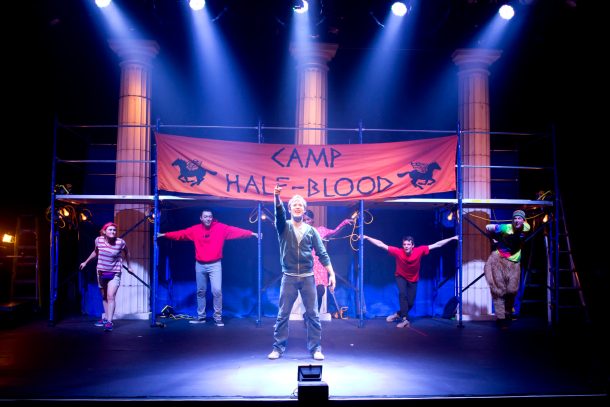
Like most of Vermont’s venues, Pentangle usually offers an array of programs for young people in the summer. Through these programs, thousands of people of all ages discover and develop their artistic passions, allowing their experiences to live on in things like songs, plays, and poems.
“We’re not frontline workers, and we recognize that,” said Wilson. In the last flu pandemic, a century ago, she said, little art came out of the experience, in part because the focus was on World War I. It could be different this time around.
“It’s important that we have a means to chronicle this whole experience,” she said.
