


The Deeper Dig is a biweekly podcast from the VTDigger newsroom, hosted and produced by Sam Gale Rosen. Listen below, and subscribe on Apple Podcasts, Google Play, Spotify or anywhere you listen to podcasts.
While officials strike an optimistic tone about containing the spread of Covid-19 at the Northwest State Correctional Facility in St. Albans, one former inmate who was released just days into the outbreak says he believes it could have been prevented.
When Michael Akey learned that the assault charges against him were dropped, he says, he was in an isolation cell in the prison’s solitary confinement unit. Days earlier, he had received a memo that said he had likely been exposed to the coronavirus. Later, he learned that his cellmate had tested positive — and only after his release did Akey confirm that he had the virus, too.
The Department of Corrections confirmed seven new cases in the prison Friday, the result of a second round of mass testing. Earlier mass testing had revealed an outbreak of 38 inmates and 17 staff members.
Akey said that inmates were poorly protected in the days leading up to that first round of tests. He described correctional officers misusing protective equipment, failing to provide hand sanitizer or antibacterial soap and ignoring his cellmate’s medical needs.
“They were treating us like we were the problem,” Akey said. “The problem was them coming in and bringing it in to us, and they weren’t protecting us from them.”
Interim Corrections Commissioner James Baker told VTDigger this week that while he couldn’t respond to Akey’s specific complaints, he took exception to allegations that the department didn’t properly protect inmates.
On this week’s podcast, Michael Akey describes his experience of contracting Covid-19. Plus, VTDigger’s Alan Keays discusses the corrections department’s response to the outbreak.
**Podcast transcript**
This week: As the spread of COVID-19 in the St. Albans prison appears to have leveled off, one former inmate who was released just days into the outbreak says he believes it could have been prevented.
At the governor’s press briefing on Friday, Human Services Secretary Mike Smith said a new round of mass testing at the Northwest State Correctional Facility showed seven new cases among inmates.
Mike Smith: We had seven new cases. Those new cases have been moved — are in the process of being moved to St. Johnsbury…
The first round of testing in early April revealed a major outbreak — 38 inmates and 17 staff members had tested positive. Smith said the new numbers were a sign of progress.
Mike Smith: I just want to congratulate the Department of Corrections who has done an amazing job in responding to that situation that Northwest correctional as a correctional facility they have, they have done an amazing job in looking at how to move people how to isolate people, how to make sure that they contain a spread…
But the Department of Corrections, which Smith oversees, has faced criticism for failing to contain the virus early on. Just this week, we heard from one inmate who got his positive test result the day after he was released.
Michael Akey: They were treating us like we were the problem. Like we were like we were the ones with the disease. Instead of protecting us from them, they were trying to protect us from each other. And the problem isn’t us — the people that have been there and none of us have coronavirus — it’s not just going to appear out of nowhere. You know what I mean? The problem is them bringing it into us, and they weren’t protecting us from them.
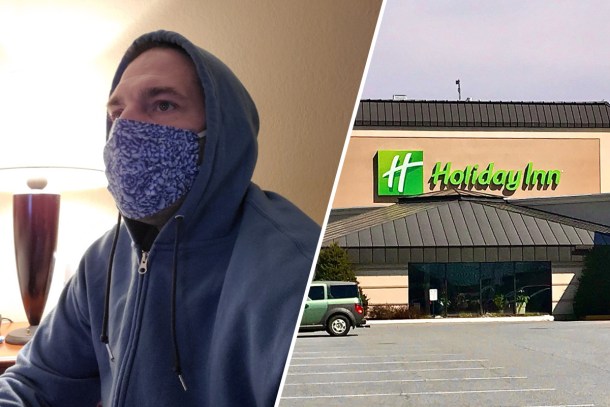
This is Michael Akey. Michael spent about two months at Northwest on assault charges that were eventually dismissed. This week, while he was quarantined at the Holiday Inn in South Burlington, he reached out to our criminal justice reporter Alan Keays.
Alan, why were you interested in hearing the perspective of someone like Michael?
Alan Keays: Well, we haven’t heard the perspective of many inmates who have been behind bars since the coronavirus outbreak at the Northwest State Correctional center in St. Albans. So Michael was able to provide a view from inside the walls during the time of the outbreak.
What did he tell you that stuck out to you?
Alan Keays: It was, I guess, mostly his fear of contracting the virus while behind bars. It seemed like it was something that kind of preoccupied him the whole time, was the possibility of contracting this virus.
Michael Akey: All the panic started coming in, I think, around the end of February. They canceled visits for two weeks. So the first two weeks in March, everything was canceled. They shut down all the visitor programs, they shut down a sex offender program, they shut down substance abuse, they stopped allowing AA into the facility. So they basically put us all on modified lockdown, and the only people that were coming in and out of the facility were corrections officers.
What are you thinking is all this is happening?
Michael Akey: I’m thinking we’re gonna end up getting all locked down. To me, it felt like they were just getting us all ready to lock us all down. Once they canceled visits, they started feeding us better. We started getting special food. Like the week before I left they gave us grinders. We had roast beef and chicken grinders. They’d given us Philly cheese steaks before I left. Extra hamburgers. On Saturday it was pizza day, they would give us an extra slice of pizza. I kind of felt like they were buttering us up to try to keep us cooperative while they took everything away from us slowly.
At this point, no one in the prison had tested positive. But outside the facility, prisoners’ rights advocates had started making noise about how dangerous correctional facilities could become.
Alan Keays: They talked about how it could spread in such a closed environment, as well as the conditions of some of the inmates — some of them are older and vulnerable to the disease because of their medical history. They also talked about the conditions that exist in a prison that might expose them to contracting the coronavirus, and also the potential spread of the coronavirus could happen quite rapidly because of the close quarters that people are in in a prison. You can’t get out, and oftentimes you’re eating meals together. You’re using shared bathroom facilities, and you also in most cases have a cellmate who is in close proximity to you.
Michael Akey: Slowly we started to notice that advocates are pushing for people’s release. Because St. Albans has been deemed by Corrections to be a transfer facility, they do a lot of federal inmate holds. So they have a lot of guys there that are federal inmates waiting for court and stuff. So the conditions there, under general normal circumstances, is you don’t ever feel comfortable, because you don’t ever know if you’re going to be transferred to another facility. So I noticed that they started emptying the jail out. At one point in time, there was only 16 of us in F pod. There was like 20 people in G pod; there was like 17 people in H pod. So they started to empty the jail out pretty quickly.
But Michael said that didn’t do much for the inmates that were still there.
Alan Keays: He talked about, that he would have liked to have seen them take more precautions to try to protect the inmates. He did not see, early on, people wearing face masks, or face masks given to the inmates.
Michael Akey: They weren’t wearing masks. There were days where COs would come in, and they would have masks on them, but they weren’t wearing them.
They just have them around their necks, or…?
Michael Akey: In their pockets. I saw one had one tied around one a belt loop on his cargo pants.
Alan Keays: He talked about staff coughing in the facility. That raised concerns from him. He talked about the kind of lack of PPE he saw early on.
Michael Akey: They tell us that it spread through people breathing and coughing, you know, and germs. They tell us to wash our hands — they took away all the hand sanitizer that had alcohol in it. And it took them days to get us antibacterial hand soap.
They weren’t wearing their masks. They weren’t wearing gloves. They were still patting us down. I remember asking a few times, asked medical for masks, asked why we weren’t allowed masks, why we weren’t allowed gloves. And they just didn’t seem to really pay too much attention to it. They didn’t care. They weren’t monitoring COs’ lives outside of the facility — because they’re the only ones coming in and out every day.
Alan Keays: He had a cellmate, he said, who he believed was showing symptoms, or who talked about showing symptoms, believing he might have Covid-19. And he was concerned about being in the cell with that person.
Michael Akey: He had been complaining about the illness from the day that we moved in together. On April 1, that night he started complaining that he didn’t feel well. He put in like three or four sick call slips saying he didn’t feel well. I was keeping an eye on him to make sure like he wasn’t coughing or anything. And the symptoms that he had weren’t any of the normal symptoms of the coronavirus, like shortness of breath, cough, fever. He didn’t have any of that. He just had body aches and chills, like he was getting the flu or something.
We were in the same cell from April 1 until April 6. Monday morning, April 6, they came in. They came in, handed me a piece of paper. That piece of paper from DOC is a memorandum from Supervisor Mann that said it’s served me a notification that I’m being placed in medical isolation quarantine due to my exposure or infection with Covid-19 virus. The only way that I had been infected that they know of, is that they tested my cellmate. They tested him and his test came back positive. And that’s why I was removed from the unit, because I was exposed to him.
Where was he at that point?
Michael Akey: He was still in population. He was working in the kitchen.
Wow. What happens next?
Michael Akey: They take me down to seg, they take me down and lock me in a cell down in Delta.
What does that mean?
Michael Akey: Delta is segregation — it’s the hole. Where they take you when you misbehave. They strip me completely naked. They take my sweatsuit, they take all my comfy clothes, and they put me in a red jumpsuit. Red jumpsuit is for people who are down there for being in trouble. I didn’t get in any trouble. You know what I mean? So, I didn’t understand why they were treating me like I had done something wrong. They had just come into my cell, told me that I’ve been infected with Covid-19. “You need to come with us.” They made me feel like I had done something wrong.
When they escorted me to segregation, they were only in a mask. I wasn’t provided with a mask while I was being escorted to segregation, knowing from that letter that I’ve been infected. They didn’t give me any PPE to protect everybody around me from me being potentially infected.
So they bring me down there. They don’t let me call anybody on the phone. I asked if I could have my tablet. They said no. I didn’t get anything but a pencil and a piece of paper. For three days, they didn’t let us come out of the cell and let us make any phone calls. The only reason I was able to get on the phone was because my lawyer called.
I just told her what was going on. She asked me what was going on inside there. And I told her, and that’s when she told me that my cellmate was the one that tested positive. I’m like, “Well, how do they know he tested positive? When did they test him?” We were still in the cell together they day they came in and got me. So they had to have already known Monday when they took me out, because otherwise how else would they say that I was infected with the COVID-19 virus?
The good news from this call was that Michael was getting out – the charges against him had been dropped. But in the meantime, the first positive case in Vermont’s inmate population was drawing major attention.
Mike Smith: Yesterday evening, we received confirmation of a positive test of an inmate who had been in a negative pressure cell, single occupant isolation room since developing the symptoms on, like I said, April 6, on Monday. We also put an inmate who had shared his cell in a single room isolation at the same time, for observation and for the health of other inmates. That person has not developed symptoms at this time, and will remain separated and housed in an isolation room throughout the quarantine period.
At a press conference on April 8, Secretary Mike Smith announced that Northwest would be the first facility in the state to get blanket testing.
Mike Smith: Soon, I’m ordering additional steps to be taken immediately to help prevent further spread. All inmates and staff at Northwest Correctional Facility will immediately be tested over the next 24 hours…
That would become the first test to tell Michael he was positive. We’ll be right back.
[break]
Michael Akey: They tested us all on Thursday.
This is while you were in the hole.
Michael Akey: Yeah, while I was in the hole. I don’t know how many inmates they tested that day. I just know they tested everybody in Delta that day, because I could see that with my own eyes.
Got it. How soon did you get your results back?
Michael Akey: The next day. I got my results back Friday morning around 10:30.
When Michael got released, he was supposed to head to an empty sober house in Plattsburgh, New York. But he says that plan got scrapped – and he was sent to a more crowded facility here in Vermont.
Michael Akey: It caused me to have to go to a house in Essex with nine other guys, where I could have potentially infected nine other guys. Thank god I didn’t, you know what I mean? It was just still the fact that probation and Department of Corrections just didn’t go with the flow, knowing that I could be sick and that I could infect other people, knowing full on that people are dying from this.
I just happen to be lucky that I’m healthy, that I didn’t get that sick. But I very well damn well could have, and I could have given everybody else this freakin’ shit. I’m very thankful, thank god, that I didn’t get anybody sick. Because there was a couple of guys in that sober house and assets that could die from it if they got it, because they’re compromised. One has COPD and the other one has a heart condition.
I just don’t think they did enough to protect us. And they need to, because people are dying from this shit.
Why do you want to tell your story about this? What do you think should change going forward?
Michael Akey: The reason why I want to tell my story is because I feel like they didn’t care about my life. Because when they released me, they released me right out the door, the same door that 15 other positive inmates were in booking. There was a sign on the door that said do not answer without proper PPE, which is a tyvek suit, face shield over the mask. And they sent me right out of booking with no protection, with nothing. And they said, “Have a good day.” They didn’t care. They didn’t care about the lives of the people that they sent me to the sober house in Essex. They didn’t care about any of it. And it’s not right.
Alan, in hearing from Michael, you’ve heard his account and brought some questions about it to the Department of Corrections. What did they say in response?
Alan Keays: Well, interim Commissioner James Baker said it was difficult to respond to each allegation that was being raised because he has to know more context and more of a timeline about what happened. Without having to research it for quite a lot of time to spend to respond to each allegation, what the commissioner’s most upset about, or most wanted to respond to was the fact that Michael talked about his feeling that Corrections did not care about the inmates. And Commissioner Baker wanted to be very clear that that was not the case, and that the Department of Corrections was doing all it could. He took it very personally: that he had a responsibility as the commissioner to look out for these inmates and people who are in his custody.
Did he respond at all to this broader idea that more precautions should have been taken earlier, at least according to someone like Michael, from the way he’s described his experience?
Alan Keays: He talked about following the guidelines and recommendations that have been put out by the CDC, as well as working with the Department of Health and working to follow the best practices in what had been recommended by those groups. And certainly very early on, officials were learning how to cope with Covid-19, as well as, there were limited testing options at that time, early on in the process. Access to testing has greatly improved.
So that was a factor early on, was that they just didn’t have the capacity to do a blanket test of everyone in the prison system?
Alan Keays: Correct. And again, there have been no other outbreaks in any other facility. But they also haven’t done mass testing at other facilities. They have done testing of inmates who have met the symptoms requirement to be tested. There certainly have been inmates who have been tested at various facilities that have all come back negative, except for in St. Albans.
What happens next for Michael?
Alan Keays: Michael was just released from the Holiday Inn, where he was quarantined. He was released on, I believe it was Wednesday afternoon. And he’s going to a sober house, where he’s going to receive some programming, as well as a safe place to be living as he transitions back to being out in the community.
Michael Akey: I’m supposed to meet somebody tomorrow morning for a job. So hopefully, that all works out for me, then I’m just gonna get my feet under me, and continue to be on probation, and deal with probation, and hopefully get off probation in the near future. And just, I don’t know, just continue to try to heal.
I just know that I just keep putting one foot in front of the other, and I just keep going with the flow. Because I know I know that I can get through this. But there’s a lot of other people that I know that can’t. I just want to be their voice to stick up for them. You know what I mean? To, like, be that person going, “Hey, we need to be treated better. And you need to take this a lot more serious than you did initially.” Because there’s a lot of people that could die from this in jail.
Well, I really appreciate you sharing all this with us. Good luck.
Michael Akey: Thanks.
