


Spooked by national reports that some restaurants have already closed for good after weeks of downtime this spring, Vermont restaurateurs are hard at work on plans to bolster the recovery for themselves and their peers.
Restaurant owners have banded together to share ideas and information about economic survival in the face of social distancing measures. They’re lobbying for state assistance and for a rooms and meals tax abatement. And they’re looking for ways to change the existing federal emergency funding for small business, which in its primary form, the Paycheck Protection Program, isn’t of much use to cash-strapped eateries that don’t know when they are going to be able to rehire their staff.
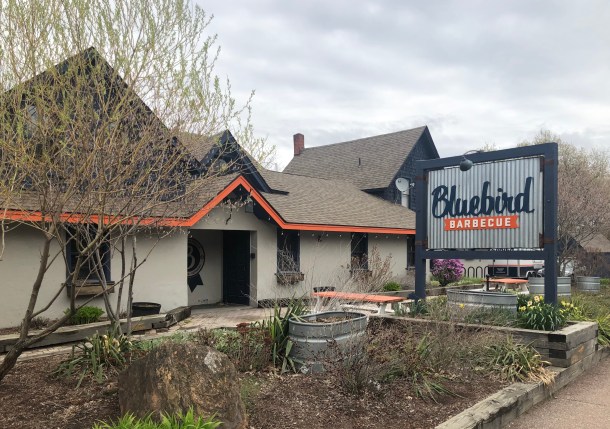
“It’s a very dangerous loan,” said Sue Bette, who owns Bluebird Barbecue in Burlington. PPP loans carry a two-year repayment term. Business owners can have the loans forgiven as long as they meet certain conditions, including rehiring their employees within two months of receipt. But with no way of knowing when they’ll be able to reopen, restaurants can’t meet those terms.
“If you do not achieve forgiveness, a loan of $150,000 would carry a payment of about $8,000 starting in November” because of the two-year repayment window,” said Bette, who has been approved for a PPP loan that she applied for in the first round of the popular program. She hasn’t decided whether to use it.
“Without any changes made to it, it is not going to be of benefit to us,” she said.
No opening date in sight
Vermont has 4,500 retail food licensees at 4,000 locations, according to the Vermont Department of Health Food & Lodging Program. Of those, 2,300 have seating licenses. More than 800 of those accommodate just zero to 25 people. Another 550 have seating for 26 to 50.
Local restaurants contribute more than $500 million to Vermont’s GDP, according to the state Agency for Commerce and Community Development. Before Gov. Phil Scott issued an order that closed restaurants and bars to dine-in service March 17 to mitigate the spread of Covid-19, they employed an estimated 20,000 people.
With Covid-19 infections appearing to be at a plateau, the Scott administration is now slowly opening some businesses, such as construction and manufacturing, to limited activity. But as places designed for gathering, restaurants seem unlikely to open to dine-in service anytime soon.
Even after laying off their workforce, restaurants still have to meet continuing expenses such as rent, insurance and electricity. To help them survive the extended downturn, the National Restaurant Association is asking for $240 billion from Congress as part of an extensive “Blueprint for Recovery.”
The Vermont Chamber, which is the state affiliate for the National Restaurant Association, is also working on a plan that would make it easier for restaurateurs to use the PPP, among other things by extending the two-year repayment period to 10 years. And the Chamber is pushing Congress to increase funding for Economic Injury Disaster Loans program, or EIDL, and allow businesses to take out a second EIDL if they need to.
It’s also working on a state grants program for restaurants that would help businesses buy products from Vermont producers, said Amy Spear, vice president of tourism at the Vermont Chamber.
Since the middle of March, the Vermont Chamber has been working on a change in liquor regulations that would allow restaurants to pay for liquor with a credit card. They are now limited to using checks.
“That’s one item we think could be considered,” said Spear of credit card payments. “Especially since contact-less payment, like social distancing, is something that is going to be trending for quite some time.”
For restaurant owners, the first order of business is the PPP loans, which ran out of money in the first round and got more funding from Congress on April 23. Bette said she applied for one in the first round because she knew the money was going fast.
“A lot of restaurants, including mine, moved to get the PPP as it was the only relief funding available, in the hopes we’d see these two pieces change,” Bette said of the criteria for the loan to be converted to a grant, and the repayment window.
Seeking an orderly path forward
The ACCD is home to a new Economic Mitigation and Recovery Task Force that has created subgroups from each business sector to work with state officials on devising plans for reopening their businesses. Spear said that will help the restaurants open in a more orderly and systematic manner when they are allowed to.
“I am on multiple calls a week with other state restaurant associations, and some have been caught off-guard and have not been working toward preparation,” she said, noting that Georgia’s governor took many by surprise when he authorized businesses to open April 24. “There are a lot of restaurants in Georgia, for example that decided not to reopen last week,” she said. “They just said it wasn’t time yet.”
Keith Paxman, who owns three restaurants with partner Rich McSheffrey, is another restaurant owner who was approved for a PPP loan but doesn’t know if he’s going to take it. He’s pretty sure his company can’t meet the criteria required for the loan to be converted to a grant.
“It’s pretty tough to hire staff back and get back all your full-time equivalents when the state is still mandating that we stay closed,” he said. Like Bette, he said it didn’t make financial sense to keep any of his restaurants open to provide takeout and delivery, although he tried with one for a while.
Rep. Peter Welch, D-Vt., said he’s hopeful the PPP rules can be changed, and through the U.S. Treasury, not through the legislative process.

“People ask me this: Can I guarantee we’ll get the guidance changed? I can’t guarantee it; I can guarantee I’ll advocate for it,” he said. “The problems they have are not unique to Vermont, and what that indicates to me is I’ll have a lot of colleagues, Republican and Democrat, who want to make it right for the small businesses that are in our districts.”
Meanwhile, for Paxman, as for so many others, knowing how long social distancing will last would help with decisions about what to do next. When restaurants were ordered to close March 17, Paxman initially made an eight-week plan.
“That’s kind of the million-dollar question,” he said. “For the state of Vermont, it’s the billion-dollar question, because that is what our industry provides.”
Bette draws some comfort from a recently formed group of about 150 fellow Vermont restaurateurs who discuss their shared experiences.
“What we have in common is a real concern about the health of our industry and what we are all going through together,” she said. She’s worried that many restaurants, financially fragile to begin with, won’t make it through.
“PPP doesn’t work, EIDL got capped, a lot of restaurants are looking at really low bank balances, fixed costs are mounting up; rent, utilities, refrigeration, these are fairly expensive facilities to run,” she said. “There was a big loss of perishable inventory unless you pivoted to curbside. It’s been a perfect recipe for a very, very difficult path even to reopen.”
