

VTDigger posts regular coronavirus updates on this page. You can also subscribe here for daily coronavirus news. Please send your Covid-19 questions to coronavirus@vtdigger.org
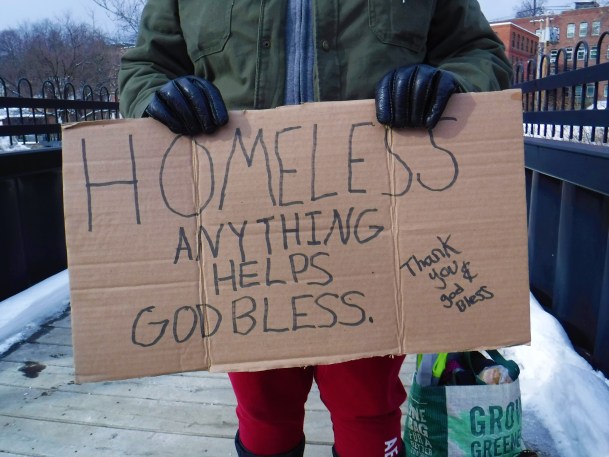
For Jenna O’Farrell, the Covid-19 crisis has revealed the extent to which Northeast Kingdom residents live in precarious situations.
O’Farrell heads Northeast Kingdom Community Action, a social services agency that had been running a 10-bed seasonal warming shelter in St. Johnsbury when the coronavirus hit Vermont.
The organization is now managing four sites across the region that as of last week housed 118 people. And that number may have grown in the meantime, O’Farrell said.
“We have a problem in the Northeast Kingdom that never existed before because we didn’t have the capacity to support people,” she said. “People made their own decisions to take care of themselves … We have a need, and now we have the resources to support the need.”
Statewide efforts to combat homelessness have ramped up in this new reality.
People housed in shelters have been moved to safer, less cramped spots, and the Scott administration has formed a team to guide shelters in protecting guests. At the North Beach campground in Burlington, workers set up 27 campers for residents of the city’s low-barrier shelter, in an effort to stem the virus’s spread. Other locations, such as Goddard College’s campus in Plainfield, have been eyed as spots for homeless people and others to recover from Covid-19.
And 20 shelters and service providers received a total $100,000 in grants Thursday from the National Low Income Housing Coalition, with each getting $4,900 to help ease the costs of adapting to the crisis.
“The lack of affordable housing and homelessness have been a significant issue for several years,” said Luciana DiRuocco, a spokesperson with the Vermont Department for Children and Families. “This crisis is further highlighting it.”
In the Kingdom, three of the four sites — the Colonnade Inn in Lyndonville, the Fairbanks Inn in St. Johnsbury and Pine Crest Motel and Cabins in Barton — are being paid for by the state. Lyndon Institute, a high school, donated its Mathewson House dorm to use as the fourth site.
Most of their guests are from the Kingdom, with some from Washington County.

O’Farrell attributes much of the Kingdom’s increase in numbers to a recent change in state policy.
DCF relaxed several parts of its housing rules in response to the crisis. Previously, temporary housing “in catastrophic situations” was available only for people “involuntarily without housing through circumstances they could not reasonably have avoided.”
Now, people without immediate access to permanent housing or “alternative arrangements” can apply too. The department has also created a new category for receiving motel vouchers that includes people over the age 60 or who have underlying health conditions that make them particularly vulnerable to the new coronavirus.
The relaxed rule means that people living in unstable housing situations — such as couch-surfing or staying with friends — have been able to get help, O’Farrell said.
But she also believes the pandemic’s unique demands, such as social distancing, have contributed to the rise.
“I think that the Covid-19 crisis had families asking other families to leave,” O’Farrell said. “You might not want another family sharing a bedroom with your child or sleeping on your couch at this time.”
She said her organization had been providing three meals a day to guests for four weeks before the state rolled out its mass-feeding plan. And the agency hired two more staffers to better handle the boost in need.

The state’s contracts with motels and other lodging establishments were set to expire May 15. But DCF Commissioner Ken Schatz told lawmakers Thursday that the agreements would be extended past that date, without giving a specific timeline.
If the contracts expire while the coronavirus crisis continues, it could prove problematic in the Kingdom, O’Farrell said. There are more people in need than housing available, she said.
Patrick Shattuck, director of Rural Edge, an affordable housing provider in the Kingdom, knows that well.
The nonprofit has 600 units in its portfolio, but only four of them are available, Shattuck said.
“Everything we have is spoken for, and we’ve got a long waiting list,” he said. “So there is a need for more affordable housing.”
Rural Edge had been building more units before businesses slowed or shut down as part of the state’s coronavirus response. That left projects like Olivia Place, a planned low-income complex in Lyndonville, unfinished.
With recent moves to reopen parts of the economy, those units might be ready by July 1. But the agency already has people lined up for them.
“Our current situation has only magnified [the lack of support for homeless or at-risk people],” Shattuck said. “We’ve seen what not providing intensive services can do — as folks may participate in unhealthy behaviors that expose them and others to potential infection.”
DiRuocco, the DCF spokesperson, said the agency is “developing transition plans now, and we should have more information on this in the coming days.”
Some sense of the path forward came during legislative meetings Tuesday.
Josh Hanford, commissioner of the Department of Housing and Community Development, told the Senate Economic Development Committee that he supports alternatives to housing shelters for long-term homelessness populations during the pandemic.
He said officials were vetting plans for a back-rent assistance program and rehabbing rental properties for homeless people.
Grace Elletson contributed reporting.
Get the latest statistics and live updates on our coronavirus page.
Sign up for our coronavirus email list.
Tell us your story or give feedback at coronavirus@vtdigger.org.
Support our nonprofit journalism with a donation.
