

This article by Nora Doyle-Burr was published by the Valley News on April 18. VTDigger added some material from Vermont Gov. Phil Scott’s press conference on April 20.
LEBANON, N.H. — Amid increasing signs that a surge of COVID-19 cases may not hit the Twin States, Dartmouth-Hitchcock Health plans to resume some medical procedures that had been delayed by the pandemic, according to hospital officials.
Officials in both New Hampshire and Vermont last week said the daily number of new cases is starting to “plateau” thanks to social distancing and stay-at-home orders, and that New Hampshire had seen a relatively constant number of patients requiring hospitalization — 85 on Saturday — from the new coronavirus.
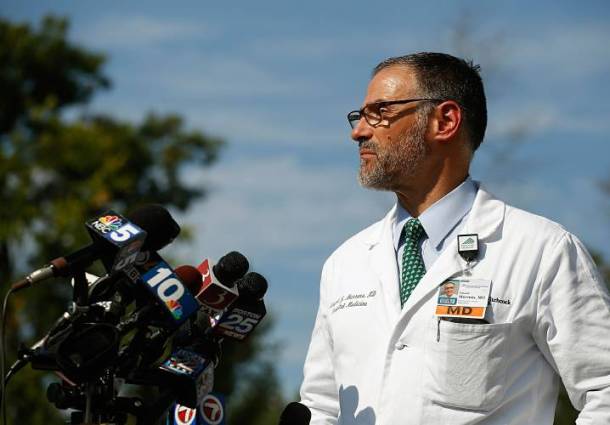
“Certainly in the Upper Valley we feel like we’re doing reasonably well,” Dartmouth-Hitchcock Chief Clinical Officer Ed Merrens said in a phone interview Friday.
Dartmouth-Hitchcock Medical Center, New Hampshire’s only academic medical center, has a dedicated COVID-19 unit for patients and is also helping to support hospitals in the state’s southern tier, which has seen more cases than the rural Upper Valley, he said.
Even so, Merrens said the health system wants to start bringing in patients in need of “time-sensitive” procedures unrelated to COVID-19 that have been delayed by the pandemic.
“We’re going to slowly get back to business,” he said.
And, he said, patients can feel safe coming to the hospital for necessary procedures. While 17 employees of the health system have contracted COVID-19, Merrens said, none of them had done so at work. They got it through travel or from someone else in the community, he said.
The first patients to test positive for COVID-19 in New Hampshire were DHMC employees. The first had recently traveled to Italy and the second had contact with the first. D-H officials have said neither man had contact with patients.
Since the early days of the pandemic, Merrens said, D-H has developed a “more assured” line of personal protective equipment such as masks. Patients and visitors are given cloth masks upon entry to a D-H facility, in addition to having their temperatures checked and being asked if they have symptoms.

In addition to DHMC, D-H member hospitals in the Upper Valley include Alice Peck Day Memorial Hospital in Lebanon, New London Hospital, and Mt. Ascutney Hospital and Health Center in Windsor.
“If people need to come for care, they are totally safe,” Merrens said.
To get through this time, D-H like many health care providers has turned increasingly to telehealth. D-H providers used telehealth to assist in the care of the first patient critically ill with COVID-19 in the U.S., Merrens said.
In addition, telehealth has helped providers to stay connected with patients who may not be able to come to the hospital for routine visits, Merrens said. D-H does thousands of telehealth visits every day, he said.
The continuity of care provided through those visits will help D-H in the transition to a time that people can come back and feel safe, Merrens said.
Health system officials are working out a staged process to bring back patients with more “time-sensitive” needs first, such as cancer-related care and postponed imaging, Merrens said. The health system does not plan to invite back “truly elective” procedures that could wait several months without affecting a patient’s health, he said. Clinicians will consult with patients to determine the right time frame for them and their condition.
In his press briefing Monday, Vermont Gov. Phil Scott said Vermont is weighing when to allow hospitals to begin to perform elective surgeries but has not set a timeframe.
The governor said he’s spoken to other regional governors about “opening the spigot” for non-emergency medical care. But, he said, officials want to be sure that such procedures would not take from needed medical resources.
“There’s two things we’re watching the capacity of — the health care system, as well as the number of positives that we see on a daily basis,” Scott said.
No furloughs at D-H
To be clear, the pandemic has affected Dartmouth-Hitchcock financially.
Dartmouth-Hitchcock CEO Joanne Conroy late last month told employees in her weekly email that D-H would not be able to “achieve our $65.9 million (3.3%) budgeted operating margin” for fiscal year 2020.
Some other hospitals in the Twin States have announced furloughs, and both state governments have begun distributing money to hospitals in the most dire financial situations.
In the Upper Valley, Cottage Hospital in Woodsville received a $1 million payment from the state to help offset losses in revenue due to cancellations of elective procedures.
“When we all received the guidance from the CDC to stop all elective surgeries and to stop all elective outpatient therapies, that was crippling to rural and community-sized hospitals,” Cottage Hospital CEO Maria Ryan said in a Friday email. “The revenue to keep hospitals afloat come from outpatient business.”
Springfield (Vt.) Hospital, which is going through Chapter 11 bankruptcy, also recently received a $1.3 million loan to help it weather the COVID-19 storm.
Across New Hampshire, hospitals are losing approximately $200 million a month, said Vanessa Stafford, spokeswoman for the New Hampshire Hospital Association.
“Funding made available by both the state and the federal government were critical first steps to ensuring that hospitals and health systems on the front lines have the resources they need to respond to the COVID-19 pandemic, but we must continue to work with our state and congressional delegation for additional federal resources to ensure the stability of New Hampshire’s health care system as it responds to this public health emergency,” Stafford said.
Doing so, she said is necessary to ensure the hospitals stay open to assist with the COVID-19 response, “but also so that they can be there to serve their communities long into the future.”
While Merrens said that D-H also expects to receive some federal support to help make up for costs and revenue losses associated with COVID-19 response, those losses have not forced D-H to lay off or furlough workers.
D-H has given other jobs to employees who have less to do due to the cancellation of elective procedures, he said. Without increases in revenues, the system can’t continue to pay staff “forever,” but Merrens said for now it is committed to supporting employees.
Planning ahead
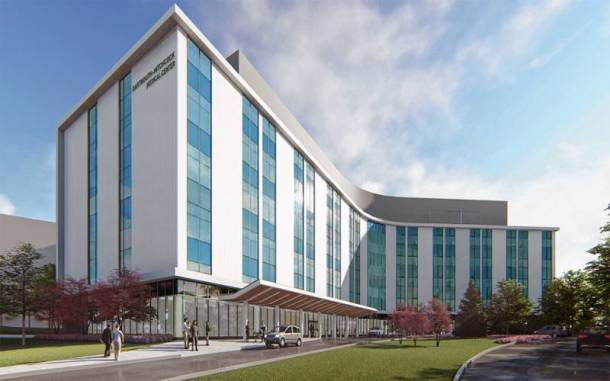
Merrens acknowledged that D-H’s plans to expand its footprint in Manchester and at DHMC may be delayed due to COVID-19. But, he said, the system is still planning to expand its ambulatory care center in Manchester, construct a new patient tower in Lebanon and “combine” with the health system including Manchester’s Catholic Medical Center.
“We’re committed to being here in the future,” he said.
CMC spokeswoman Lauren Collins-Cline said in a Friday email that as far as she knows the combination with D-H is moving forward, but she has been focused on the COVID-19 response since mid-March. CMC has several hundred employees on “low-census leave” due to fewer visits and procedures.
She said health care workers are struggling to stay focused on the job with so many other things in their lives turned upside down, such as children learning at home and not being able to see elderly relatives due to their increased risk of serious symptoms from the disease.
“To be honest, the question ‘How is CMC being affected by COVID-19’ nearly made me cry,” she said. “The answer is in every single way. … Our day to day has changed, how we approach our normal jobs is being redefined. … We wonder how long it will be before things get back to normal and how we will define normal.”
Though D-H’s workforce is managing the situation well, Merrens siad, he acknowledged that it’s a difficult time and that even when employees go home it’s hard to escape the effects of COVID-19.
Still, he said, “it’s going to get better. I think this will only make us stronger.”
