


VTDigger is posting regular updates on the coronavirus in Vermont on this page. You can also subscribe here for regular email updates on the coronavirus. If you have any questions, thoughts or updates on how Vermont is responding to COVID-19, contact us at coronavirus@vtdigger.org
The U.S. Senate voted 96-0 late Wednesday to approve a sweeping $2 trillion coronavirus disaster relief package to help workers, businesses, health providers and state and local governments across the country.
The House of Representatives is expected to approve it Friday.
The legislation includes $500 billion in federal funding for large businesses and municipalities, a $367 billion employee retention fund for small businesses, and it would direct $130 billion to hospitals — as well as $16 billion to replenish the Strategic National Stockpile with medical supplies and personal protective equipment.
It would also dramatically expand unemployment benefits, allowing self-employed people and independent contractors to take advantage of the fund. Another provision allows laid-off employees to receive an additional $600 a week for four months, on top of the benefits their state unemployment agencies pay.
The stimulus package would also send $1,200 checks to American adults who earn $75,000 or less. The payment slowly decreases as income increases and people who earn more than $99,000 would not qualify. Children in qualifying households would also receive $500.
The federal response package also has more than $30 billion to support K-12 education and higher education institutions, as well as $9.5 billion to support farmers.
How it breaks down
Sen. Patrick Leahy, D-Vt., who as vice chair of the Senate Appropriations Committee has been a lead negotiator on the federal legislation, announced late Wednesday that Vermont is poised to receive nearly $2 billion from the emergency spending package.
“Further stimulus measures will be needed, in Vermont and across the country,” Leahy said in a statement. “I am pleased that Vermont will receive this critical assistance, and know more will need to be done.”
Here is the estimated funding that will be coming to Vermont, according to Leahy’s office:
$20 million to support public transportation emergency relief.
$9.6 million to support the state’s airports.
$5.4 million for the support of public health preparedness and response activities through the Centers for Disease Control.
$5 million in Community Service Block Grants to address the consequences of increasing unemployed and economic disruption.
$4.7 million in Community Development Block Grant (CDBG) funding to support the expansion of community health facilities, child care centers, food banks and senior services.
$4.6 million for housing assistance grants through the Department of Housing and Urban Development.
$4.3 million in Child Care Development Block Grants to support child care assistance to health care sector employees, emergency responders, sanitation workers and other works deemed essential during the COVID-19 state of emergency.
$4.1 million in the Low Income Home Energy Assistance Program (LIHEAP).
$3 million in election assistance grants.
$2 million to support state and local law enforcement and corrections through the Byrne-Justice Assistance Grant (JAG) program.
$862,000 in Emergency Preparedness Grants through the Federal Emergency Management Administration (FEMA).
$826,000 through the National Endowment for the Arts and the National Endowment for the Humanities to support museums, libraries and other organizations that have been forced to shut down.
$175,000 to help small to medium sized manufacturers recover from the economic impacts of COVID-19 through the Manufacturing Extension Partnership program.
What this means for Vermont
The federal expansion of unemployment insurance benefits comes as Vermont lawmakers and the Scott administration have gone back and forth over how to help the self-employed during the economic crisis brought on by COVID-19.
The administration’s position has been that it would be a violation of federal law to allow people who have not paid into the state unemployment trust fund to take advantage of the benefits.

On Thursday, the Vermont Department of Labor reported that last week more than 14,000 Vermonters applied for state unemployment insurance last week, smashing previous records.
This includes $1.25 billion through the Coronavirus Relief Fund, which has been established to help states address the economic situation caused by COVID-19.
Adam Greshin, Vermont’s commissioner of finance and management, said there are still too many unknowns about the federal legislation to know definitively what it means for Vermont.
“We’re aware that the ink is barely dry and it has not been signed,” he said. “We’re doing the best we can to parse through the federal legislation and discover the impact for the state of Vermont.”
The Scott administration planned to speak with Leahy’s office Thursday afternoon to discuss what exactly will be coming to Vermont. State agencies have all been in contact with their federal counterparts, according to Greshin.
“As we speak, a small team, including me, is working to put together a document that will describe what is in the federal legislation and what it means for Vermont,” he said.
Greshin added that the administration has been in dialogue with the Vermont Legislature about a possible emergency COVID-19 budget adjustment for the remaining months of fiscal year 2020.
“There are some critical needs we have to address and we are speaking with the Legislature about going about that,” Greshin said. “One thought is a budget adjustment in April, but what is in that still needs to be discussed.”
However, Greshin added that before they move forward with an additional budget adjustment, both lawmakers and the administration need a clearer idea of what federal support there will be.
The role of Vermont’s congressional delegation
Leahy and his staff had been working long nights for weeks on the legislation — the third part of the federal government’s response to the coronavirus crisis.
Since the outbreak of COVID-19 in Vermont, Leahy has been speaking with Gov. Phil Scott daily, both providing updates on the latest developments.
In the $2 trillion response package, Leahy said he had insisted it include small state minimums — intended to ensure that small states receive a basic level of funding under each federal grant — to make sure Vermont got aid.
“Every time someone tried to take that out, I put it back in,” Leahy said. “No bill without it was going to pass.”
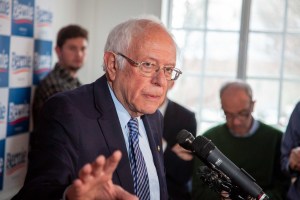
Leahy added that the legislation is not perfect but with so many unknowns it was the best they could hope for.
He and his office are already getting ready to analyze how the legislation will work and the possibility of tweaking it in the future.
On Wednesday, prior to the vote, the passage of the bill was threatened after four Republican senators raised concerns about potentially encouraging unemployment by beefing up the benefits.
Sen. Bernie Sanders, I-Vt., swiftly put out a statement threatening that he would begin to demand strong conditions be placed on the $500 billion in relief for big businesses if the GOP members began watering down the unemployment insurance language.
“Now I find that some of my Republican colleagues are very distressed. They’re very upset that somebody who’s making 10-12 bucks an hour, might end up with a paycheck for four months, more than they received last week,” Sanders said on the Senate floor Wednesday. “Oh my God. The universe is collapsing.”
“How absurd and wrong is that,” he added.
President Donald Trump and Treasury Secretary Steven Mnuchin spoke with the objecting senators, according to the Washington Post, and told them to drop their concerns. An amendment the senators offered to try to scale back the unemployment benefits was later defeated Wednesday.
While the Senate worked busily to pass the legislation Wednesday, Rep. Peter Welch, D-Vt., introduced a House bill to create a $2 billion fund at the Federal Communications Commission (FCC) for rural communities to maintain internet connection during the COVID-19 crisis.
The fund would compensate small broadband providers that offer free or discounted broadband services for low-income families or students impacted by the coronavirus outbreak.
Speaking about the overall response by Congress, Welch said Wednesday that the coronavirus has caused a “cataclysmic shock to the economy” and that “this is a cataclysmic response.”
“This is no time to act small,” he said. “We have to err on the side of too much too soon, instead of too little too late.”
