


VTDigger is posting regular updates on the coronavirus in Vermont on this page. You can also subscribe here for regular email updates on the coronavirus. If you have any questions, thoughts or updates on how Vermont is responding to COVID-19, contact us at coronavirus@vtdigger.org
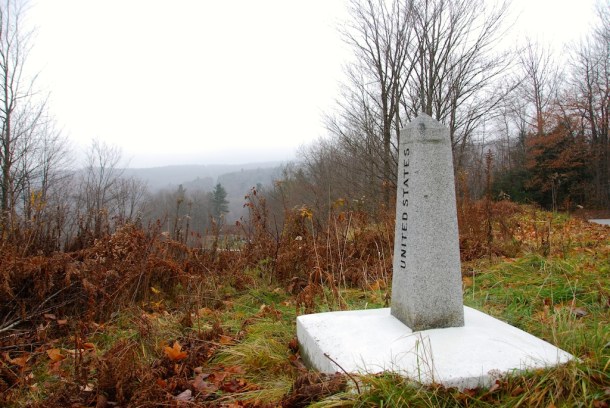
The United States and Canada are barring all nonessential travel between the two countries amid the worldwide COVID-19 pandemic.
The new policy, implemented by mutual agreement between the two countries, means that people will not be able to cross the border between Vermont and Quebec for recreation and tourism.
In Vermont’s northernmost communities, where cross-border connections are common, acts as simple as volunteering at a thrift store have been interrupted, and residents sit with unease over what will happen the longer the policy stays.
Speaking to reporters Wednesday, Prime Minister Justin Trudeau said that the measure will not interrupt supply chains of food, medicine and fuel. Trucking will not be restricted across the border. Individuals who cross the border for essential work will still be able to travel.
The decision to partially close the world’s longest non-militarized land border comes as leaders around the globe are struggling to contain the outbreak of the new coronavirus.
Earlier this week, Canada banned most foreign citizens, except Americans, from entering the country. Last week, President Donald Trump barred any non-citizens traveling from European countries from entering the United States.
Canadian officials expect the ban to take effect within hours or days. The Investigative Post, a Buffalo, New York, news outlet, reported that the ban began to be partially enforced Tuesday at the Peace Bridge, a major crossing in western New York.
Trump said at a press conference that the travel restrictions could last 30 days.
“Hopefully at the end of 30 days we’ll be in great shape,” he told reporters.
Along Vermont’s northern border, there are questions about how the restrictions will impact a region where communities and businesses are interconnected across the international boundary.
Wednesday afternoon, Fritz Halbedl stood by the window of the Derby Line Village Inn, which he owns with his wife, Paula.
“There hasn’t been a car by in the last five minutes,” he said, speaking by phone. “It’s pretty quiet.”
The five-room inn and restaurant is one of the first stops in Vermont for those passing through the Derby Line border station, and Halbedl said a solid chunk of their customers come from Canada — students at Stanstead College, for instance, only a three-minute drive away.
“Of course it’s concerning,” he said of the announcement. “We’re in the hospitality business.”
The dine-in part of the inn is closed for now — it’s only doing takeout — and Halbedl wasn’t sure what the travel restrictions might mean for him and his wife long term.
“It will be interesting for us to see how the weekend is,” he said. “For us, my wife and me are running the business. We’ll be hanging in there.”
And though he thinks the governments’ move is probably for the best, he hopes officials can get a handle on the virus soon.
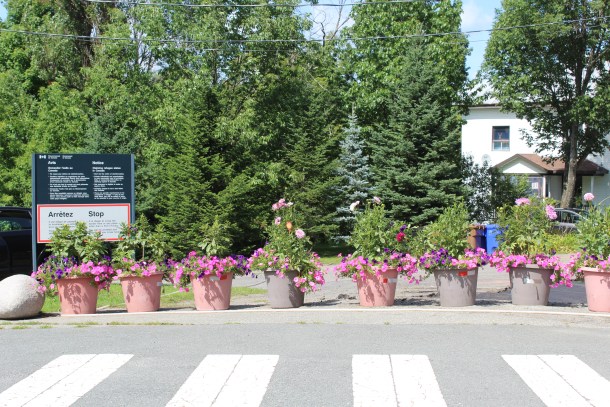
Reports first came out Tuesday night that officials from the two countries were discussing restricting travel along the border. Trump confirmed the agreement in a tweet Wednesday morning.
Gov. Phil Scott, who had previously been unaware of the new border policy, said at a press conference that both countries need to act to address the spread of the illness.
“I would assume that in conjunction with Canada that this is the right step to take while understanding that we have a lot of trade and we so rely on a number of employees from there,” he said.
He referenced health care workers in Northern Vermont who live in Canada, noting that they would likely be considered essential. Based on Trudeau’s remarks, it appears they will be able to travel.
In both the U.S. and Canada, leaders and public health experts are advising people to take steps to prevent the spread of the illness. Quebec has enacted similar measures as Vermont to limit exposure in public places, like closing bars and limiting restaurants to 50% capacity. Vermont closed all restaurants, except for take-out and delivery options, earlier this week.
On Wednesday, Quebec announced the first death in the province related to the COVID-19 outbreak. At that time, there were 94 confirmed cases in the province. According to Vermont officials, 19 people had tested positive for the illness in the state.
Vermont Rep. Brian Smith, a Republican who represents the border community of Derby, said the impact on Vermonters in the northern part of the state will depend on how long the policy lasts.
“If it goes into two or three months, I think we’re going to see a lot of problems everywhere,” Smith, a member of the House Committee on Health Care, said Wednesday.
But in daily life, he doubts the restrictions will affect much in his Orleans County border town.
“I don’t think you’re going to see a heck of a lot of changes going on,” he said, explaining that the number of residents crossing the border has already been whittled by checkpoint inconveniences in recent years.
“Very few people are worried about the border,” he said.
He praised the Trump administration’s response.
If the policy lasts only for a few weeks, Smith doesn’t think many will be hurt, “as long as you can keep commercial traffic.”
“They shut that down,” he added, “they’re going to start costing a lot more people a lot more money.”
Leaders on both sides of the border have emphasized that trade will continue.
Gary Viens, a former Border Patrol agent who used to represent Newport in the Legislature, said Wednesday that he does not expect the order will change much for families or for cross-border business.
While, in ordinary times, people might cross the border to go out for dinner, those habits have already been disrupted as restaurants are limiting business, and in Vermont’s case closing.
“In the totality of things, I don’t see that opened or closed would really make an awful lot of difference,” Viens said. “It’s basically asking the public to hunker down until they get a better handle it.”
Janice Beadle of Derby lives on Canusa Avenue, a road that crosses the border line.
“At this point, they’ve got to do every possible thing they’ve got to do,” she said Wednesday.
She shops across in Canada and volunteers at a thrift center in Stanstead that raises money for charitable work. If the center hadn’t already been closed, the new policy would mean she could no longer volunteer.
“That affects me because it’s something that I’ve really enjoyed, and I do have a lot of friends over there,” she said.
Some people on her street have family members on either side of the border, and their visits may be curbed.
“So I guess it’s going to be quiet,” she said, contemplative. “Pretty darn quiet here on the border.”
