


Vermont’s presidential primary next Tuesday would seem to be a lock for hometown candidate Sen. Bernie Sanders, but some Democratic rivals are actively trying to peel off some of the 16 pledged delegates in play.
Former South Bend, Indiana, Mayor Pete Buttigieg, Sen. Elizabeth Warren, former New York City Mayor Michael Bloomberg, and Sen. Amy Klobuchar have set up campaigns in Vermont, in hopes of stealing a few delegates in Sanders’ backyard.
Candidates must receive at least 15% of the vote to be awarded any delegates, in what is known as the “the 15% rule.” If candidates cross that threshold, delegates are distributed proportionally.
The Vermont primary is an open primary, with the state awarding 24 delegates, of which 16 are allocated on the basis of the results of the primary. The rest are so-called “superdelegates.”
In 2016, Sanders won more than 86% of the vote in Vermont while former Secretary of State Hillary Clinton received just 13.6%, falling short of the 15% threshold. The Vermont senator collected all 16 delegates in that contest.
While Buttigieg has only a small team of staffers working in Vermont, his campaign believes it has the best chance to siphon delegates away from Sanders in his home state.
In an internal memo obtained by VTDigger, the Buttigieg campaign outlined how Vermont is key to staying in close contention with Sanders and minimize his overall delegate lead from Super Tuesday.
The document, circulated among staffers earlier this week, said while the Super Tuesday map “overwhelmingly favors Sanders,” Buttigieg’s plan is to limit the Vermont senator’s overall lead to no more than 350 delegates after all the March 3 results come in.
On Super Tuesday, 1,357 delegates are up for grabs in 14 states and American Samoa, a third of what will be apportioned in the nomination process.
“If we do this, Pete will need to beat Sanders by approximately 10% in the remaining contests,” the document says of Buttigieg’s plan in the remaining contests after Super Tuesday.
The document specifically names Vermont — along with Virginia and North Carolina — as states that Buttigieg can make inroads.

“Polling averages have Pete as the only candidate besides Bernie Sanders that can realistically clear the qualification threshold in Sanders’ home state,” the authors of the campaign memo wrote.
The campaign is projecting that Buttigieg could capture three delegates in Vermont and that performing well in Vermont would be a “huge opportunity to minimize” Sanders’ strength moving beyond Super Tuesday.
As of Feb. 25 the campaign planned to spend $92,000 on television ads in Burlington and in the DMA counties — television market areas that include most of Vermont, New Hampshire and eastern New York. The campaign is also expected to spend $37,652 on “non-skippable” digital ads to all likely voters in the state.
Isaac Dayno, Buttigieg’s Vermont state leader, said the former South Bend mayor has significant support in Vermont.
“I think his showing here will turn quite a few heads on Super Tuesday,” Dayno said.
In the splintered Democratic field, with more than five candidates still vying for support, winning a clear majority of delegates appears the only way to ensure a first ballot nomination during the Democratic National Convention this summer.
Democratic Party officials, including more than 90 superdelegates, have said that if Sanders has a plurality of the delegates by the convention, they would not support handing him the nomination, according to the New York Times.
The delegate calculus has led to more candidates, like Buttigieg, thinking strategically about picking up more delegates, even in a state like Vermont.
In a VPR-Vermont PBS poll published on Feb. 18, while Sanders blew away the field in Vermont, Buttigieg received 13%, just 2 points off the magic number to snare a delegate.

In that survey, Sen. Elizabeth Warren was third with 9%, billionaire former New York City Mayor Michael Bloomberg had 7%, former Vice President Joe Biden got 5%, and Sen. Amy Klobuchar had 4%.
Rich Clark, a professor of political science Castleton University who supervised the poll, said the numbers may have changed. The survey was conducted just before the Feb. 11 New Hampshire primary, where Sanders squeaked out a win over Buttigieg.
However, Clark described the 51% level as a likely base of support for Sanders.
“We don’t expect anyone to move away from Sanders only toward Sanders,” Clark said. “When you look at the numbers for Sanders in our poll, I only expect them to grow.”
Sanders recently announced he will be in Vermont March 3 to cast his own vote and hold a rally in Essex Junction as the results come in.
The fate of other 2020 candidates in Vermont, Clark said, is less certain.
Of the 13% who said they support Buttigieg, only 8% said they had made up their minds about who they will vote for. Bloomberg, Biden, Warren and Klobuchar are all in similar situations with only small percentages of their supporters saying they were completely convinced.
Patricia Siplon, a St. Michael’s College political science professor, said she believed no other candidate will be able to break the threshold and win a delegate.
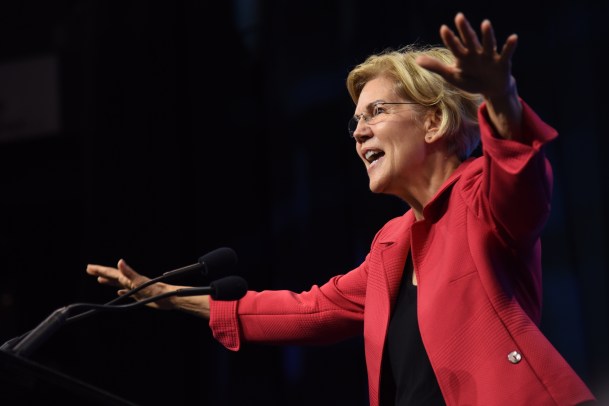
“I think Sanders is going to get all 16 delegates,” Siplon said. “I think if someone is able to crack it, it would be Warren.”
“I think the pride in having Bernie is going to carry it,” she added.
The Warren campaign has been on the ground in Vermont since November with a small staff.
Her staffers believe Warren can reach the 15% threshold and win a delegate.
“He obviously has wide support in his home state, but this race is so fluid,” a spokesperson for the Warren campaign said. “There is a belief that other candidates can siphon off delegates from Sanders.”

For the past month, Bloomberg, has carpeted the state with mailers and phone calls along with advertisements on television, radio and online.
“Mike’s goal in Vermont is simple,” said R. Christopher Di Mezzo, Vermont state director for Bloomberg’s campaign. “It’s to demonstrate that he is running a national campaign with a focus on states like Vermont that vote on Super Tuesday and afterward.”
Di Mezzo said reaching the 15% threshold was part of Bloomberg’s strategy, but it was also a secondary goal.
“We would like to win a delegate out of Vermont, but really showing that Mike has the time and energy to focus some resources on Vermont is a win in and of itself,” he said.
Eric Davis, professor emeritus of political science at Middlebury College, said Bloomberg is flexing his muscle in a state he knows he will never win.
“I think that Bloombeg would like to say that if he got 16% in Vermont and one delegate he would have prevented Sanders from sweeping the state,” Davis said.
Bloomberg’s heavy presence in Vermont was a way is to “say to the nation that they went into Bernie country,” Siplon said.
“He literally has so much money to spend. It’s so strange because in any other campaign it is ‘how should we judicially spend this limited pot,’ but he never has to ask that question,” Siplon said.
Bloomberg has hired a team of four, rented an office in Burlington and parked a campaign bus in front of the Vermont Statehouse one afternoon this week.
Klobuchar’s team is relatively new in Vermont — three staffers have been in the state since Feb. 17.
Last week her staffers met with the Vermont Democratic Party to discuss how to put a field program in place in less than a week to compete for a delegate, according to a party official with knowledge of the meeting. Two Klobuchar staffers also talked with lawmakers about whether they could get last minute endorsements for their candidate.

Some public officials have issued support; others have decided to stay out.
Sanders has received the most high-profile endorsements, including Senate Pro Tem Tim Ashe, D/P-Chittenden, Lt. Gov. David Zuckerman, Attorney General TJ Donovan, as well as Rep. Peter Welch and Sen. Patrick Leahy. (In 2016, Leahy backed Clinton.)
State Rep. Sarah Copeland-Hanzas, D-Bradford, came out in support of Warren in 2019 and former Democratic Gov. Peter Shumlin endorsed Biden during a private fundraising event last November.
Still, key Democratic leaders in the Vermont Legislature are not endorsing candidates ahead of next week’s primary.
Katherine Levasseur, spokesperson for Speaker of the House Mitzi Johnson, D-South Hero, said Johnson “does not endorse in the primaries.”
“No, I’m staying out of it,” said House Majority Leader Jill Krowinski, D-South Burlington.
Senate Majority Leader Becca Balint, D-Windham, joined her colleagues in the lower chamber, saying she would not be backing a candidate.
Di Mezzo said he spoke with many elected officials in Vermont about endorsing Bloomberg, but none were willing to speak out against Sanders.
“Publicly there is a discomfort that would come with endorsing someone besides their home state senator that could be too much and we understand that,” he said.

