

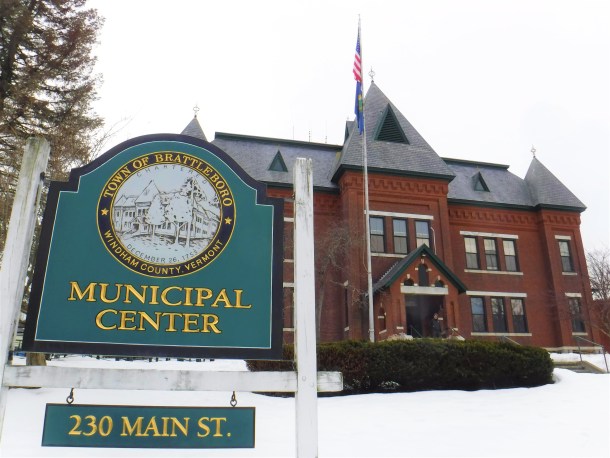
BRATTLEBORO — Organizers of a March 3 advisory article want this municipality to weigh replacing its appointed manager system of local leadership with an elected mayor. But as the vote approaches, the question of when the town should talk specifics is also up for debate.
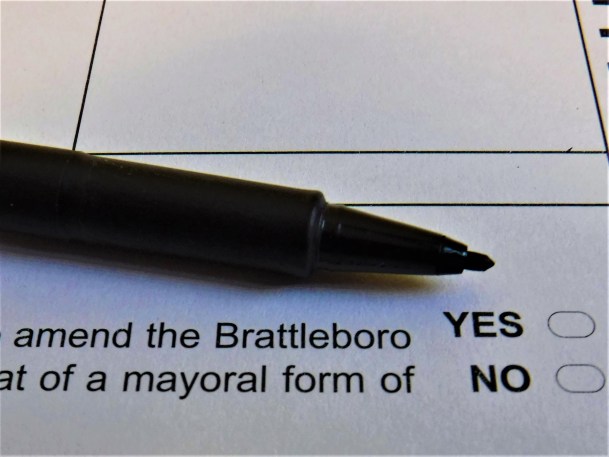
The specific wording of the non-binding resolution asks, “Shall the voters of the Town of Brattleboro advise the Selectboard to amend the Brattleboro Town Charter to replace the Selectboard form of governance with that of a mayoral form of governance?”
“I want to know if people want to explore this, and the best way to do that is to have a town-wide vote,” says Dick DeGray, a former Selectboard chairman and article sponsor. “Because it is a long, cumbersome process, there’s no sense in putting time and effort into a discussion if there isn’t any interest.”
As a result, supporters want to gauge public opinion generally before proposing any particulars — a move that’s frustrating voters seeking more information.
“Nothing has been decided — no structure, no nothing,” says fellow article sponsor Daniel Yates, president of the Brattleboro Savings and Loan. “This is simply about putting the question to the voters. The time for a debate will come if and when the voters say yes to one.”
With only one pre-election public forum scheduled — March 1 at 3 p.m. at Epsilon Spires at 190 Main St. — many residents are turning to Facebook to express their concerns about the lack of details.
“This would be a profound change to our town affecting everyone in ways we cannot really know and needs be discussed and analyzed way BEFORE the ballot vote,” one resident has posted.
Eight of the state’s cities and towns now elect leaders who are part of the Vermont Mayors Coalition. Burlington and Rutland have full-time positions, while Barre, Montpelier, Newport, St. Albans, Vergennes and Winooski have posts that are supplemented by professional managers.
Brattleboro’s nearly 9,500 voters currently elect a five-member Selectboard that, in turn, chooses a town manager to preside over a 150-employee municipal government. Article sponsors say they don’t oppose any of the current people in the posts. Instead, they’re concerned that only a simple majority of the Selectboard has a say in choosing the locality’s top leader.
“It only takes three people to hire or fire the town manager,” DeGray says. “When you have a population of 12,000, we ought to have more say. I look at it as accountability to the stakeholders. I want to pick who’s leading my community.”
DeGray proposed the same idea seven years ago when current Town Manager Peter Elwell’s predecessor stepped down and the Selectboard started looking for a replacement.
“One of the things we don’t know is what the voters actually feel about changing the form of governance,” DeGray says. “The best way to find out is to take it right to the people and say, ‘Are you happy with this?’”
Although article sponsors want to wait before determining specifics, they have taped a half-hour Brattleboro Community Television program that offers a few suggestions.
“I would foresee a mayor who is both the administrative and political head of the town and has the ability to do the hiring and, when necessary, the firing,” Yates says in it. “A mayor who would have the authority to run the town the way a CEO has the authority to run a company.”
DeGray, for his part, is advocating for a paid position with a three-year term.
Both men envision replacing the current five-person at-large Selectboard with some sort of bigger governing body whose members would represent each of the town’s three state legislative districts.
“Burlington uses a council and Rutland uses a Board of Aldermen and, in either case, there is veto authority,” Yates says. “The board can pass an ordinance and the mayor has the authority to veto that. The same board, with a majority vote, would have the ability to override that veto, so it continues to provide checks and balances to ensure that nobody has so much power.”

Such a board could bring an end to Brattleboro’s annual representative town meeting, which this municipality has used for decades to keep the size of the participating electorate manageable.
“A continuation of that under a council and mayoral form of governance would be somewhat superfluous,” Yates says.
If the town approves the resolution, local leaders still would have to decide the details and request a charter change from the state Legislature in a process that would take at least a year.
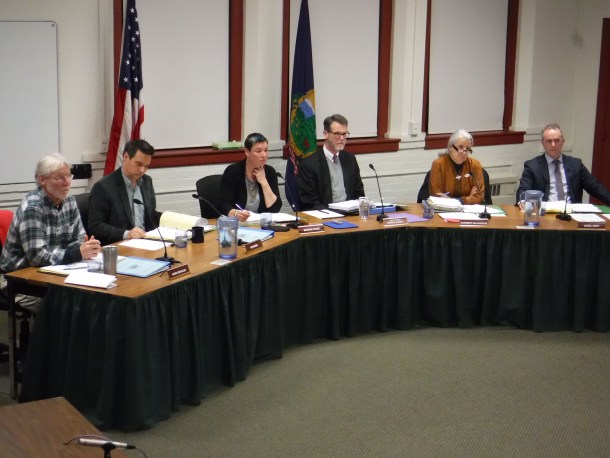
Although debate on the article has been limited to the local press and social media, all five current Selectboard members have expressed individual reservations.
“I really get nervous about the mayor being an elected position when right now our town manager was picked based on a resume,” board chairwoman Brandie Starr says.
Adds colleague David Schoales: “It’s putting one person in a position of authority with no oversight except an election however many years the job would be for.”
And Daniel Quipp: “I am a huge fan of our professional and politically neutral town manager. I think that a vote for a mayoral system will lead to less democracy, more executive power and create instability in our town government.”
And Elizabeth McLoughlin: “The proponents of this initiative have not been clear about their intent — what kind of mayoral government do they want and why do they want it?”
And Tim Wessel: “Without specifying what type of mayoral system is intended in the vote, we will be left with more questions than answers if a ‘yes’ vote prevails. As a voter, I can’t imagine supporting something without knowing the parameters and full implications involved.”
As town manager, Elwell has confined his comments to what he thinks the current system does right.
“An elected governing body and a professional staff serves most communities the best,” Elwell has told the local press. “That’s a preferred system of governance for maximizing democracy and a municipal staff’s ability to implement the community’s goals.”
Article sponsors have stressed they don’t want to run for mayor but would support Elwell if he did.
“Someone said I have a secret agenda,” DeGray says. “I have a strong interest in the mayoral form of government, but it’s all moot unless you know there’s support for a change.”
Adds Yates: “People have talked about this, but the question is never answered. This lets the voters decide whether or not this is something that should be pursued.”
UPDATE: Since publication of this story, a pre-election public forum has been scheduled for March 1 at 3 p.m. at Epsilon Spires at 190 Main St.
