


Vermonters from across the state weighed in Tuesday night on a bill that would require alleged domestic abusers who have been served with a restraining order to relinquish their firearms.
H.610 would also close the “Charleston loophole,” which can be a way for people to obtain a gun before a federal background check is complete. The House Judiciary Committee held the public hearing at the Statehouse, drawing about 200 attendees.
The House chamber was largely split between two colors: neon hunting orange for those who opposed the bill, and shades of purple for those who supported it.
“No weapon is capable of making an assault,” said Jim Sexton from Essex. He came to the hearing dressed in a sports jersey, except where a player’s name would typically go, “amendment” was featured above the number “2.” He asserted his view that abusers need reform, not the state’s gun laws.
Under the legislation, those served with a restraining order for domestic abuse would have to give up their guns until the order expires and not live in a residence where firearms are present.
Many who supported the bill represented domestic violence organizations or were survivors of domestic abuse themselves.
Becky Gonyea, executive director of the Clarina Howard Nichols Center and a survivor herself, said victims of domestic abuse are terrified right after they obtain a relief from abuse restraining order. This bill, she said, could bring those victims solace.
“I have seen survivors not leave our shelter for weeks or even months in fear of being killed by an abuser,” Gonyea said.
Heading into the night, tensions were heightened by a post in the Gun Owners of Vermont Facebook group.
The post included screenshots of an email exchange forwarded by a House Judiciary Committee assistant. It showed House Judiciary Chair Maxine Grad, D-Moretown, seeking approval of edits to a legislative draft suggested by Sarah Robinson, deputy director of the Vermont Network Against Domestic Violence.
“Once Sarah ok’s it, it can get sent out and posted,” Grad wrote in an email to her vice chair, Rep. Martin LaLonde, D-South Burlington, the committee assistant and the legislative counsel working on the bill.
Erik Davis, head of the Gun Owners of Vermont, wrote in a Facebook post that members are “mad as hell that your representatives are conducting business in this manner,” arguing that gun rights advocates had been cut out of conversations about the bill.
John Klar, a Republican candidate for governor, referred to the post — which has almost 100 comments, many calling Grad’s actions unethical — as he shared his opposition to the bill.
“This is a fraud. This is not just unconstitutional, it is absurd,” Klar said. “Maxine Grad and Mr. LaLonde, you have sat here and put together this bill as lawyers, you could not defend this in 100 years. And yet Sarah Robinson from the Vermont Network is the one who drafted this legislation, we have the emails. And you make sure she approves all the amendments.”
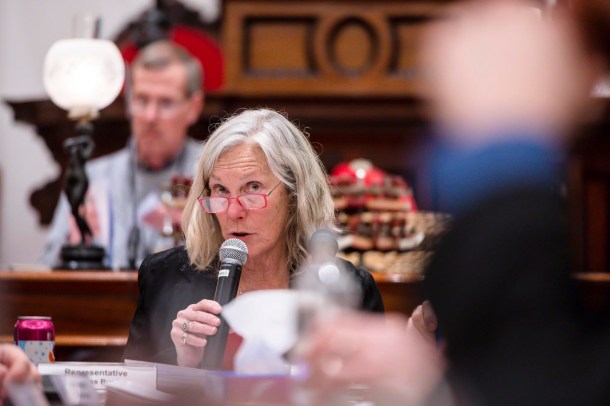
After the hearing, Grad said Robinson was not the only outside representative providing feedback on the legislation. She said Robinson worked with the Vermont Police Association, the Department of Public Safety and the Attorney General’s Office, who were opposed to some parts of the bill, to suggest revisions. Robinson was the communication point person for these groups, Grad said.
“This is very common. It happens all the time,” Grad said. “Frankly, there’s nothing unethical about the current legislative process in terms of people coming to consensus and getting the language to be considered.”
Grad said she is still in strong support of the legislation and that she expects it to be voted out of committee this Thursday.
Before the hearing, Rep. Martin LaLonde, D-South Burlington, said the committee has heard from gun advocates and taken their views into account.
“We’re at the point where we have narrowed down the areas of disagreement, except for the gun rights groups,” LaLonde said. “The only way to satisfy them is to put the bill back on the wall.”
Another woman at the public hearing told lawmakers she experienced abuse by her father when she was a child. She urged them to support the bill that she thinks could save lives.
“I am a survivor. I have seen and felt the rage of the moment of violence,” she said. “Broken bones and bruises will fade, but a firearm will kill.”
She didn’t feel comfortable sharing her name out of fear. “I’m frightened by the conversations here tonight,” she said. “The level of anger here is very high.”
John Walters contributed reporting.

