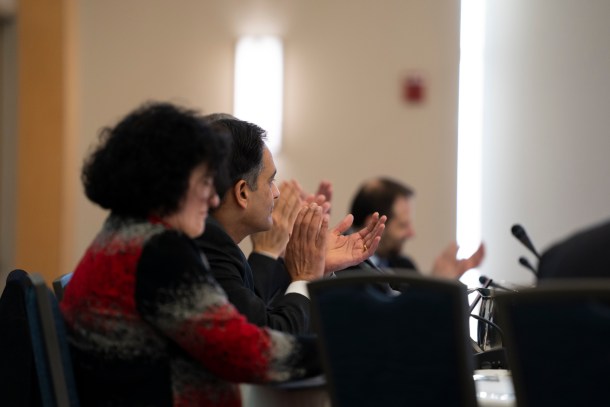
Sawyer Loftus and Emma Burnham are news reporters with the Vermont Cynic, where a version of this article was originally published.
BURLINGTON — Despite a push from the Vermont Legislature to require gender balance on the University of Vermont board of trustees, members are signaling their resistance.
The potential new law, which is currently being weighed in both the House and Senate, have left some on the board to call the mandate a “legislative overreach.”
Currently, of the 25 board members, six are female and 19 are male. UVM’s student population is 60% female, according to UVM’s 2019 enrollment report. Additionally, 56% of faculty and staff are female identifying.
Some faculty, students and staff have also signed a petition that calls on the board to diversify, adding internal university pressure.
The proposed state law would require that 12 or 13 members of the board be women or nonbinary by 2025.
The board announced it had approved changes to its guidelines when selecting new members to “reinforce the importance of seeking diversity,” according to a press release last Friday.
In the course of conversation about the legislation during that day’s board meeting, trustees said they would be unable to meet the potential 2025 deadline.
“Instant fixes are not possible, so the 2025 deadline is so arbitrary,” trustee John Bartholomew said. “It’s utterly impossible.”
However, Sen. Chris Pearson, P/D-Chittenden, the primary sponsor of the Senate bill (S.248), said the 2025 date is not an arbitrary one.
He and those he worked with to craft the legislation strategically picked that date because most of the trustees’ terms would be over by then, Pearson said.
“Any time you’re proposing something that is controversial, you try to basically remove as many hurdles as you can,” he said. “[It’s] an attempt to work with the board to phase out the imbalance.”

Rep. Johanna Donovan, D-Burlington, who is also a trustee and was at the meeting Friday, said she feels the legislation isn’t needed and that the Legislature doesn’t have the authority to make this change.
“It is certainly my feeling that it is a legislative overreach,” Donovan said.
Specifically, the group of trustees who are selected by the Vermont Legislature have been discussing ways to increase diversity and encourage more diverse candidates to come forth, she said.
“I think we’ll get there, and as I said privately to my friend that launched the legislation in the House, we will get there,” she said. “We will get there, on our own.”
Donovan said she couldn’t speak for other members on the board, but she hopes that the Legislature will leave it up to the university to make these decisions.
Pearson said the Vermont Legislature has every right to make changes to the structure of the board as UVM is a public institution and the Legislature wrote the structure of the board into law.

“We’re not suddenly talking about the board for the first time in law,” he said. “We’re not commandeering that. I’m sure the board doesn’t like that. Clearly this is not something we have done much with.”
Two other representatives who are also trustees — Reps. Curt McCormack, D-Burlington, and Kevin Christie, D-Hartford — both signed on as co-sponsors to the House version of the bill (H.709).
Ron Lumbra, the vice chair of the board, told reporters before Friday’s meeting that the board has been focused “very intensely” on diversity in its recruitment process but decided it needed to update its governance guidelines to reflect that commitment.
“It doesn’t reflect our focus on diversity the way we are actually practicing it,” he was quoted by VTDigger. “We thought it was a great opportunity for us to improve on that and really be explicit.”
Lumbra said he didn’t know much about the bills in the Vermont Legislature but said he believed quotas were “dangerous.”
“One of the challenges with affirmative kind of quotas is that it can harm the image and brand of a diverse candidate coming onto the board,” said Lumbra, who is African American.
Pearson agreed the changes made to board selection policies reflect the need for greater diversity, but said they aren’t enough.
“I think it’s good they are acknowledging the dynamic, but I know those are sort of aspirational directives,” he said. “They’re not forcing their hand, our proposal is, ‘no, you will do this.’ This is not something we hope you get to.”
At last week’s board meeting, Donovan said she hopes the issue gets pushed further, to which UVM President Suresh Garimella replied with what Donovan described as a joke.
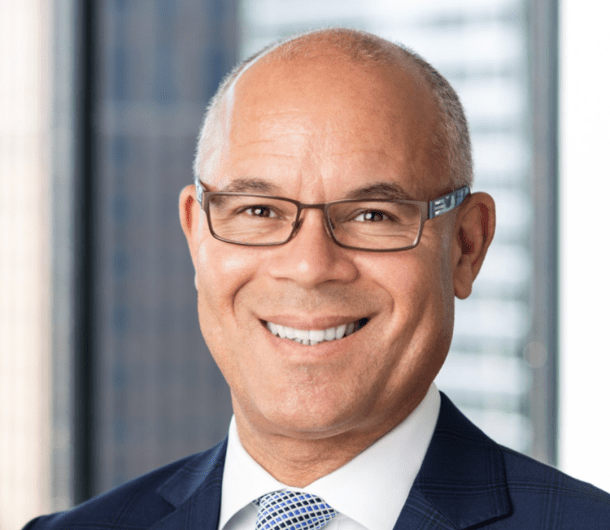
“You could fire me and hire a woman,” Garimella said.
Donovan said that her take on that comment was that Garimella was attempting to bring a moment of levity to a difficult conversation.
“I’m surprised that there is anything being read into that, because in this context, the president himself is a picture of diversity,” she said.
In a Saturday email to the Vermont Cynic, UVM spokesperson Enrique Corredera said he had looked into the matter and it was “a lighthearted comment.”
Garimella said in a statement to the Cynic on the same day that he is supportive of current board efforts to diversify.
“I believe deeply in diversity in all forms in our faculty, staff and student bodies,” Garimella said. “I also recognize the value of diversity on the board, although the university president has no role in the selection of any trustees, and rightly so.”
In the Senate, the bill is currently in the Education Committee, which is chaired by Sen. Philip Baruth, D-Chittenden. Baruth is also an English professor at UVM and a co-sponsor of the legislation.
Baruth said the committee is taking testimony on the measure and is in the process of reaching out to UVM and the board. He said that from his perspective, something is clearly not right with the make-up of the board.

Board members need to assist the university in bringing in donors and support, but there’s no reason women can’t do that too, Baruth said.
“One of the things they try to do is select trustees that can try to help them with their capital campaigns,” he said. “But, I would think in this day and age, there are plenty of qualified female candidates that have access to donors and help not just bring in money, but steer the board.”
For now, Baruth sees the role of the Legislature as overseer of the board and said his committee will work to find a solution.
Last week’s meeting marked the last one for student trustee Sydney Hilker, dropping the number of women from six to five on the board.
Her replacement is a man, said Student Government Association president Jillian Scannell.