


Andrea Smith awoke for work one morning and headed for her shower.
On her way, she paused in front of the dryer in the bathroom of her Charleston home.
She didn’t know where she was.
That was in March 2017. Her problems would only escalate.
The 51-year-old corrections officer tremored daily. The muscles in her arms and legs tightened and ached. She lost her senses of smell and taste, grew winded after little strain and started forgetting things, like the PIN for her debit account. Her heart raced constantly.
“I have to take four muscle relaxers a day just to fricking walk,” she said in an interview, pulling up her lower pant leg to reveal blots of black mottling her skin.
Smith is one of several officers at Northeast Regional Correctional Complex who believe they suffered health effects from ozone gas inside the prison in 2017.
The gas leaked from defective and improperly installed laundry systems, according to Vermont Occupational and Health Administration investigators, at one point measuring at a level that maxed out a detector.
Supervisors never warned of the risk, and at least 10 state employees were exposed to the gas, documents from the investigation show.
There were no apparent published accounts about the leak, reported illnesses or frenzied fallout from the situation, which stretched from December 2016 to August 2017. But records from the case detail a plan gone wrong and a scramble to solve the problem.
Officials from the Department of Buildings and General Services (BGS), partnering with the Department of Corrections, set out in 2016 to cut costs and make state facilities more energy efficient. The state contracted in November that year with Daniels Equipment, a New Hampshire company, to install ozone-injection systems in prison laundry machines — a first for BGS.
The systems are said to eliminate the need for hot water and detergent. In prisons, that would yield financial, health and safety benefits.
Contractors retrofitted washers in the St. Johnsbury prison, its adjacent work camp and Northwest State Correctional Facility in St. Albans. The projects, state officials wrote in a 2018 report, cost $13,500 and would have saved about $22,000 annually in electricity costs.
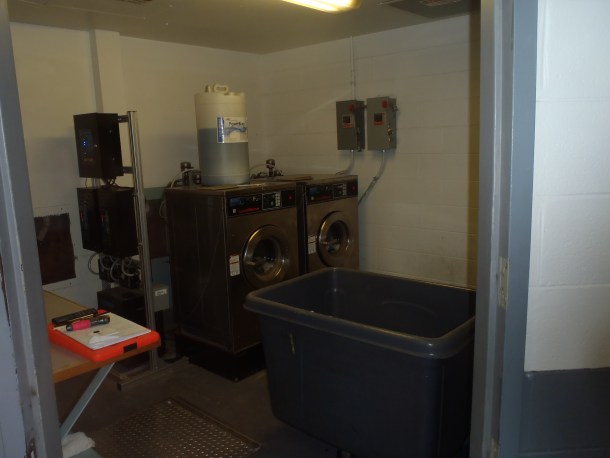
Less than a year into the rollout, workers shut down all three machines, and VOSHA handed down violations and fines to the two departments involved. Investigators from the agency uncovered a string of missteps and a group of guards left ill — or impaired, like Smith.
“I just used to be a strong person, and I’m not anymore,” said the officer, who is considering legal action against the contractor. “The gas just took all that out of me.”
‘It’s only getting worse’
Smith, who normally worked in an office, said she had heard about the odor clogging the air around the inmate laundry room after the ozone system came in December 2016.
Two months later, because of short staffing, she began working on the floor, sometimes at the guard desk outside the laundry room, she said. Then she noticed what colleagues had mentioned.
“Just the stink,” she said. “The smell was so bad, it takes your breath away.”
She didn’t think much of it at the time.
But by March she developed tremors and breathing issues, and the other symptoms followed.
In a visit that month, she said, her doctor was stumped. Smith was referred to a Dartmouth-Hitchcock Medical Center neurologist and waited a month. The specialist there thought she might have fibromyalgia and gave her medicine for that condition, but it did nothing to ease her ailments, Smith said.
She returned to the specialist in July 2017. He performed an MRI, and Smith was relieved to see she had no brain damage. The doctor recommended that she visit physicians in Boston. After a six-month wait, the Boston doctors told Smith that her nerve receptors were damaged. But she said they couldn’t do much to solve the problem.
All the while, her pain grew — and it continues to worsen.
“It has not improved a bit,” she said. “It’s only getting worse and worse and worse … My muscles get so tight, it feels like it’s ripping your joints apart.”
‘An unfortunate series of events’
VOSHA received a complaint in September 2017 about the conditions inside the prison, and on Sept. 20 that year investigators arrived at the facility off Route 5 in St. Johnsbury.
They spoke with several other employees who detailed health problems they’d experienced in the last few months.
One correctional officer described heart fluttering and minor nausea. Another told investigators about suffering from pneumonia, coughing and excess phlegm.
Smith said she did not recall any inmates mentioning the situation but asked, “How would they know?” She did say there were many flu-like cases among inmates at the time.
There was no information about the effect on anyone other than correctional center employees in the VOSHA records obtained by VTDigger.
Inspectors looked at the facility’s OSHA 300 forms — logs for work-related injuries and illnesses — which noted further issues believed to be linked to the gas system. Officials redacted identifying information in each form included in records obtained by VTDigger.
The first form is dated May 1, 2017. “Allegedly came into contact with carbon monoxide,” the log reads. “Felt joint pain, weakness, shaking, sinus headaches, can’t sleep.”
The ailments were “allegedly [caused by the] ozone laundry system,” the document says, and the person had to go to the emergency room for treatment.
In a form dated Aug. 15, 2017, an employee complained of “alleged exposure to [the] ozone laundry system.”
“Pain in joints, trouble breathing, has pneumonia + lung infection,” the log reads.
Two employees detailed health issues in reports dated Sept. 20, 2017.
“Became fatigued, light headed + dizzy, subsided when I got fresh air,” reads one report, which notes the possible cause as “CO” exposure.
The other log from that day says an employee experienced “walking pneumonia,” with the cause listed as “allegedly carbon monoxide due to improper venting of ozone laundry system.”
Short-term — one hour to one month — exposure to ozone causes respiratory problems, according to a 2019 Environmental Protection Agency report about the gas. Long-term — more than a month — exposure is likely to cause respiratory impacts, too, according to the document.
Research also suggests a cause-and-effect relationship between long- and short-term ozone exposure and central nervous system effects, the report says. Those effects, according to previous reports published by the agency, may include impacts on memory.
Despite the option to mark the cases as involving respiratory issues, poisoning or “all other illnesses,” each of the incidents was listed as an “injury” in the master OSHA 300 log.
Alan Cormier, superintendent of the prison and adjacent workcamp, told an investigator that he didn’t know what OSHA 300 forms were, according to case records.
Cormier said “there are no first reports of injury and that he has been unaware of any significant health problems other than employees claiming that the [ozone] generator smell was unpleasant and unhealthful,” the inspector wrote.
Interim Corrections Commissioner Jim Baker declined to comment on the case last week, citing potential litigation. He was appointed to the role at the end of 2019, after the resignation of Mike Touchette in the wake of scandals throughout the prison system.

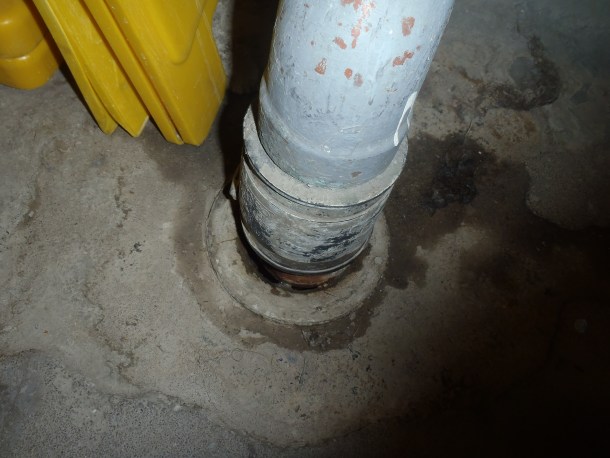
In mid-August 2017, according to corrections officer Smith, state crews checked out the floor drain in a closet connected to the laundry system, which employees had pointed to as the source of the odor.
The maintenance workers poured concrete in a gap in the drain.
Smith said she talked to one of the specialists involved.
“So what’d you find?” she recalled asking him.
“They’ve been gassing you the whole time,” he said incredulously, according to Smith.
Deputy BGS Commissioner Jennifer Fitch, in an interview last week, said that when her agency found out about the complaints in August 2017, it jumped to solve the problem.

“I think it was an unfortunate series of events,” Fitch said. “But we did take immediate action as soon as we heard anything.”
Fitch said that by the end of that month, workers shut down the ozone machines, and when someone from Daniels Equipment came to the prison to try to re-create what happened, the person found a small amount of ozone leaking into the closet adjacent to the laundry room. Fitch said the level was nowhere near the OSHA exposure limit.
But that contractor employee told VOSHA investigators that his ozone detector maxed out, according to case records.
The detector measured .14 ppm at the drain, investigators wrote. The VOSHA permissible exposure limit for an eight-hour period is .1 ppm; for short term periods (15 minutes), it’s .2 ppm.
Ralph Daniels, president of Daniels Equipment, did not return an email sent last Wednesday seeking comment. A receptionist at the business said the next day that Daniels was out of the office until the following week but could see the email. Fitch called the company an expert in the ozone-laundry field with a reputation for successful installations.
‘If we had kept going, somebody would’ve died’
VOSHA investigators spoke with representatives of Alliance Laundry Systems, which manufactured the washers inside the St. Johnsbury prison, on Nov. 29, 2017.
It turns out, the machines shouldn’t have been rigged with ozone generators in the first place.
“The washing machines were a lower quality model and were not rated to be used with ozone gas,” an investigator wrote.
For the machines to properly use ozone gas, they would have had to be outfitted with a specific type of seal, the manufacturer’s rep told investigators.
Another revelation detailed in records: Even though the ozone systems were meant to eliminate the need for hot water, the prison laundry machines had continued using it.
That might have caused or exacerbated the gas buildup, according to a report from a state plumber who visited the prison on Aug. 30, 2017.
“Shut off hot water to all washing machines using the ozone system,” the plumber wrote. “Excess ozone could be introduced into the building through vapor rising due to hot water usage. I have been told that hot water is not needed to sanitize laundry with this system.”
The plumber also recommended that a ventilation expert should see whether the area in and around the laundry room had proper airflow. And, the plumber wrote, the cement that workers had poured into the drain connection should be removed because it violated code.
Ventilation was the culprit behind whatever happened, said Fitch, the BGS deputy commissioner.
“We had a vent in that room as well; however, upon further inspection … we realized that that fan was not working properly,” she said, referring to the closet next to the laundry room.
“It wasn’t that the system wasn’t functioning properly,” she said. “We weren’t ventilating the space in the way that we should.”
Fitch emphasized that she could not say whether employees at the prison were exposed to ozone, but “at no time did anyone come and measure and actually document that any ozone had … released from the system.”
She also said that the closet drain piped wastewater from sources other than the laundry machines.
“What’s hard to know in all of this is, people believed they were smelling ozone … but they could’ve been smelling other things as well,” she said.
Fitch also said that BGS could have started the machines again, but decided not to out of an abundance of caution.
Smith had a different take.
“I think if we had kept going, somebody would’ve died,” the officer said. “And they still wouldn’t know what was going on.”
‘I feel like I’m 90’
VOSHA issued violations and fines to both the Building and General Services and Corrections departments as a result of the situation.
“Employees were exposed to fugitive Ozone gas in their breathing zones from December 2016 to August 2017 with significant health effects without being informed through an available [safety document] & applicable training regarding the hazards of this hazardous chemical,” notes one violation report.
Initially, officials fined the Department of Corrections $3,500 in February 2018 for two serious-category violations. The fine was later halved, and the violations downgraded, after a settlement agreement in March of that year between the department and VOSHA. The same happened in a settlement between VOSHA and Buildings and General Services, which in the end was fined $4,250.
“I think we were trying to support our goal of reducing carbon emissions, and I believe we did everything right to set the system up for success,” Fitch said. “Had the fan been working, I think that this wouldn’t have occurred.”

She said her agency is unlikely to use ozone technology again in the near future because of the stigma surrounding it after the episode in St. Johnsbury.
Smith is still angry.
She feels the situation should never have happened and that the state addressed it haphazardly afterward.
Her attorney — part-time prosecutor and state employee union rep Vince Illuzzi — said: “You had people who had never worked with ozone before. They were doing the best they could.”
These days, Smith said, she can no longer jog the miles she used to, or handle a weed wacker for more than a few minutes. She can’t blow her nose and has to draw mucus backward, into her throat, instead.
In the 1990s, she said, she was the first woman to join the tactical response team at the St. Johnsbury prison. She trained correctional officers in nonlethal use of force, too — things like hand-to-hand combat.
But since her health problems began in 2017, she can no longer defend herself.
“I’m 50 years old,” she said. “And I feel like I’m 90.”
