
IN JAN. 23’S FINAL READING…
New labor union leadership takes an aggressive approach, paid leave bill passes the House and a new bill was introduced to decriminalize hallucinogens.
THE TOP TAKE
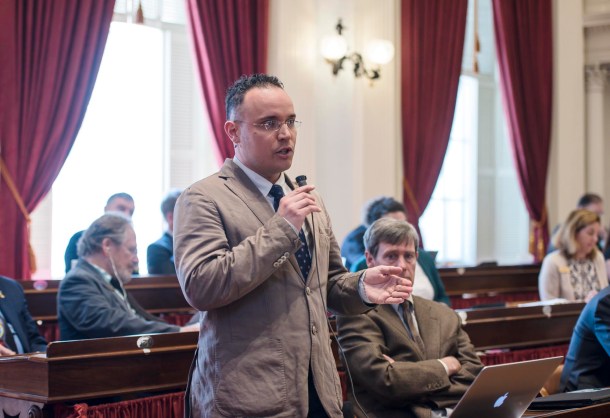
Vermont’s second-largest labor union is putting pressure on Democratic lawmakers by threatening to withhold all endorsements for the party’s legislative candidates for an entire election cycle.
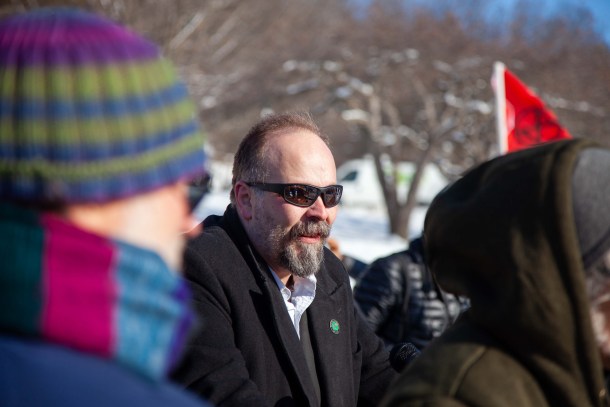
Last fall, members of the Vermont State Council, AFL-CIO elected a leadership slate promising a tougher edge to political advocacy. In December, the union adopted a new policy that threatens a blanket two-year moratorium on endorsements for political parties that don’t back the union’s top legislative priorities. “The idea is, we want to hold parties accountable,” said David Van Deusen, the union’s executive director. “Two of the three parties have strong pro-labor platforms, but we want their active support as well.”
In reality, this policy is almost exclusively aimed at the Vermont Democratic Party. Its legislative majorities are uniquely positioned to determine the fate of a bill.
“It’s clear [the union] is going to be more selective in its endorsements,” said Sen. Anthony Pollina, P/D-Washington, chair of the Vermont Progressive Party. “That’s a good thing.”
It could be a very good thing for Progressives, if the AFL-CIO withdraws its support for Democratic candidates.
One piece of legislation is most likely to trigger a moratorium. That’s H.428, a “card check” bill that would allow immediate recognition of a union when organizers collect signed cards from a majority of a workplace’s employees. (Currently, organizers have to get majority support and then go through an election process which allows employers to coerce workers to vote “no.” The bill would apply only to public sector organizing, because private employers are covered by federal labor law.
The bill was introduced last year, but has made little headway. “We’re going to have a hearing on it and see how it goes,” said Rep. Tom Stevens, D-Waterbury, chair of the House General, Housing and Military Affairs Committee, which has jurisdiction over H.428. “The path it will take is unclear, but I’m committed to taking it up and discussing it.”
Such statements are often a prelude to inaction. If that’s the case, the AFL-CIO will have to decide whether to launch the doomsday weapon it has created. It would be a high-stakes gamble on both sides. The union’s hardball tactics would risk alienating the Democrats, who are almost certain to retain their big legislative majorities. But the loss of financial, organizational and volunteer support from a union with nearly 10,000 members would make it tougher for Democrats to win — and could make the Progressives more competitive in swing districts. – John Walters
WHAT YOU NEED TO KNOW
— The paid leave bill passed the House, and is on its way to the governor’s desk. It’s likely he’ll veto it, which isn’t good news for House leadership, because today’s vote is not veto override proof. The bill landed 89 votes in favor, but 100 yes votes would be needed to overturn a veto. – Grace Elletson
— At a Thursday press conference, Let’s Grow Kids CEO Aly Richards said new data crunched by her organization shows that 3 out of 5 children in Vermont don’t have access to affordable and accessible child care. They also found that 2,000 more early childhood educators are needed.
But Richards said her organization does not have a position on Gov. Phil Scott’s somewhat controversial proposal to legalize sports betting in the state to add $4 million in revenue for child care subsidies. – Grace Elletson
— The Department of Mental Health has come out against the legalization of a marijuana market in Vermont. David Rettew, a DMH medical director, told House Health Care lawmakers that his agency is concerned that a legal market would increase usage among teens.
“When you put more cannabis shops than McDonalds and Starbucks on every street you increase usage,” Rettew said. “You send a message to kids that this is OK.” – Grace Elletson
— A new piece of legislation would allow victims of swatting — a form of harassment where police are called to respond to fake threats with aggressive force — to sue for damages.
The bill, introduced by Rep. Selene Colburn, P-Burlington, would allow victims to sue deceptive callers for a minimum of $500. – Grace Elletson
— Harvard Business School professors Deepak Malhotra and Michael Luca told lawmakers Thursday their research revealed that handgun waiting period laws reduce gun homicides by about 17%, and reduce gun suicides up to 11%.
Lawmakers are attempting to gain support for waiting period legislation, previously vetoed by Gov. Phil Scott. With a veto override unlikely, focus on the issue will likely turn to two bills, one seeking a 48-hour waiting period and another calling for a 72-hour waiting period. – Alan Keays
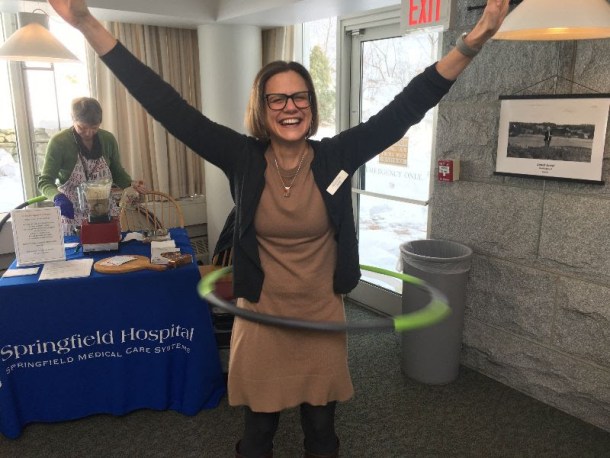
— The Statehouse cafeteria hosted a rare outbreak of hula hooping Thursday morning. It was part of a display by the Vermont Association of Hospitals and Healthcare Systems of wellness promotion programs.
Offerings included low-sugar pumpkin spice smoothies, cucumber-infused water, and the chance to rediscover the joys of hooping.
“If we can offer exercises you want to do and look forward to, you’re more likely to stick with them,” said Devon Green, of VAHHS. Quite a few passersby gave hooping a try, but sadly, no lawmakers stepped up — apparently fearful of looking the fool. – John Walters
REPORTER’S NOTEBOOK
Rep. Brian Cina, D/P-Burlington, recently introduced a bill to decriminalize the use of some hallucinogens in the state. The bill aims to decriminalize the use of psilocybin, peyote, ayahuasca, and kratom.
VTDigger’s Grace Elletson caught up with Cina to learn more about the bill.
GE: Why did you introduce this bill?
BC: I introduced the bill to decriminalize specific plant medicines that have a medicinal, cultural, spiritual, religious entheogenic purpose.
GE: So do you think the contemporary persecution of these plants is misguided, and if so, why?
BC: Yes. It’s an act of decolonization to say the government should get out of the way and let people have access to plant medicines and let people make a personal choice about how they’re going to use plant medicines.
GE: What’s your response to concerns, that are contested, that these drugs pose a public health risk?
BC: There are prescription drugs that we give people that could cause psychotic illnesses if they’re misused. We have a pharmaceutical industry that we allowed to guide medical practice to increase the prescription of opiates … there is a long history and tradition around the use [of these plants]. Instead of criminalizing this behavior and profiting off of their stigma we should encourage people to learn about the plants.