


The Brattleboro Museum and Art Center is dealing with unexpected complications after receiving a $685,000 gift of historical artifacts from a long-deceased philanthropist later discovered to be the estranged brother of the drugmakers at the heart of the nation’s opioid addiction crisis.
Museum staffers accepted more than 300 Asian, European and American works from the Arthur M. Sackler Foundation at the start of 2017, only to pick up Esquire magazine later that year to see the Sackler name revealed as “The Secretive Family Making Billions From the Opioid Crisis.”
“The greatest part,” the article reported of the fortune, “came from OxyContin, the narcotic painkiller regarded by many public-health experts as among the most dangerous products ever sold on a mass scale.”
After months of work and worry, the museum has confirmed its gift wasn’t funded by profits from the opioid’s producer, mega-drugmaker Purdue Pharma, but instead from another branch of the fractured Sackler family that never manufactured or made money from OxyContin.
But that hasn’t stopped the Brattleboro institution from facing lingering concern and confusion in a town with the highest number of opioid overdoses in the state.
“Initially when the news broke, it was ‘Sackler family’ broad-brush,” BMAC director Danny Lichtenfeld says. “So many people look only at the last name and not the first ones.”
‘It wasn’t immediately obvious that this made sense’
The museum, founded in 1972 by volunteers seeking to repurpose the town’s old railroad station, is a professionally run nonprofit reaping more than a half-million dollars in annual support. Even so, staffers weren’t prepared for the offer they received four years ago.
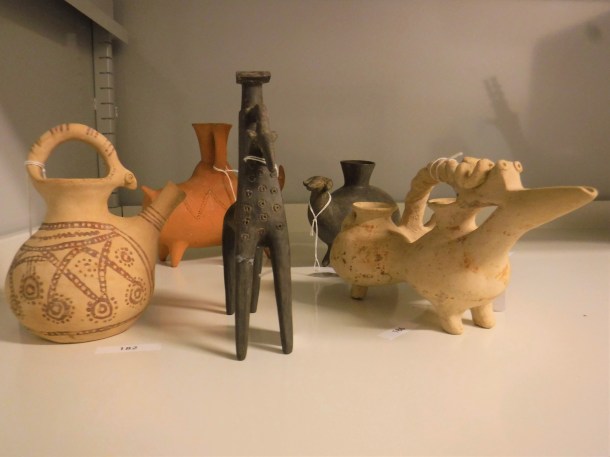
As Lichtenfeld tells it, BMAC trustee Kim Benzel, a curator at New York’s Metropolitan Museum of Art, went to graduate school with the daughter-in-law of the late Arthur M. Sackler, whose namesake foundation was looking for somewhere to donate more than 300 works of ceramic, stone, wood, bronze, gold and textiles from 2000 B.C.E. to 1850.
Most of the foundation’s usual recipients — powerhouses like Harvard University and the Smithsonian Institution — already had rarer, more renowned pieces. That’s why it reached out to smaller facilities less likely to dismiss a ceramic jar or belt buckle that, although less distinguished, have an average value of $2,000 each.
“These objects have lived thousands of years and have interesting stories to tell,” Lichtenfeld says. “But it wasn’t immediately obvious that this made sense for our museum.”
That’s because the Brattleboro facility borrows rather than collects, bringing in exhibits focusing on contemporary art. Still, it found the Sackler offer intriguing.
“Where can you go where you get to hold a 2,500-year-old bowl?” Lichtenfeld says. “We thought if we could let people touch the objects, that would be an unusual and special resource that would strengthen our educational offerings not only for students and scholars but also for contemporary artists and craftspeople.”
The foundation agreed. The 314 objects, appraised at $685,000, arrived with a half-dozen storage cabinets in January 2017.
“The donors did not ask us to publicly acknowledge them in any way,” Lichtenfeld says. “But we weren’t sheepish at all at the time about the source. We were thrilled and proud. As far as we knew, we were associated with one of the most prominent philanthropic families in the world.”
The museum trumpeted the gift in a press release published statewide.
“The extraordinary gift,” Lichtenfeld said, “will have a transformative effect on the museum and the communities it serves.”
But for all the publicity, it had no free space to display the artifacts, adding to an already active discussion about whether and how to expand its century-old building.
Then came the one-two punch.
The first, the Esquire article posted online Oct. 16, 2017, exposed how “the family’s leaders have pulled off three of the great marketing triumphs of the modern era: The first is selling OxyContin; the second is promoting the Sackler name; and the third is ensuring that, as far as the public is aware, the first and the second have nothing to do with one another.”
The second, a story in The New Yorker published a week later, revealed how “the Sackler dynasty’s ruthless marketing of painkillers has generated billions of dollars — and millions of addicts.”
The magazines landed at the museum with a thud.
“What have we gotten ourselves into?” Lichtenfeld recalls of his reaction.
Brattleboro, the first exit off Interstate 91 and the nearest Vermont community to the New England drug-route hubs of Holyoke, Massachusetts, and Hartford, Connecticut, has seen opioid overdoses skyrocket from 20 in 2010 to more than 100 (with 10 resulting deaths) this past year.
The town, population 12,046, has gone so far as to debate suing local independent pharmacies in hopes of recovering municipal money spent on related police and public safety issues. BMAC staffers knew the source of their gift wouldn’t go unnoticed. And so they began researching the Sackler family tree.
‘Many of us have had this crisis touch our lives’
What they discovered: Arthur M. Sackler, the oldest son of Eastern European immigrants, grew up in Depression-era Brooklyn alongside younger brothers Mortimer and Raymond. The three became doctors, then bought a small drug company in 1952 that made such medicine-cabinet staples as laxatives, earwax remover and topical disinfectant.
As Mortimer and Raymond ran the business, Arthur went to work in advertising, helping another pharmaceutical producer turn the tranquilizer Valium into the nation’s most prescribed drug in the 1970s.
The brothers came together in 1974 to give $3.5 million to the Metropolitan Museum of Art for a wing to house an ancient Egyptian sandstone shrine, the Temple of Dendur. But the three would have a falling-out before Arthur died of a heart attack in 1987, when the surviving siblings bought out his stake in their old company and turned it into the new Purdue Pharma.
Some argue Mortimer and Raymond followed their late brother’s advertising instincts when they began to make and market OxyContin in 1996. But Arthur, who established his foundation in 1965, had been dead nearly a decade before the drug’s debut and therefore never made money from it.
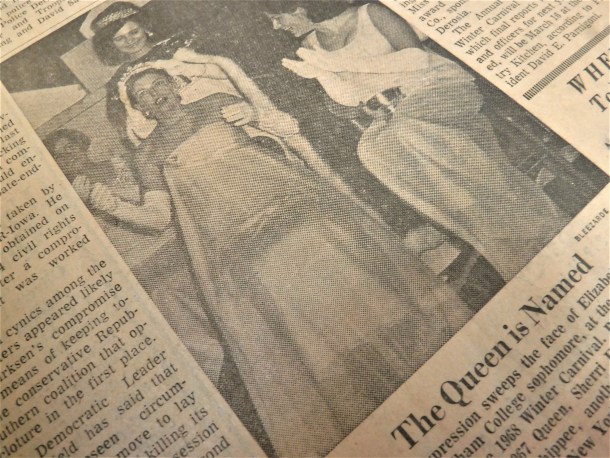
In the absence of her father, Elizabeth Sackler, 71, now serves as president of his namesake foundation. New Yorkers know her as benefactor of the Brooklyn Museum’s Elizabeth A. Sackler Center for Feminist Art. Longtime Brattleboro residents also remember her as an alumnus of nearby Putney’s former Windham College who wore two crowns in 1968 as local Winter Carnival queen and Miss Vermont.
Elizabeth Sackler, who has hired New York public relations firm BerlinRosen to deal with OxyContin questions, has limited herself to written responses and declined press requests for further comment.
“The opioid epidemic is a national crisis and Purdue Pharma’s role in it is morally abhorrent to me,” she said in a rare 2018 statement. “None of (Arthur’s) descendants have ever owned a share of Purdue stock nor benefitted in any way from it or the sale of OxyContin. I stand with all angry voices against abuse of power that harms or compromises any and all lives.”
Museums worldwide have stopped accepting gifts from Sackler family members linked to OxyContin. Institutions that have received donations from the Arthur M. Sackler Foundation are facing similar pressure under the argument his past advertising prowess contributed to the present problem.
Arthur Sackler’s widow, Jillian, is fighting that suggestion.
“Arthur pioneered newsletters to physicians and direct mail marketing back in the 1950s and 1960s,” she has said in a statement. “To say that he pioneered the methods that his brothers and their descendants used to market OxyContin is like saying that the man who invented the wheel is responsible for a massive car crash on a superhighway.”
Neither Arthur, Elizabeth, Jillian or the foundation are named in any of the scores of lawsuits against Purdue Pharma and other branches of the family. BMAC leaders cite that fact for their decision to keep the artifacts, which the museum is allowed to return but can’t sell or transfer.
“We have not and will not accept any gifts from anyone who has profited from the opioid crisis,” Lichtenfeld says. “Many of us have had this crisis touch our lives personally.”
Even so, maintaining the artifacts can be tricky. Brattleboro continues to report more opioid overdoses than anywhere else in the state — a fact that prompted the museum to host an exhibit and public speaking series last year on local faces of addiction and recovery.
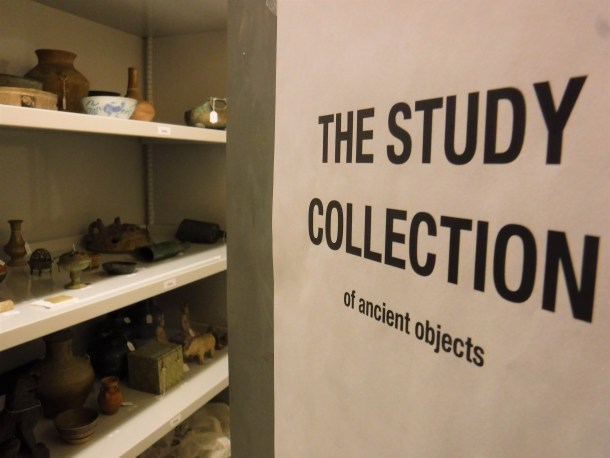
The gift, now housed in a private room with the sign “The Study Collection of Ancient Objects,” is slated to move to a $30 million arts and apartment complex the museum has proposed with the local developers who restored the nearby cornerstone Brooks House block. In the meantime, it will be displayed for the first time this summer as part of a new show of locally produced glass sculpture inspired by the artifacts.
“The only reason we would give this gift back would be to spare ourselves a public relations headache based on the misconception that Arthur M. Sackler and his descendants had anything to do with the opioid crisis, which they did not,” Lichtenfeld says. “They are not those Sacklers.”
