

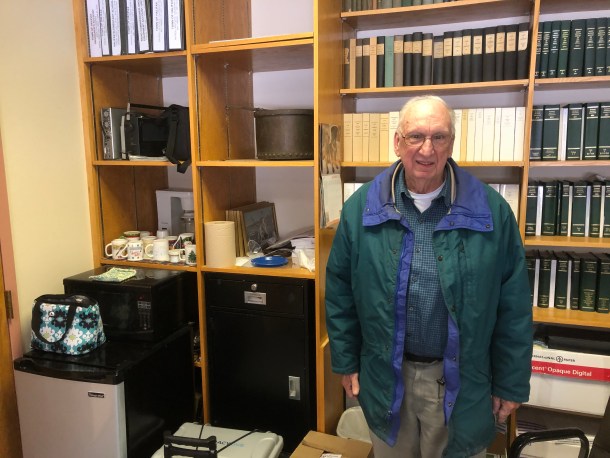
HALIFAX — Fire Chief Wayne Courser is 84 years old, but with 50 years of experience backing up his work, nobody wants him to quit the top job so they can take over.
In fact, Courser is probably a big reason why this southern Vermont town of 750 has such a healthy volunteer rescue squad, with 26 members, said Lewis Sumner, another 50-year veteran of the Halifax squad.
“For the last few years, he’s been wanting to get out of being chief,” said Sumner of Courser. But members keep talking Courser into staying on, Sumner said. “They said, ‘You tell us what to do, and we’ll do the work.’ They like him; they’d do anything for him.”
Volunteer fire and emergency medical service departments have been struggling with dwindling membership for years, not just in Vermont but in rural areas all over the country. The all-volunteer departments that remain are often staffed with people who are getting too old to do some of the physical work required.
“It’s a job for younger men and women, I’ll put it that way,” said Vermont Rep. Brian Savage, R-Swanton, and a longtime member of the Swanton Village Fire Department. Savage, 64, said firefighters often have to wear as much as 55 pounds of equipment into a building that is on fire.
“It’s an extremely hot environment, and you also cannot see,” he said.
Yet having a squad with several younger members brings its own challenges, because many of them work at day jobs and can’t always make it back to Halifax for calls, said Courser.
“We have a lot of young people — maybe in their 20’s — and some of them work out of town,” said Courser. “A couple of them work for the highway department, and they’ll respond if possible.”
Tapped-out local taxpayers
In Vermont, many of the local volunteer fire and rescue services receive support for equipment and capital costs through the city or town budget. But most don’t receive any money to pay their members.
“It’s not that the support isn’t there from taxpayers or whatever,” said Dean Gilmore, the assistant fire chief in New Haven. “It’s just, how much can they keep spending?”
That means that through mutual aid, sometimes New Haven firefighters end up fighting alongside firefighters from towns like Middlebury, Vergennes and Bristol, which have approved money to pay a stipend to volunteers for the time they spend actually working for the squad.
“We’re not in it for the pay, obviously, so it doesn’t make any difference to us,” Gilmore said.
Firefighter groups have lobbied their state legislatures and Congress for money to help, but that hasn’t gotten them anywhere either, said Gilmore, who said he’s spoken with all three members of Vermont’s congressional delegation. In October, the Federal Emergency Management Agency released $2 million in federal grants to several Vermont fire departments and academies for equipment and training.
“We’ve discussed some sort of benefits for the volunteers, but the issue is paying for those benefits,” said Gilmore.
A national trend
According to the U.S. Fire Administration, nearly 70% of all the U.S. firefighters are volunteers. The nonprofit National Volunteer Fire Council (NVFC) is starting a series of recruitment and retention seminars next year where first responders can exchange ideas and best practices for recruitment and learn about topics like diversity and inclusion, work-life balance, marketing your department and department culture.
In Vermont, there have been calls for change to the training and licensing process for first responders, after emergency services providers reported they were having trouble recruiting because the requirements were so stiff. Courser, in Halifax, said he knows the burden of training and certification has deterred some would-be volunteers.
A social center
Volunteer fire departments serve a few important functions beyond fire and rescue in small towns. In an era where small-town local schools, general stores and post offices are closing, and rural populations are dwindling, more people, old and young, are reporting that they’re feeling socially disconnected. Volunteer fire departments can serve as an important social asset and reason to gather.
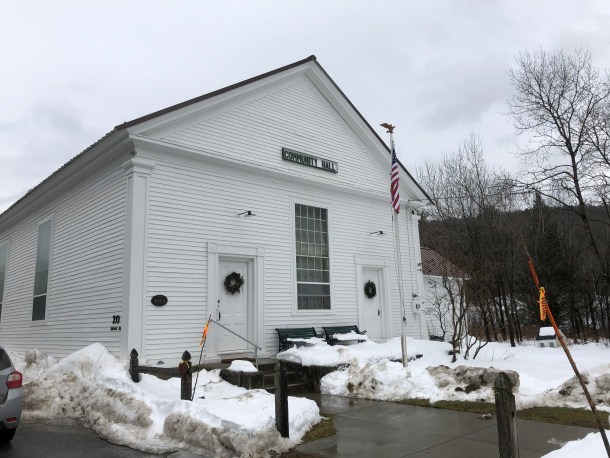
Halifax has a robust community of second-home owners and longtime residents, as well as an active community hall and a monthly townwide newsletter. Four years ago, a committee that includes Town Clerk Patricia Dow started a large annual community celebration with things like a tractor pull, a band with dancing and a pig roast.

“It’s a celebration of small-town life,” said Dow.
But as the population has changed and newcomers have moved in over the decades, the town has always been held together socially by its fire department, said Laurel Copeland, a longtime resident.
The fire department’s two annual events, a clambake and an auction, draw several hundred people, she said.
Gilmore said the New Haven Department serves a similar function.
“When we bring someone new in, we tell them when you’ve joined the fire department, you have joined one large family,” said Gilmore, who counted 24 members on his squad. “It doesn’t make any difference if you’re from Vermont or California.”
A legislative appeal
There’s still a chance that the Vermont Legislature could get involved in the future of the state’s volunteer squads. Sen. Ginny Lyons, D-Chittenden, said she’s going to add support for volunteer departments to her climate change bill, which addresses how regional planning commissions will coordinate the public response to climate disasters.
“This would be a good opportunity to bring folks in and understand what we can do,” she said. “If there’s a significant storm event, the fire chief really becomes the lead in responding to the disaster.”
