


Vermont Sen. Bernie Sanders’ policy proposals could cost more than $60 trillion over a decade and if enacted would likely add significantly to annual federal deficits and the national debt.
In addition to Medicare for All, Sanders has put forward plans to rebuild the country’s infrastructure, invest in public housing, forgive all college debt and to enact an expansive economic climate action proposal.
Economists and Sanders himself acknowledge that Medicare For All will cost between $30-40 trillion in additional federal revenue over a decade, while the Vermont senator estimates his Green New Deal proposal will come in at $16.3 trillion over the same time period.
The Vermont independent has also pledged to put $1 trillion towards fixing failing infrastructure across the U.S.A.
Sanders’ 2020 presidential campaign has said it will take $2.2 trillion to forgive all student debt and guarantee free public-college. Federal housing will require a $2.5 trillion investment under his plan.
In 2019, Sanders introduced legislation to greatly expand Social Security benefits, which the Tax Policy Center — a center-left think tank — estimates could cost around $2 trillion.
In 2016, Sanders also introduced legislation that would create a federal government-run paid family and sick leave program. The Committee for a Responsible Federal Budget, a nonpartisan think tank, reported this proposal could cost $1.6 trillion over a decade.
Sanders has put forward proposals — including a wealth tax, reversing tax cuts and a financial transactions tariff — he says will help pay for his social programs, without adding to the deficit and the national debt, but economists say his plans won’t raise enough.

Sanders has pitched a proposal to lighten
the federal deficit, but he also has
some major spending plans.
How do they stack up?
Sanders has proposed a plan to lighten
the deficit by $5.4 trillion over a decade:
Our federal deficit is projected to hit $1 trillion in 2020.
Let’s say this is $1 trillion:
= $1 trillion
Source: CBO.gov
That would add up to $10 trillion over 10 years:
FEDERAL DEFICIT, 2010-2019
WHAT BERNIE WANTS TO CUT
Source: Sanders.Senate.gov
But during that time, he also plans to spend
$60 trillion in new initiatives:
WHAT BERNIE WANTS TO CUT
WHAT BERNIE WANTS TO ADD
Source: CBO.gov
That includes:
$1 trillion on infrastructure improvements:
Source: Sanders.Senate.gov
$1.6 trillion on paid family leave:
Source: CRFB.org
$1.8 trillion to expand Social Security:
Source: Sanders.Senate.gov
$2.5 trillion on housing initiatives:
Source: berniesanders.com
$2.2 trillion on student loans and college tuition:
Source: berniesanders.com
$16.3 trillion on climate change:
Source: berniesanders.com
And $34 trillion on Medicare for All:
Source: Urban Institute
GRAPHIC CREDIT ERIN PETENKO
(Note: While Bernie has released some estimates of his spending, he’s never given
a single total in one place. We’ve used the best estimates we can find, but it’s
difficult to say for certain what some plans will cost — particularly intitiatives
that have never been tried before.)
The Sanders team says these taxes will raise nearly $10 trillion over 10 years, well short of the total amount of spending Sanders is envisioning, likely meaning the additional cost will be added to federal deficits over the years.
The Vermont senator would also drastically reduce military spending and redistribute that money to pay for social welfare programs.
On Dec. 16, the day before the Senate passed President Donald Trump’s $738 billion defense spending bill, Sanders wrote an op-ed in the Washington Post, panning the legislation.
“When I talk about changing national priorities, I’m talking about the fact that the $120 billion increase in Pentagon spending … could have made every public college, university, trade school and apprenticeship program in the United States tuition free, eliminated homelessness and provided universal school meals to every kid in our nation’s public schools,” Sanders said.
Sanders has long been focused on balancing the federal budget, reducing the deficit and therefore bringing down the national debt — which is now at more than $22 trillion.
In 1990, in his first successful bid for Congress, Sanders campaigned on wanting to reduce military spending by 10% and pledged to protect Social Security, Medicare, Medicaid and veterans’ benefits from cuts. Sanders also discussed how the federal budget should be balanced by increasing the tax burden on the wealthiest Americans.
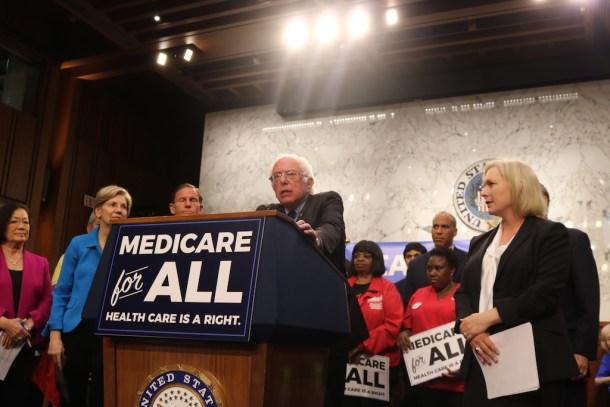
During that campaign, reducing the deficit became a key issue, with Sanders attempting to contrast himself with incumbent Republican Rep. Peter Smith, the Burlington Free Press reported at the time. Sanders had lost to Smith in 1988.
In campaign advertisements and during debates, Sanders emphasized Smith’s support for a five-year, $500 billion “deficit reduction package” that included a $60 billion cut in Medicare benefits and other social programs.
Sanders went on to beat Smith by 16 points and headed off to Washington.
In 2012 — by then as a senator — Sanders released a 12-point “progressive deficit reduction plan” that mirrors many of his tax and policy proposals he has released as a presidential candidate.
In addition to repealing tax breaks for the wealthiest Americans, adding a wealth tax on “millionaires” and implementing a financial transactions tax, Sanders would have also increased the capital gains and dividends taxes.
At the time, Sanders’ Senate office estimated this plan would reduce the deficit by $5.415 trillion over a decade.
Sanders views the recent federal deficits and increasing national debt as being caused in part by the bailing out the banks after the financial recession of 2008, the wars in Iraq and Afghanistan, and from giving tax breaks to the wealthiest people.
“I’m worried about the deficit. Every American should be worried about the deficit,” Sanders said on the Senate floor in 2012. “If you go on a shopping spree or a gambling spree or whatever it may be, and you spend a lot of money, you give away a lot of money, you have less money.”
“Our Republican friends fought for and created huge tax breaks for the wealthiest people in this country,” he added. “So our deficit hawk friends who come here every day to tell us how concerned they are, went in for two wars that they forgot to pay for and for the first time in American history they actually gave tax breaks to the very rich while they were at war.”
But while Sanders has focused spending prudently throughout his political career, he is not averse to increasing the budget deficits.
In 2015, Sanders became the ranking member on the Senate Budget Committee, a position that gave him the ability to better shape the discussion over how the federal government should spend its money.
This is when Stephanie Kelton, an advocate of embracing larger deficits, began to work as Sanders’ top economist.
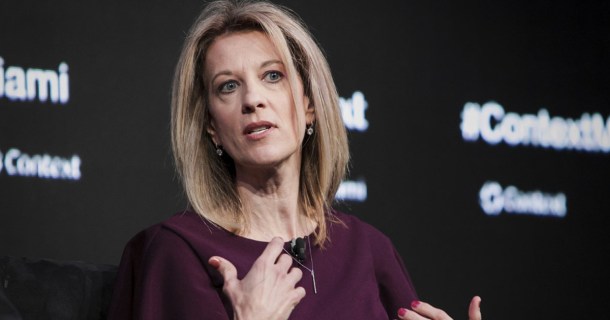
Kelton has been a strong proponent of modern monetary theory, which was born in the wake of the 2008 recession, favoring expanding federal deficits, arguing that federal governments cannot run out of funds, as they control the printing of money, and that deficits can be helpful for economic growth.
Sanders and other progressive Democrats, including Rep. Alexandria Ocasio-Cortez, D-N.Y., have embraced this economic theory as a way to pay for Medicare for All and the Green New Deal.
However, Sanders has not said whether he completely subscribes to this theory or that he would be open to ballooning the deficit.
The Sanders campaign did not respond to multiple requests for comment for this story.
During a 2015 interview with the Washington Post, Sanders described how he sees himself as a true deficit hawk — someone who places great emphasis on keeping government budgets under control — and balked at whether he agrees with former Vice President Dick Cheney about deficits not being important.
“The deficit is important and the national debt is important and they’re issues we should address,” Sanders said. “But what I think is that the disappearance of the American middle class and the reality that millions of people are working longer hours for lower wages is to me enormously important.”
“Deficits do matter, but there are issues that matter much more,” he added.
