


This story by Nora Doyle-Burr was published by the Valley News on Dec. 17.
RANDOLPH — A new campaign from the public health arm of OneCare Vermont is encouraging Vermonters, especially young adults and shift workers, to reduce their consumption of sugary beverages.
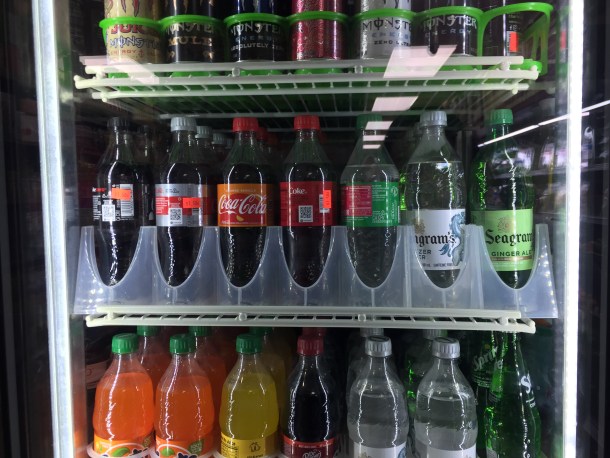
The “Sweet Enough” campaign RiseVT launched this fall aims to educate consumers about the health problems from drinking too much soda, sweetened juices, sweet tea, and sports and energy drinks, which can include excessive weight gain, diabetes and the risk of heart attacks and strokes.
The Centers for Disease Control and Prevention recommends that people limit their consumption of added sugars to less than 10% of their daily caloric intake, but Americans consume three to six times more than that, often from beverages.
By working with hospitals, schools and the beverage industry to highlight healthier options, the campaign aims to make it easier for Vermonters “to swap those out for something that is better for you,” said Marissa Parisi, RiseVT’s executive director.
RiseVT began in Franklin and Grand Isle counties in 2015 and has since expanded to 10 hospitals across Vermont, including Gifford Medical Center in Orange County and Mt. Ascutney Hospital and Health Center and Springfield Hospital in Windsor County.
RiseVT is one element of OneCare Vermont, an accountable care organization owned by the University of Vermont Health Network and Dartmouth-Hitchcock Health that aims to reform health care by paying providers a fixed per-patient amount, rather than the traditional fee-for-service. The Green Mountain Care Board is scheduled to vote on OneCare’s proposed $1.43 billion budget Wednesday. The organization has been facing questions — including from the state auditor — about whether it is delivering the health improvements and cost reductions it said it would.
RiseVT’s effort comes following a survey the organization conducted that found that young men, parents 35 and younger, and shift workers such as plow drivers and licensed nursing assistants are the biggest consumers of sugar-sweetened beverages in the state, Parisi said. As a result, the campaign is targeting them in its advertising.
One ad featured on RiseVT’s Facebook page has an image of a young man rowing a boat with text that says, “I swapped my daily soda for a gut healthy kombucha.”
Though the campaign is still in its early stages, it is beginning to make a mark at least in one of RiseVT’s own staffers.
“People have no idea how much sugar they’re drinking,” said Bethany Silloway, RiseVT’s program manager for Orange County. “Even sports drinks — kids think that’s the healthiest choice.”
Silloway, mother to two kids aged 5 and 10, said she “used to make that mistake.” Now, she said she tries to steer them toward flavored waters or seltzers.
But, she said, “it’s not easy to do especially when your kids want a treat.”
It’s also challenging, Silloway said when her kids see other kids drinking things like slush drinks, which were so popular in Randolph this summer that the recreation department had to ban them from summer camp, she said. The sugar content of slush drinks sold at convenience stores can range from about 20 grams to more than 100 grams, depending on the size and flavor.
The American Heart Association recommends that men consume less than nine teaspoons (36 grams or 150 calories) of added sugar each day and that women and children consume less than six teaspoons (25 grams or 100 calories).
Through the campaign, Silloway said she hopes to get the word out about just how much sugar is in sweetened beverages and encourage people to “save it as a treat every so often. That’s our goal.”
Aiming to make healthier choices easier to find without reading labels, RiseVT is working with the Beverage Association of Vermont to set up coolers, affixed with the orange Sweet Enough logo, that contain unsweetened products such as bottled water, seltzer and unsweetened tea. So far there are about 10 stores in Chittenden County with the coolers in place with plans to expand the number.
The effort is in line with the American Beverage Association’s Balance Calories Initiative that aims to reduce beverage calories consumed per person nationally by 20% by 2025, said Matt McMahon, a government affairs representative for the Beverage Association of Vermont.
McMahon said connecting the RiseVT staff to stores interested in setting up these coolers seemed like “an opportunity for us to collaborate.”
Several hospitals in the area, including Gifford Medical Center and Dartmouth-Hitchcock Medical Center, already have removed sugar-sweetened beverages from their menus.
“We’re a hospital,” said Ed Striebe, Gifford’s director of hospitality who spearheaded the change there in 2011. “We’ve got to walk the walk, not just talk the talk.”
Other than chocolate milk — which the hospital kept on the menu because it has calcium and other vitamins — staff and patients have to bring their own sweet drinks if they want them, he said. While it was an adjustment for patients to use diet rather than regular ginger ale to help with nausea, Striebe said the switch has been a success.
Gifford “never looked back,” he said.
