


ADDISON — Residents near a dairy farm in Addison County are asking whether the state should allow large farms to expand near Lake Champlain given the state’s water quality challenges.
The issue came up during a public meeting about a pending permit application for Gosliga Farm. The Addison dairy has been operating under a medium farm permit, but Agency of Agriculture regulators determined last year that it had enough cows to trigger the need for a more restrictive large farm permit.
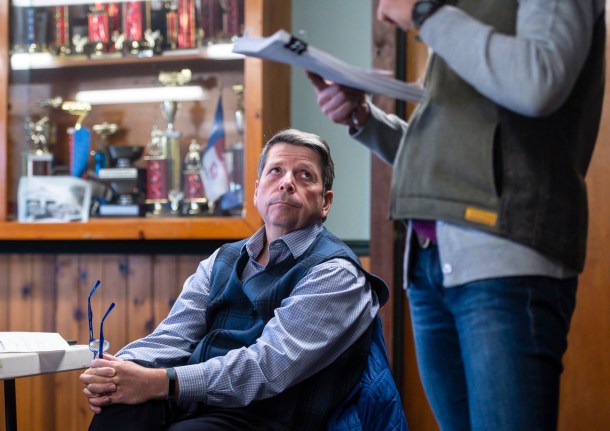
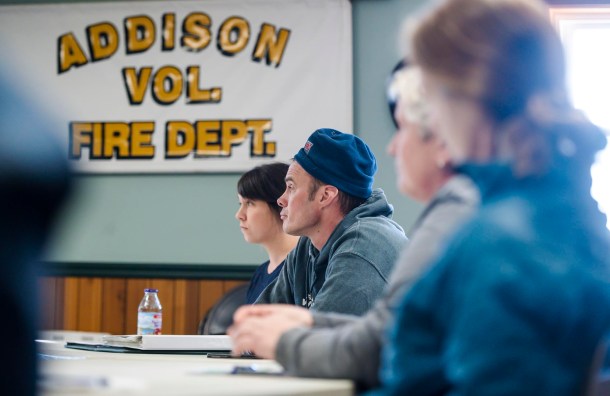
Agency of Agriculture Secretary Anson Tebbetts and other agriculture agency employees were joined Monday by the farmers and members of the public at Addison’s fire station.
Residents attributed Lake Champlain cyanobacteria blooms to runoff from the farm.
Agriculture Water Quality Director Laura DiPietro said the meeting was not a public hearing since no new construction was planned at Gosliga Farm.
Large and medium farms are regulated differently. Large farms are inspected every year and medium farms every five years. Large farms must also obtain permission for future construction.
All farms need to have proper nutrient management plans, are not allowed to have discharges into waterways and must submit annual reports to the state.
“We started as a really small farm and our family grew,” Jeff Gosliga said, adding the farm needs to grow so they can provide for the family.
Gosliga said the family prides themselves on being stewards of the land and their animals. He highlighted the challenge many farmers are facing with operational costs rising while milk prices have remained flat.
Agency of Agriculture enforcement staff said the farm had more than 700 cows, which would trigger a large farm permit, but the Gosligas maintained they had fewer, according to a copy of an Agency of Agriculture enforcement memo from a public records request by Michael Colby, head of nonprofit Regeneration Vermont, shared with VTDigger.
Last March, agency staff found an article from the Dairy Herd Improvement Association that showed that Gosliga Farm had 713.2 “cow years,” which is their average yearly number of cows.
“On a number of previous occasions personnel from the Vermont Agency of Agriculture Food and Markets have spoken with the Gosliga family about the need to keep their cow numbers and the need to submit an application to become an LFO if they are going to maintain a herd with more than 700 cows,” stated the enforcement memo. An LFO is a large farm operation.
Using the Dairy Herd Improvement Association publication as proof that the farm had more cows than it permit allowed for, AAFM then sent a letter to the farm telling them they needed to apply for a large farm permit, DiPietro said. Since the farm went ahead and applied for a permit, the agency is not taking any additional enforcement action, she said.
Kirsten Workman is an agronomist with the University of Vermont’s Extension program, who works closely with the Gosligas and other farmers. Workman said Gosliga Farm wrote its own nutrient management plan and she praised the farm’s record-keeping.
Workman said the Gosligas’ fields have very healthy soils; only four of the over 100 fields have levels of phosphorus “beyond optimum.”
A resident who declined to identify herself for fear of reprisals displayed enlarged photos from this past summer showing cyanobacteria blooms. She criticized state officials for failing to regulate manure runoff.
She quoted a recent article from John Hopkins University that recommended a moratorium on concentrated animal feeding operations, or CAFOs.
The report said large volumes of animal waste pose a public health risk because the manure can contaminate the air, water and soil and lead to spreading of antibiotic-resistant pathogens.
“Can we willingly let things grow without taking into consideration particularly the manure?” she asked. “I fear for children and grandchildren.”
Other residents also spoke out.
“The fact of the matter is, for the last few years, we haven’t been able to swim in our lake,” Katia Berger, of Ferrisburgh, said.
Berger said she and others have grown increasingly concerned about air quality around large farms. She challenged Tebbetts to enact tighter restrictions for large farms. While the agency says it is protecting the lake, “we’re not feeling it and for the last two summers, our lake has been green.”
Workman addressed these first two concerns with passion. Choking up, she said “[the farms] are with you in this fight to protect water quality.”
She said that the vast majority of Vermont farms care just as much about the environment as concerned residents. Workman said the Gosligas are some of the most passionate farmers she works with, saying they didn’t have to go through this process, but volunteered to open up their land to further scrutiny to improve the environment on their farm.
“When we work together instead of pointing fingers and being angry, that’s when we see the biggest changes in the state of Vermont,” Workman said.
“We’ve tried,” the anonymous resident said.
Residents have until the end of the day Dec. 2 to provide written comment to the agriculture agency regarding the permit application. Agency employees will write residents back, then the state has 45 days to decide whether or not to approve the application.
