


The Institute for Sustainable Communities, a global nonprofit group based in Montpelier, will see a change in leadership next year.
George Hamilton, who has run ISC since its start in 1991, recently announced that he plans to retire in July.
Hamilton’s departure will mark a shift for the organization, which has worked in dozens of countries over the past three decades. He co-founded ISC with Gov. Madeleine Kunin, who is still on the board but no longer actively engaged in ISC’s day-to-day work.
ISC’s work is based on the belief that strong communities are the foundation of a peaceful and healthy planet.
In recent years, ISC has been working in Maricopa County, Arizona, to help residents of the large, ethnically diverse area survive the heat.
Heat-related deaths reached all-time highs in 2016 and 2017, hitting minority groups, older adults and the economically disadvantaged particularly hard. But the parties that could help – like local utilities, community action programs, church-based charities, and others – weren’t well-coordinated. So their response wasn’t as efficient as it could have been.
In 2015, the Virginia G. Piper Charitable Trust in Phoenix invited ISC to assess the county’s ability to manage the risks posed by the climate, and to help the community respond. ISC interviewed more than 200 stakeholders, published a 2016 report that was later cited by the World Health Organization, and received a three-year grant to help the trust’s staff and others with training, workshops and pilot projects.
ISC worked with more than 30 social service organizations.
“Often these stakeholders had never met, or didn’t understand their role in the larger system serving populations within Maricopa County, so the act of convening began to address fragmentation by fostering connections,” ISC said in its report about a utility assistance network that formed as a result of the project. “Some of these cause-centered cohorts even became formal networks.”
Arizona is relatively new ground for ISC, which has worked with thousands of communities, organizations, institutions and companies in 30 countries, focusing on the places with the largest share of climate emissions — such as China and the U.S. — or those most likely to be affected by climate change, such as India and Bangladesh.
A community-based approach
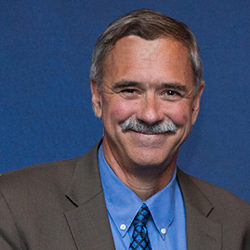
ISC got its start when Kunin, freshly emerged from her three terms as Vermont governor, was invited to observe the election process in the newly independent Bulgaria. Kunin invited Hamilton, her policy director, to accompany her, and the two got a lesson in how things can go wrong.
“We were blown away by the fact that these people were so desperate for decentralized decision-making and for a society based on the principles of sustainable development,” Hamilton said. “We were moved by that experience to form something that could help them.”
Once back in Vermont, Kunin and Hamilton started their organization based on some of the principles they had employed in governance to help other social movements succeed. Jonathan Lash, then Vermont’s secretary of natural resources, was on the founding board of directors, and later left Vermont to run the World Resources Institute, a global environmental organization. He now leads ISC’s board.
ISC’s work is based on the belief that strong communities are the foundation of a peaceful and healthy planet. “We have concluded that climate change, income inequality, and social injustice are the biggest threats to building strong, sustainable communities and hence these challenges define our current priorities,” the group says on its website.
With a budget of $6.8 million, from federal grants and foundations, and 56 employees — 14 in Montpelier — the group has recently deepened its focus on global climate change and has expanded its work in the United States. The group doesn’t have any projects underway in Vermont.

ISC teaches an approach to problem-solving that is holistic, where often communities are struggling with a fragmented social service structure, said Hamilton.
“Communities, in Vermont and as it turns out all over the world, want multiple things: They want economic opportunity, they want clean water, clean air, a safe place to raise their kids, educational opportunity,” he said.
Often, problem-solvers are in silos, he said, with a country or community focused on economic development at all costs, or protecting the environment at all costs.
“What human beings want is solutions that take a holistic, systemic approach and solutions that create multiple benefits,” he said.
Lessons from Vermont’s small size
ISC has trained more than 40,000 supply chain factory managers in Asia on all aspects of environmental health and safety, according to Hamilton.
Supply chain factories that are focused on the bottom line are likely to be out of compliance with rules on things like worker health and safety and greenhouse gas emissions, said Hamilton. “By training factory managers to think of their factories as holistic systems, you can improve your efficiency, reduce emissions, engage workers, and actually build a stronger, more productive plant.”
ISC’s impact can also be seen in physical infrastructure such as solar panels and energy efficiency measures, said Elliott Bent, ISC’s communications director. He said the organization’s programs have also helped local groups receive additional funding to accelerate their work, or start new networks or institutions.
“We see sustainability measures codified into ordinances, policies, and law at the municipal, county, and state levels,” he said. “For some projects, we also are benchmarking and measuring emissions and seeing reductions in both emissions and carbon intensity over time.”
The two founders steer clear of stating that they’re exporting a spirit or practice that is specific to Vermont. Rather, they saw coalition-building work in Vermont and decided to teach it to people who were working for social justice and environmental change, said Kunin.
“Vermont government is very hands-on, very approachable,” Kunin said. “Our small size makes things work better than in other places.”
Tools for change
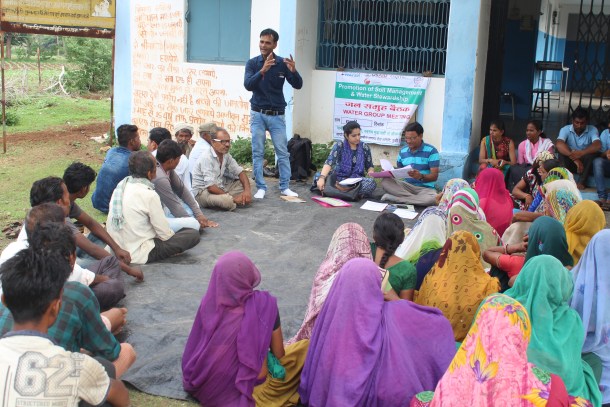
Along with looking at systems holistically, Hamilton said, ISC focuses on helping stakeholders build local institutions that will continue the work.
“We have a very pragmatic approach about going into a place, listening to people on the ground and learning, and finding institutions that we can strengthen so they can take over the work as soon as possible,” he said.
Kunin said she sees that empowerment as a legacy of self-governance that ISC can leave for future generations in emerging democracies. She recalled a trip to Bulgaria where a community was struggling with water pollution that had rendered a river unusable for recreation.
“We had a meeting with what you now would call the stakeholders, and we brought a flip chart, and whenever somebody said something, we wrote it down,” she said. “In a dictatorship or autocratic government, your voice doesn’t count, and they felt empowered just by our writing their proposals down.
“It wasn’t magic; it was hard work, and there were obstacles,” she said. “But somehow we attracted a committed staff. There is idealism in this kind of work, and it was uncharted territory.”
A leadership change
Lash, who is leading efforts to find a successor for Hamilton, said Hamilton’s announcement was no surprise.
“The board has had discussions of succession as part of its strategic planning for the last four years,” he said.
Lash said the new leader of ISC won’t necessarily live in Vermont.
“The culture, values and brand of ISC are rooted in Vermont, and I just don’t see that changing,” Lash said, noting that many organizations rely on top managers who work remotely.
