

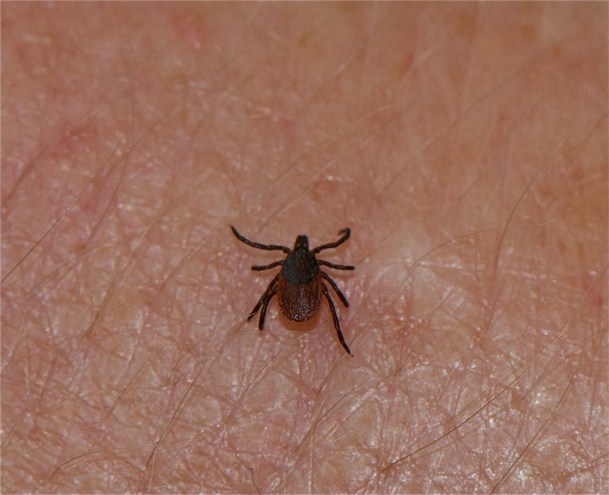
October saw record-setting levels for tick-related hospital visits in Vermont, doubling historic averages, and even topping historic maximums.
The Vermont Department of Health reported a little over 1.5% of the state’s emergency room and urgent care visits were tick-related in the last several weeks of October. Those numbers were well above the historic average (from 2004-2018) of closer to 0.5% of visits being tick-related during the fall peak of tick season.
The recent numbers, however, are on-par with the first peak of the 2019 season, in May and June, when the Lyme-spreading black-legged tick was in its nymph form.
State Public Health Veterinarian Natalie Kwit said an important difference between the two seasons is that while Lyme is the primary area of concern during the spring, another tick-borne illness, anaplasmosis, makes up a big portion of hospital visits in the fall.
Anaplasmosis, Kwit noted, can have a lot of the same early symptoms as Lyme, like fevers, headaches, and muscle or joint aches. The catch, she said, is that unlike in the spring, it’s now flu season, which can make those symptoms a lot harder to immediately recognize as being tick-related.
“Once we get into the fall, we do see it being hard to make that distinction,” Kwit said. “It might not be on providers’ radars as much, which is why it’s important to report any history of a tick bite you might have.”

Health officials were unable to provide the raw number of tick-related hospital visits. In 2017, the most recent data, 1,093 cases of Lyme disease were reported to the Health Department, the highest annual count ever recorded in Vermont. There were 399 cases of anaplasmosis reported in 2017, double the year before.
Kwit said in some situations, anaplasmosis can also have more severe outcomes than Lyme, despite being not nearly as well known. Late stages of the disease can cause respiratory or organ failure, bleeding problems, and sometimes, death.
She said the state sees a lot more reports from older Vermonters (over 50) than younger ones, probably because of the way older immune systems respond to bacteria.
But, because of the snow and freezing temperatures that much of the state saw this week, Kwit said ticks will be much less of a concern until things start to thaw. However, she said, ticks can be active any time temperatures climb above freezing.
“But based on our historic tick surveillance, people aren’t seeing them active much over the winter months,” Kwit said.
Despite some research showing that climate change is causing a steady increase in the spread of Lyme and other tick-borne illnesses in Vermont, Kwit said there’s also an aspect of randomness in the severity of this year’s numbers.
“Tick populations tend to fluctuate year to year,” she said. “It all depends on how favorable conditions are for them that year.”
She noted things like the weather, abundance of host mammals like deer and white-footed mice, and how the previous year went (for black-legged ticks with a two-year life cycle) as factors that make it hard to predict how well ticks will do in any given year.
But regardless of how bad a tick season is, Kwit said it’s important for people to keep spraying their clothes and doing tick checks, even after they have turned in their shorts and T-shirts for boots and snow pants.
“Prevention tips are kind of moot now, but we never know if it’s going to warm up again,” she said. “And if you’re feeling sick, and have had a couple tick bites, certainly go see your doctor.”

