


Two Addison county towns have voted by overwhelming margins against closing their local schools.
The school board in the Addison Northwest Supervisory District brought the question to voters after administrators said they projected the status quo would result in an 18-cent bump in the tax rate next year. Closing the K-6 schools in Addison and Ferrisburgh and sending all students to Vergennes could yield big savings, they argued, equalize opportunities, and strengthen middle school programming.
But in an unusually high turnout election Tuesday, voters emphatically said no. In Ferrisburgh, where the town clerk reported at one point running out of ballots, residents voted 884 against and 160 in favor of shuttering the Ferrisburgh Central School. In Addison, the vote was 373 against and 123 in favor of closing the Addison Central School.
At the polls, many voters complained that the board’s plan appeared too hasty, and some expressed concern about fifth and sixth grade students being educated in the same building as high school students. But most argued closing schools would only accelerate the problem – steadily decreasing enrollments – and dissuade young families with children from moving into town.
In Ferrisburgh, self-described “young Vermonter” Erin Teodosio said she had been incredibly impressed by the elementary school when she had volunteered through her work recently.
“I really wanted my future kids to go there, if I do have kids. So I really hope we don’t consolidate,” she said.
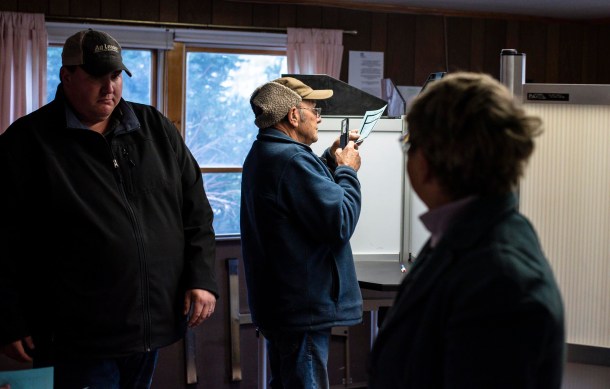
Addison resident Peter Reynolds, a former principal at the middle and high school in Vergennes, said he, too, voted against the measure.
“A town needs a school, it’s as simple as that,” he said. “These are tough times, and our taxes will go up. But I think they’ll go up either way.”
Still, Reynolds said he was sympathetic to the school board. Voters approved this year’s budget by a razor-thin margin, and the tax rate rose by 9 cents. Administrators estimate that, as enrollments continue to decline, the tax rate could climb by 34 cents by 2024 unless about $2 million in cuts are made.
“They got caught between a rock and a hard place. And it’s unfortunate that it’s come down to the school boards to resolve a population, demographics issue,” Reynolds said.
Board chair Sue Rakowski said the school board would now start drafting its budget for next year, working under the assumption that students would attend school in all four of the district’s existing buildings. But whether it will cut programming in order to hold the line on taxes or reconfigure grades across the schools is still up in the air.
The board must also figure out a long-term solution, Rakowski said. The trends that brought ANWSD officials to suggest closing schools aren’t going away, and certainly aren’t isolated to Addison County.
“I think this is going to be a widespread issue moving forward,” she said. “I think there are going to need to be more regional solutions. But I don’t know. I don’t know how it’s going to work out.”
