


Students are once again asking the University of Vermont to divest its more than $500 million endowment from fossil fuels.
Activists with Organize UVM, a student group, say they plan to present a formal proposal to trustees at their meeting this Saturday, requesting the public college divest from fossil fuel companies completely by 2027.
Organizer member Kieran Edraney, a junior studying computer science and mathematics, said the group will also present a petition, signed by about 1,900 faculty and students, to trustees. Edraney said he got involved with the divestment movement because he believes it’s a useful way to vilify the companies responsible for climate change. The movement is modeled on a divestment campaign waged against the South African state during its period of apartheid.
“I think it’s one of the most effective things that students can do on campus, in terms of having an impact on the environment,” Edraney said.
UVM trustees have been asked before by students and climate activists to consider divestment, and each time declined. Trustees considered and rejected a request to divest in 2013, and again in 2016, when campus activists had narrowed their ask to just divesting from coal. Trustees said at the time that while the schools didn’t currently have any holdings in coal companies, it would be financially imprudent to remove commingled funds from the university’s portfolio.
In response to calls for divestment, UVM has frequently touted its on-campus green initiatives. A spokesperson for the university on Wednesday forwarded a reporter a copy of an article, written by Richard Cate, UVM’s vice president for finance and treasurer, titled “Divestment not our only option.” The piece, published in the student paper, noted the school’s investments in green building, sustainability programming, and carbon-neutral electricity.
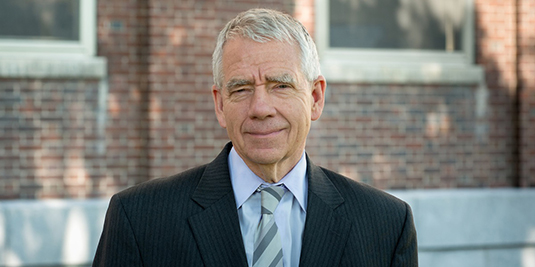
“I think we can do a great deal without divesting,” Cate, who has been tasked by UVM President Suresh Garimella with leading the school’s climate action efforts, said in an interview.
But pressed as to whether the school should consider divestment in addition to its on-campus initiatives, Cate said he would take his cues from the board of trustees.
“The board has a position on that. That is the university’s position, and thus it has to be my official position,” he said.
UVM’s endowment portfolio currently includes about $27 million of direct investment in fossil fuel companies, about 5% of the school’s $567 million total endowment, according to Cate.
The university’s endowment does include a small Green Fund – established at the request of a donor – which excludes fossil fuel and nuclear investments. But the fund, which endows a faculty member who specializes in renewable energy, only holds about $800,000 in assets, according to the latest figures published by the school. UVM also has about $200 million cash investments, managed by Cate, which are fossil fuel-free.
But while UVM trustees have said no in the past, the landscape has changed.
The global divestment movement has won important victories recently, including in Vermont, where Middlebury College officials in January announced the school would divest its $1 billion endowment from fossil fuels over the next 15 years. And just last month, leaders in the University of California system announced the $13.7 billion endowment for the state’s public colleges were already fossil fuel-free, and that its $70 billion pension was nearly fully divested.
