

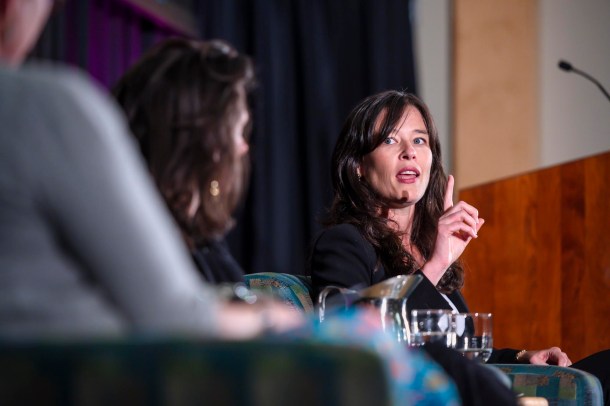
BURLINGTON — New York Times reporters Jodi Kantor and Megan Twohey detailed the obstacles they overcame in their reporting of the Harvey Weinstein sexual abuse story during an appearance at the University of Vermont Wednesday evening.
Kantor and Twohey discussed breaking the story of sexual assault allegations against Weinstein, which they described in their new book “She Said: Breaking the Sexual Harassment Story that Helped Ignite a Movement,” published in September.
The two reporters appeared at UVM Wednesday evening as part of the Vermont Women’s Fund’s annual fundraiser. Jane Lindholm, the host of VPR’s “Vermont Edition,” moderated the discussion.

Twohey and Kantor broke the story of Weinstein’s decades of alleged assault and sexual harassment in October 2017, and won a Pulitzer Prize for their work. The Weinstein story marked the start of the #MeToo movement against sexual harassment, especially in the workplace.
Twohey said that as she and Kantor continued their reporting on the Weinstein story after the initial article was published, it became clear that the story was about more than one man.
“We watched with wonder as this story took off and had ripple effects not just around the country but around the world,” she said. “After almost two years of additional reporting, this story wasn’t just about a single individual alleged predator, it was about a whole system in place to silence women.”
As Kantor and Twohey spent months reporting on the story, Weinstein was working with his lawyers to push back on their reporting with legal threats and by hiring a private Israeli intelligence firm to undermine their efforts. Kantor said the obstacles were “galvanizing.”
“We’re investigative reporters, we get up in the morning and what we want to do is confront the powerful,” she said.
With the protection of the New York Times, Kantor and Twohey said, they were more concerned about their sources than themselves as the publication date approached.
“Despite all of this crazy interference and bullying, the journalism still worked,” Kantor said. “It was no match for the Times as an institution telling these kinds of stories, but more importantly it was no match for our sources who wanted to have their story told.”

Before joining Kantor on the Weinstein story, Twohey reported on sexual assault allegations against President Donald Trump. She said she understood the many reasons survivors of sexual abuse wouldn’t want to go on the record, especially against men known for threats and retaliation.
That’s why the reporting duo aimed to have a “mountain of evidence” to join the women’s individual stories about Weinstein. For example, Kantor and Twohey compiled a financial trail of secret settlements and internal company records which further built the case against Weinstein.
“We were inviting them onto this mountain of evidence,” Twohey said. “When we were able to publish the story, the debate wasn’t what had happened, the debate was what would be the response.”
As publication approached, Twohey and Kantor worked to persuade women to go on the record with their stories, eventually succeeding in convincing actress Ashley Judd to be named in the story.
Weinstein and his legal team went to great lengths to stop the Times from publishing their story, especially after Twohey and Kantor reached out to Weinstein for comment in the days before the story’s publication.
Twohey said she and Kantor had not thought much about what would happen after publication as they were frantically working to get the story finalized.
“We were so deep in the work we had a hard time seeing the trees through the forest,” she said.
After publication, Twohey said her phone started ringing incessently and her email inbox was flooded with messages from women wanting to tell their own stories of sexual abuse.
Weinstein is set to stand trial for rape in January 2020.
Kantor said most of the allegations against Weinstein relate to sexual harassment, which is often not criminal behavior, while a smaller number of allegations are sexual assault.
Kantor said the trial entails two women’s allegations against Weinstein, and that she and Twohey couldn’t predict the outcome. That further fueled their motivation to write their book, Kantor said, to ensure the full story is told.
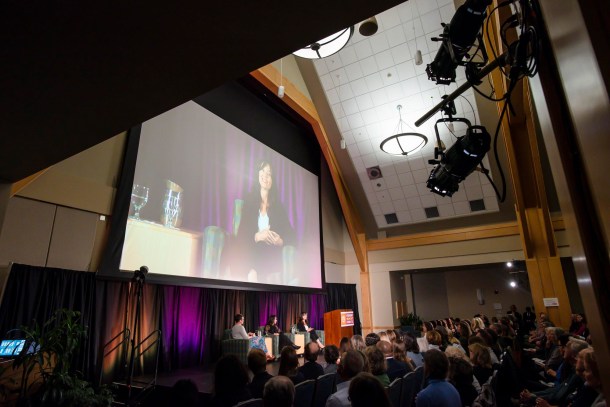
The Vermont Women’s Fund, which is part of the Vermont Community Foundation, celebrated its 25th anniversary with Wednesday night’s fundraiser. The crowd filled a large room at the Davis Center, and the event raised over $50,000.
In the book, Twohey and Kantor explain the reporting process behind the story, including all of the efforts at corroboration and due diligence that they undertook to ensure the story was accurate.
“When great sources come together with this hulk of journalism, it makes a difference,” Twohey said. “Facts do matter, and social change does result from airtight stories with great sources.”
