BERLIN — Nursing shortages in Vermont and elsewhere in the nation could be eased if lawmakers from rural states worked together, Rep. Peter Welch, D-Vt., told a gathering of health care professionals.
In the roundtable discussion on Wednesday at Central Vermont Medical Center, Welch focused on how he could address problems at the federal level — like student loan debt forgiveness and relaxing nursing teaching regulations — to help grow Vermont’s nursing workforce.
A 2018 study conducted by Vermont Talent Pipeline Management projected more than 3,900 nursing-related job vacancies in Vermont between October 2018 and next spring.
And rural areas are facing the worst shortages — a 2019 study conducted by the Association of American Medical Colleges found that Southern, Western and Midwestern regions in the United States will be in most demand for medical professionals. That’s why Welch wants to partner with lawmakers from other rural areas to break down barriers that keep students from entering nursing programs.
Patricia Moulton, president of Vermont Technical College, which offers a nursing program, said potential nursing students have been turned away because of a shortage of instructors. Accreditation standards require nursing instructors to have a master’s degree and many experienced nurses cannot afford to earn an advanced degree.
“If it’s a regulation that needs to be adjusted without compromising patient safety, let’s do it,” Welch said.
Welch said he would work with representatives in other states to explore whether accreditation regulations on the national level could be changed.
“This is a problem for Vermont but there’s a potential to get broad support because it’s an acute problem in rural America,” Welch said. “And what I’m trying to do is, when we have a problem here, find particularly Republican support where they represent districts that have problems identical to what we face here. We’ve got to revitalize rural America and we can only do that together.”
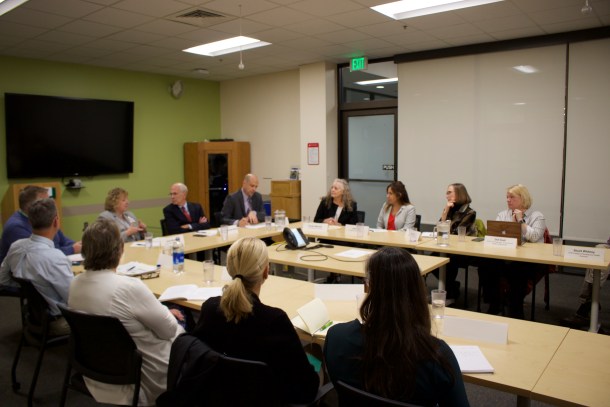
Others said that student loan debt deters people from entering nursing programs. Laura Pelosi, a partner with lobbying firm MMR who represents health care companies in the state, said she doesn’t think enough federal and state money is going to loan-repayment programs for medical professionals, specifically nurses. She asked Welch for more federal funding for these programs.
“In my view, this is not a shortage anymore, this is a crisis,” Pelosi said. “And we’re about to go over that cliff.”
Pelosi also asked Welch to support proposals in Congress that would increase the cap on H-2B visas, which is currently set at 66,000, specifically for nurses. H-2B visas allow foreigners to work in the United States for a limited amount of time. If more visas were made available, Vermont medical centers could recruit from Canada, Pelosi said.
Retention of nurses has been a challenge, according to Deb Snell, president of the Vermont Federation of Nurses and Health Professionals. Facilities are short-staffed and nurses feel overburdened. Staffing ratios aren’t high enough, Snell said. Nurses won’t work in Vermont hospitals if they don’t feel supported and welcomed.
“It’s scary, because we’re burning out the nurses that we do have,” Snell said.
Jeff Teiman, president of the Vermont Association of Hospitals and Health Systems, said Vermont needs to be an attractive place for nurses to work and live. The state should prioritize economic development, he said, and took a dig at the stalled CityPlace Burlington development project.
“If I’m new to the state and I see a hole in the ground in Burlington, that’s a concern for me,” Teiman said. “I want to see a thriving cultural and economic place.”
Correction: A previous caption with the lead photo in this article mistakenly identified Anna Noonan as Annie Noonan, and misstated the hospital she leads. It is Central Vermont Medical Center, not the UVM Medical Center.