


BURLINGTON — The city’s Community and Economic Development Office has a sterling reputation.
CEDO, as it’s universally called, is renowned for setting an example as a city community development office that prioritizes working-class and low-income residents in its work.
But today, the office finds itself “struggling to get by,” says Brian Pine, a longtime former CEDO employee and current Progressive city councilor.
“People have great expectations that CEDO can do truly amazing things,” Pine said. “The expectation outmatches the ability of the organization, given what its funding is and what its staffing levels are.”
For example, CEDO has long had an active role in developing and nurturing business networks in city neighborhoods, like the South End Arts and Business Network and the Old North End Arts and Business Network.
These organizations aim to connect a range of community members and organizations, from businesses to artists and nonprofits. But without CEDO’s assistance, these volunteer-run organizations are faltering, Pine said.
“Groups like that are critical infrastructure CEDO was supporting, and would like to see more support and engagement from the city,” Pine said. “And CEDO was the one to do that.”
CEDO leads the city’s efforts on housing, economic development and community justice — and oversees the city’s community engagement Neighborhood Planning Assemblies.
Large-scale development projects, including the stalled 14-story CityPlace project off of Church Street, the renovation of Memorial Hall and a dispute over what to do with the Moran Plant have required so much attention that CEDO has struggled to maintain focus on its many other obligations.
Founded in 1983 by then-Mayor Bernie Sanders, CEDO has a long track record of successful initiatives from helping low-income residents combat lead in their homes to revitalizing the Burlington waterfront. It’s also encouraged affordable housing in a city with a low rental vacancy rate.
Former CEDO directors, staffers and city officials say the department has been successful over time, but acknowledge that a decrease in federal funding, a stretched-thin staff and the pressures of high-profile development and renovation projects have left the office in a perilous position.
Critics say CEDO more interested in business development than social justice issues.
Neale Lunderville, CEDO’s interim director for most of 2018, had a stark message at his last city council meeting in the role in December 2018: In its current iteration, the office is struggling to meet its mission.
Decreased federal funding and understaffing has caused the department to struggle to live up to its ambitious mission, Lunderville said in an interview.
“CEDO is neither resourced sufficiently or structured correctly to meet its mission, which is both broad and deep,” Lunderville said.
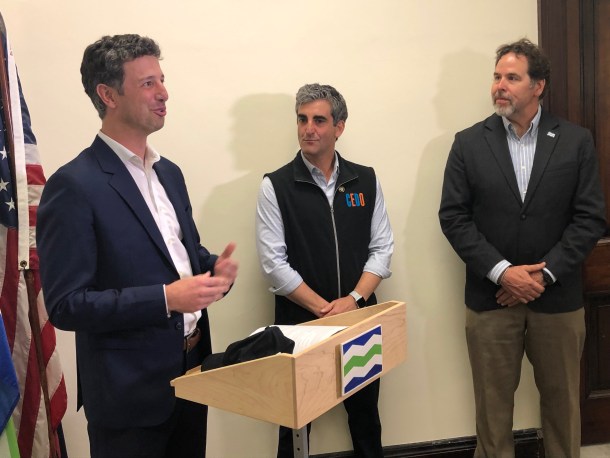
CEDO’s new director, recently hired Luke McGowan, takes the helm of the office at a pivotal time in the city’s history. Mayor Miro Weinberger said the city is working to add additional capacity to CEDO to help keep the office moving forward.
History and mission
Bernie Sanders was elected mayor in 1981. At the time, the mayor had little authority over city departments. Instead, the power rested with commissions comprised of city residents, who selected the department head and helped set policy.
Particularly early on, many entrenched department heads were working against Sanders’ agenda, said Michael Monte, who worked for CEDO for almost two decades, including 10 years as director. He stepped down in 2006.
This included the Planning Department, whose agenda Sanders viewed as too sluggish.
So Sanders created a work-around.
“CEDO was seen as a sort of a solution to that issue, meaning that the mayor would then finally have a department and policy arm that could move an agenda,” Monte said. “In the eyes of Sanders and then-CEDO director [Peter] Clavelle, there was a weak agenda relative to sort of the economic and community development activities that could be taking place.”
Sanders was also concerned that development was paired in a city department with planning and zoning, which regulated development, Monte said. Creating CEDO separated the regulators from those tasked with promoting development.
Sanders appointed Clavelle as the inaugural CEDO director in 1983, where he served until he succeeded Sanders as mayor in 1989. Clavelle’s office was next door to Sanders, and Clavelle said Sanders would simply walk in from next door with an idea for Clavelle to consider or execute.
“At the time that CEDO was created, the notion was the city needed to be more engaged, active at promoting sustainable development and the idea was to pursue an integrated approach to development which connected all the dots,” Clavelle said.

The office moved on several fronts. The agenda was never specifically defined, allowing officials to explore a variety of priorities.
One of CEDO’s biggest accomplishments was the launch of the Neighborhood Planning Assemblies, which are designed to better engage the city’s neighborhoods. The office also led the charge on cleaning up the city’s Waterfront, transforming it from an industrial area to a highly used public space that includes an expansive park.
The office also started affordable housing initiatives and workforce programs for people of color and women, among other initiatives.
“When you think about the challenges facing Burlington, most of them, back then and today, fall in the lap of CEDO,” Clavelle said.
Burlington is often named one of the most livable cities in America, and Chittenden County is adding population while most of the rest of the state is in decline.
CEDO focuses on community development that helps low-income residents. It doesn’t just serve as a business-boosting organization — and that sets it apart from other economic development offices in cities around the nation, Pine said.
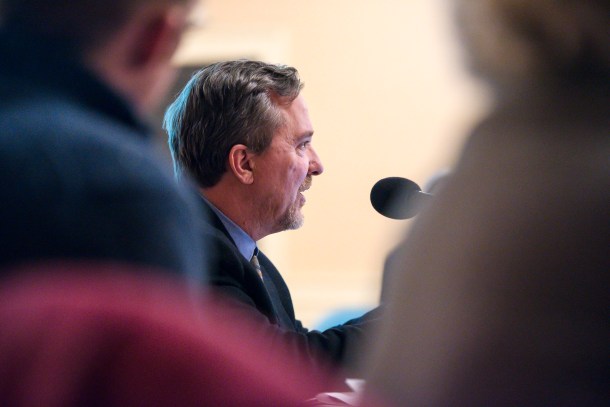
“There are community development offices in every city in the country, so that’s not unique,” Pine said. “It’s really an abiding commitment to ensuring low-income people are always at the forefront of what that department is doing, and that piece needs to continue to be in the forefront.”
CEDO has spearheaded changes that have transformed the city.
The office played a leading role in helping transform Pine Street from an area with empty industrial buildings into a robust, thriving business corridor. It launched a program to protect residents from lead-related dangers associated with the city’s aging housing stock. The Community Justice Center, housed in CEDO, is expanding its role to provide court diversion services to the entire county. The office also runs the My Brother’s Keeper initiative, which provides programming for people of color in the city.
“It has a storied history and its past successes are part of what makes Burlington such a special place,” Lunderville said. “It is an organization capable and worthy of revitalization.”
In the housing realm, CEDO helped ensure that Northgate Apartments remained affordable housing during the 1980s, and more recently helped save the Farrington mobile home park, which is now the North Avenue Co-op.
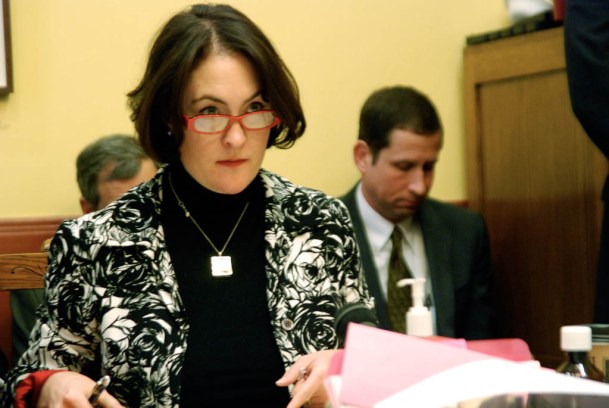
CEDO is currently working on Weinberger’s early learning initiative, which is providing scholarships for child care.
Former CEDO director Noelle McKay, CEDO’s director from 2016 to May 2018, said the staff is dedicated.
“They do the work because they are really committed to public service, they want to make Burlington better, they want to make sure that everyone has access to City Hall,” McKay said.
Current challenges
City councilors and former CEDO directors stressed that CEDO’s strengths come from a talented staff dedicated to public service. But CEDO has fewer people juggling more projects than it used to have, Lunderville said.
“My colleagues were deeply dedicated and smart, but also just struggled under the burden of these many projects with limited resources to tackle them,” Lunderville said.
CEDO’s staffing numbers reflect a slight decrease in the total number of employees, but this is largely due to the rapid growth of the Community Justice Center.
Factoring out the CJC, the total number of CEDO employees has fallen from 25 in 2011 to 19 this year, according to the 2011 city budget and the organization’s current online staff list.
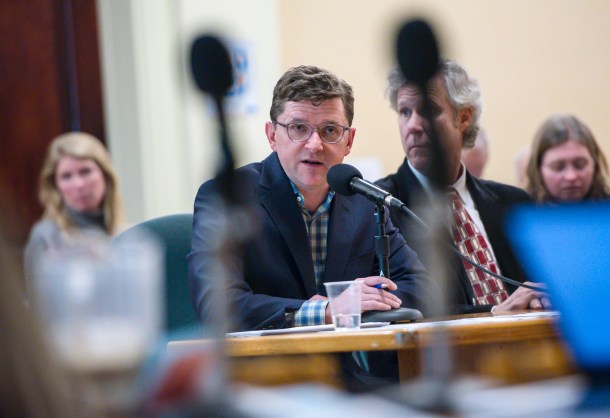
Pine said the decreases in funding and staffing have had a tangible impact on the services CEDO has been able to provide the city. In particular, Pine said CEDO isn’t providing as much attention to small businesses and neighborhood engagement as it was able to with a larger staff.
“It’s really limited the ability of CEDO to respond to the needs of the community, really, in a major way,” Pine said. “Everything CEDO’s doing, when there were more resources and more people, they were able to have a bigger and deeper impact, and really think ahead a little bit.”
On business development, McKay said Burlington has been working to become a tech hub. But CEDO has struggled to foster this due to its limited flexibility.
“It’s hard for the city staff to do if a business doesn’t fit into a housing and urban development box,” McKay said. “You can help these kinds of businesses, but you can’t help these. How do you provide a flexible funding and staffing to do that kind of stuff?”
Lunderville said that CEDO’s staff ensures that projects continue to get attention, but the organization just doesn’t have enough people to match the demands of its mission.
“They are stretched to give their full measure to these critical projects,” he said.
CEDO depends on federal funding for a majority of its funding, and a decrease in available funding and more restrictions on what funding can be used for has put pressure on the office.
The amount of Community Development Block Grants, the premier federal grant for municipal community development, offered by the Department of Housing and Urban Development has declined. Funding for CDBG grants has gone nationally from a peak of around $15 billion a year in the late 1970s to just $3.37 billion in 2019.
Declines in federal funding have trickled down to Burlington.
In the past 10 years, recurring federal funding received by CEDO has fallen from $2.69 million in 2009 to a low of $1.85 million in 2012. This year, the funding rebounded to $2.37 million.
“There have been these sort of big tectonic shifts in funding and government, since CEDO was founded,” Weinberger said. “There was a lot more federal money being granted, sent to the municipalities back in the 80s and early 90s.”
The decreases in the funding have also forced CEDO to lose grasp of its innovative, creative DNA, Pine said.
“When you’re resource-constrained, your people are operating in a scarcity mentality and there’s so much time spent doing paperwork and filing out federal reports, it only leaves you so much time to do the work that’s most needed in the community,” Pine said.
The federal government has also increased its oversight on how grant funding is used. This increased oversight has both created administrative headaches and limited the staff’s flexibility.
Pine said some employees find themselves having to stop working on a problem without solving it if they have used the hours devoted to a particular funding source.
“If there’s a really critical need that’s out there in the community and CEDO’s assistance is desperately needed, there’s no one available to do it,” Pine said. “That is a crazy way to deliver services.”
Monte said in the past, CEDO has had additional capacity with a larger staff.
“We were able, in the context of economic development, to hire people and say, women are not getting their share of construction jobs,” he said. “Let’s develop a program and have somebody do work in researching, testing and figuring it out.”
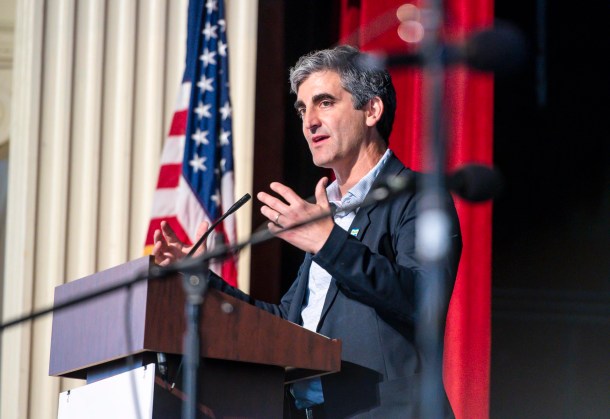
The pressure on the staff stretches all the way to the top of the organization.
McKay said she was working 70 hours a week as director, and had to to keep projects moving forward.
“There’s all of these other mandates that CEDO’s being asked to do, and the resourcing is not lining up with that,” McKay said. “Every meeting you go to, it’s like, ‘Well, CEDO should be doing this, this and this,’ and it’s like, ‘Well, yeah, we’d love it if we could do that. But there’s only so many hours in a day.’”
Weinberger said he believes CEDO is still meeting its mission, but doing so has put pressure on CEDO staff.
“I think to some degree that performance has come at the cost of very demanding conditions for staff,” Weinberger said. “I think we have had some staff turnover that is a function of not having fully addressed structurally the changes that need to happen.”
During the 2018 mayoral campaign, both of Weinberger’s challengers, independents Carina Driscoll and Infinite Culcleasure, criticized his handling of the office.
Progressives say under Weinberger, the office’s focus has leaned too heavily on spurring development compared to the rest of the office’s mission.
“The mayor has a more private-sector background and orientation, and that’s definitely what he gravitates toward,” Pine said. “I think it’s been a challenge for him to utilize CEDO to its fullest potential.”
Councilor Max Tracy, a Progressive, said he thinks CEDO has become more focused on downtown development than the neighborhood anti-poverty work it had previously been centered on.

Weinberger disagreed with that critique during the campaign and now. He said through the My Brother’s Keeper initiative and work to battle chronic homelessness, CEDO has maintained its focus on social justice.
“There has been a substantial expansion of the city’s social justice, equity and racial justice efforts in numerous areas that we have pursued, with real success,” Weinberger said. “On many of them, CEDO has had a real role in.”
And of CEDO’s 26 total employees, only four are devoted to working on development projects, Weinberger said.
Additionally, Pine said it has been a challenge for directors to both manage the department and lead the major development projects the department is overseeing — CityPlace, Memorial Auditorium and the Moran Plant.
The most prominent of these projects is the stalled CityPlace development project, which has taken up a significant amount of time and attention from other CEDO priorities. When he was director, Lunderville said he spent more than half of his time managing the project before the city hired a consultant, Jeff Glassberg to run it late last fall.
“Trying to manage these large high profile projects, and manage the office and the myriad other important projects going on at CEDO made me realize doing that without more resources is an impossible role if you want to get the high-quality deliverables the city of Burlington deserves,” Lunderville said.
The city is moving forward with the “Frame” concept for the Moran Plant and is moving forward with plans to renovate Memorial Auditorium, McGowan said. The CityPlace project has been mired with delays and is currently undergoing a redesign.
Tracy said the CityPlace project has taken up resources and time from CEDO without anything to show for it at the development site, which has been vacant for a year with no construction start date in sight.

“There’s an opportunity cost to spending so much energy on one project, and when that project doesn’t happen and the developer fails to come through, it puts the department in a very challenging place,” Tracy said.
While the development projects are higher-profile and get more media and public attention, Lunderville said the vast majority of CEDO’s work is on community and social issues and that has not changed under Weinberger.
“If you move beyond the talking points and look at the work the staff is doing, it is really focused on those core foundational values, and that hasn’t changed,” Lunderville said.
Glassberg said that the project and its delays have taken a significant investment of time from CEDO, as well as the city’s Department of Public Works and Planning and Zoning Department.
Glassberg, who briefly worked for CEDO during the 1980s, said that he believes as the CityPlace Burlington project moves forward, the department will be able to refocus its priorities.
“I think they’ve got a proud track record and there’s a lot of work to do, so hopefully with a little less distraction from CityPlace, they’ll be able to re-focus on critical mission elements,” he said.
Moving forward
McGowan, 34, was a consultant living in South Woodstock when he was hired to lead CEDO. He had worked for Thumbtack, a San Francisco-based website that helps connect people to local professionals, and as a speechwriter for then-Vice President Joe Biden.
McGowan has been in and out of public service his entire career, and said the CEDO role appealed to him as he believes in the power of government action.
“I’m a believer that, if we’re going to solve the big kind of hairy problems, it’s going to be through the constructive work of government action,” he said.
CEDO’s mission, in McGowan’s eyes, is to make Burlington the most “livable, just and connected” city in America. Along with addressing pressing issues in the city, like affordable housing, economic opportunity and diversity and inclusion, McGowan said he wants CEDO to keep an eye on the future.

“We’re building the social infrastructure and the physical infrastructure of Burlington to prepare us for the future,” McGowan said.
McGowan has been meeting his CEDO employees, other city departments, outside partners and community members to learn more about the organization before proposing a path forward.
CEDO is restructuring, adding a full-time staff member tasked with overseeing development projects, the assistant director of community works. The position aims to allow McGowan focus on organizational leadership instead of the department’s real-estate development projects.
“I’m pleased with how much CEDO has continued to get done, even while we’ve been been confronting these challenges,” Weinberger said. “And I am hopeful that we are figuring it out.”
Lunderville said he believes the position will help the department improve its function and that Weinberger is taking the concerns he raised when leaving the position seriously and is devoting more funding to address some of those concerns.
“As interim director, trying to manage these large high profile projects and manage the office and the myriad of other important projects going on made me realize doing that without more resources is an impossible role,” Lunderville said.
Pine also said he believed the new position was a step in the right direction, and McGowan said he is interviewing candidates for the position. (Weinberger’s office wrote to VTDigger after this article was published to say that Grace Ciffo started in the role on Oct. 7).
“I do think, sort of some opportunity was left on the table, because so much of the sort of directors time and attention was on those big projects,” he said. “I think that specific problem, it’ll go a long way towards solving it.”
Weinberger said the city has been aiming to re-purpose federal funding and re-invest revenues generated CEDO into the office to help address funding concerns.
The city has also been bolstering CEDO by using general fund money to fund CEDO in recent years. This started in fiscal year 2016, and a total of 6.97 FTE salaries are paid by the general fund in fiscal year 2020.
McGowan said he was mindful of the funding challenges CEDO faces, and said he was confident the office has the support of the mayor.
And he’s ready to get to work.
“CEDO’s history here, its connection and lead position among so many individuals and organizations working on these difficult challenges is pretty unique,” he said. “That makes it fun.”
Clarification: A previous version of this article said a dispute over the Moran Plant was ongoing; it has been resolved. Another sentence suggested the My Brother’s Keeper program battles chronic homelessness; it focuses on creating opportunities for youth of color.
