


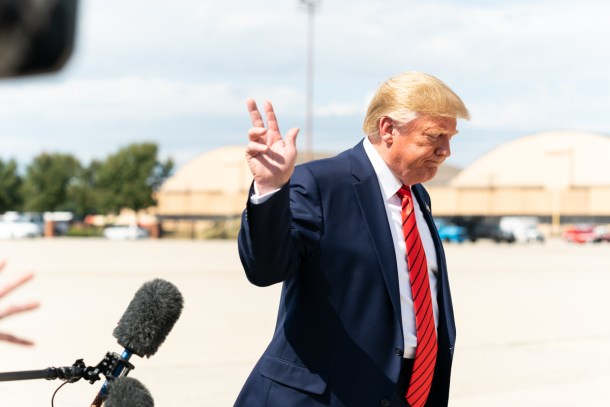
The Deeper Dig is a weekly podcast from the VTDigger newsroom. Listen below, and subscribe on Apple Podcasts, Google Play, Spotify or anywhere you listen to podcasts.
As news of the impeachment inquiry into President Donald Trump has rapidly evolved, so has the involvement — and the rhetoric — of top Vermont officials.
Vermont’s members of Congress, and its Republican governor, have all previously criticized the president over his past actions or remarks. But this week, all four were unified in support of an investigation into reports that Trump allegedly withheld aid to Ukraine while pressuring the country to investigate Joe Biden, a 2020 presidential challenger.
On this week’s podcast, VTDigger political reporter Xander Landen discusses where each official stands.
Rep. Peter Welch

As Vermont’s sole member of the U.S. House, Welch would be the first top official to vote on articles of impeachment should the inquiry result in charges against the president. Welch said in a statement Tuesday that he “strongly” supports Speaker Nancy Pelosi’s decision to begin the inquiry.
As a member of the House Intelligence Committee, Welch also grilled acting Director of National Intelligence Joseph Maguire on Thursday about the whistleblower complaint that kicked off the scrutiny into Trump’s dealings with Ukraine. Welch and other Democrats criticized Maguire for not forwarding the complaint to Congress, while Maguire argued that his concerns about executive privilege caused the delay.
Gov. Phil Scott

Scott on Thursday became the first Republican governor in the country to publicly express support for the impeachment inquiry. Scott has criticized Trump on several occasions, including calling the president’s remarks in July about four congresswomen of color racist, and he has distanced himself from Trump on immigration, trade and other policies. His support of the impeachment inquiry was echoed by a second Republican governor, Charlie Baker of Massachusetts, later on Thursday.
Sen. Patrick Leahy
While taking questions from reporters about the Ukraine call on Wednesday, President Trump suggested an equivalency between his actions and those of three Democratic senators, including Sen. Leahy, in a May 2018 letter to a top prosecutor in Ukraine. In the document, the senators requested that authorities not shelve inquiries related to Special Counsel Robert Mueller’s investigation into the 2016 election. In a series of tweets, Leahy refuted Trump’s framing of the letter, while CNN, which had first reported on it, wrote that the president’s description was wrong.
Sen. Bernie Sanders
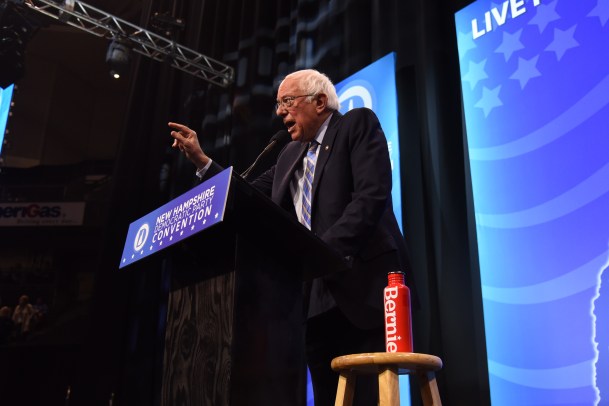
Sanders on Tuesday expressed full support for the impeachment inquiry, saying the House Judiciary Committee “must investigate” the allegations made in the whistleblower’s complaint. “We appear to have a president who unbelievably may have used security funds, funds designed to protect the security of the people of the United States as a means to gain political dirt on an opponent,” he said at a campaign press conference in Iowa on Tuesday. Sanders had previously expressed support for an impeachment inquiry based on his belief that Trump obstructed justice around the Mueller investigation and violated the Emoluments Clause of the U.S. Constitution.
[Podcast transcript]
This week: As news of the impeachment inquiry into President Donald Trump has rapidly evolved, so has the involvement and the rhetoric of top Vermont officials.
On Thursday, Gov. Phil Scott became the first Republican governor to say he supports the inquiry.
Phil Scott: I support getting the facts in that inquiry that’s happening today. So I think these are serious allegations, and we need to make sure that we do the fact finding and figure out what exactly did happen.
But Scott’s announcement was just the latest in a dramatic chain of events over the past week. Our politics reporter Xander Landen explains.
Landen: So in the last few days before we heard about this impeachment inquiry, we’d been hearing about this whistleblower who had filed a complaint with the Inspector General, about a phone call between President Trump and the president of Ukraine. In that phone call, the whistleblower said that essentially, there had been pressure from President Trump to sort of force the president of Ukraine to investigate Joe Biden, whose son Hunter Biden was previously on the board of an energy company and investigate to what extent Biden was using his influence to assist his son Hunter while he was involved in that company. So that would obviously, if true, be, in theory, a pretty serious crime. You’d be having, you know, a president trying to exert his influence in this case by withholding, allegedly withholding, foreign aid from Ukraine, trying to influence the outcome of an election and another country sort of investigating someone who is his opponent.
How does that lead us to this discussion about an impeachment inquiry?
Landen: Once Democrats in the House got a grasp of this allegation, this whistleblower complaint, they had discussions, and Speaker Pelosi made a pretty large pivot. Previously, she had been very hesitant to consider, in a serious way, an impeachment inquiry into Donald Trump. With this, she and other House Democrats who were previously reluctant to push for impeachment totally changed their minds and saw this as a clear violation of the law and the president’s oath of office.
Nancy Pelosi: I can say with authority, the Trump administration’s actions undermine both our national security and our intelligence and our protections of the whistleblowers — more than both.
Landen: And say that now is the time to open an investigation into this impeachment inquiry.
Pelosi: Therefore, today, I’m announcing the House of Representatives is moving forward with an official impeachment inquiry. I’m directing our six committees to proceed with their investigations under that umbrella of impeachment inquiry. The president must be held accountable. No one is above the law.
Landen: This was, you know, a stunning reversal. And our delegation here, had pretty much I think, to no surprise, was very much ready to get on that train.
Let’s talk about that. So we have one representative, Peter Welch. He’s a Democrat. What’s his role in this?
Landen: Welch sits on the House Intelligence Committee, which has been influential in investigating President Trump in previous instances, and Welch has recently changed his mind about impeachment before this whole situation with Ukraine, back in July, he said that after basically months of not supporting impeachment, he changed his mind and said that he would support impeachment.
Welch: I have been very hesitant and reluctant to come out in favor of impeachment. And it’s for pretty straightforward reasons. You know, we have elections, and they have consequences. And I believe very strongly in respecting the outcome of any election.
Landen: And that was not really based on one thing, it was based on a lot of different things he said that were building and that were bothering him about the Trump presidency.
Welch: The president has an obligation to be responsive, to let your representatives in Congress hold the administration to account and give you the facts. And there has been a decision on the part of the White House to essentially disregard any legitimate request from Congress.
Landen: Generally, he said he doesn’t like the division that the president is sewing. One thing, at the time, that really did make him change his mind was the remarks that he had made about newly elected women in the House, who are all representatives who are people of color — among them, Alexandria Ocasio-Cortez basically telling them to go back to where they came from.
Welch: We can have a fight about what you stand for. And I may get criticized by some of you tonight for what I stand for. That’s fair and square. But no one has the right to tell a person that they should go back to where they came from because you don’t like…
Landen: Welch has also opposed him on almost every policy issue, namely, you know, immigration.
So after Pelosi’s announcement on Tuesday, Welch is on board. He’s right there for it.
Landen: Yeah. And he had been ready to get on board since July. He came out with the same line that all the Democrats, House Democrats, including Speaker Pelosi were coming out with on Tuesday, which was that this was another, maybe the greatest incident, in which he violated his oath of office, clearly pressuring a foreign leader to conduct an investigation on his behalf — and you know, sort of, in a quid pro quo fashion, holding this foreign aid up in the air. It wasn’t surprising that we saw him jump on board, like I said, because he’d been ready to get on the impeachment train for some time, along with a number of other Democrats in House. I think what was more surprising is that this was the straw that broke the camel’s back for Pelosi. You know, this clearly moved the dial enough for Pelosi and the leadership to say, we’re ready to investigate here.
Sanders: Thank you all. What a wonderful turnout. Any way we could turn down those lights just a little bit? If we could do that, that’d be great.
Let’s talk about Sen. Bernie Sanders. He’s campaigning for president. He’s out there doing campaign rallies while all this news is breaking. What do we hear from him this week?
Landen: Sanders unsurprisingly supports an impeachment inquiry into Trump, and he said he had — before this Ukraine situation arose this week, he said he would support one as far back as three months ago, that he was ready to support an impeachment inquiry.
Sanders: We appear to have a president who unbelievably may have used security funds, funds designed to protect the security of the people of the United States as a means to gain political dirt on an opponent. These are just some of the issues. And there are more that the Judiciary Committee of the U.S. House of Representatives must investigate as part of an impeachment inquiry.
Landen: But it’s interesting, his remarks this week were a little bit cautious. He told BuzzFeed, basically, you know, I support this impeachment inquiry, but my support is not enough. Sanders is in the Senate where Republicans have a clear majority. Mitch McConnell, the Senate majority leader, is obviously extremely close with the president. They’ve been working in tandem since, you know, Trump took office two years ago, and basically said that it would be a huge political win, if, let’s say the House was able to support impeachment, but the Senate blocked an impeachment process. So obviously supportive, but maybe a little less hopeful. I don’t think that people in the House are really thinking about the Senate position at this point. I think they’re just trying to move ahead.
Our other senator, Sen. Patrick Leahy, is involved in a somewhat more tangential way, where a day later, on Wednesday, President Donald Trump is responding to some of these developments, and calls Leahy out.
Trump: They got almost no attention, but in May, CNN reported that Senators Robert Menendez, Richard Durbin, and Patrick Leahy wrote a letter to Ukraine’s Prosecutor General, expressing concern at the closing of four investigations they said were critical.
What happens there?
Landen: Yeah, he was trying to basically make the same argument that Democrats have been making about him about the Democrats.
Trump: In the letter, they implied that their support for U.S. assistance to Ukraine was at stake, and that if they didn’t do the right thing, they wouldn’t get any assistance. Gee, doesn’t that sound familiar? Doesn’t that sound familiar?
Landen: In this case, there was a letter that Leahy and two other senators sent to Ukraine’s top prosecutor back in May of 2018. And in that letter, Leahy and two other senators urged Ukraine’s top prosecutor essentially to not interfere or inhibit Robert Mueller’s investigation, which was going on at the time, which involved looking into many of the campaign officials, Trump campaign officials, relationships with people in Ukraine back in 2016. At the time, Leahy said, you know, we wrote this letter, because we were concerned that Trump may be trying to pull on Ukrainians to interfere with the investigation. So we wanted to assure them that this investigation needed to proceed uninhibited and free of that influence. He came out with a series of tweets this week saying, you know, this is ridiculous. We wrote this letter, because we were afraid of the very influence that we’re seeing you exert in this phone call happening back then.
He’s saying there’s a key difference between calling on someone to investigate something and letting an existing investigation proceed without interference.
Landen: Right. He was basically saying, “Don’t let anyone influence the independence of this investigation that’s going on right now.” He wasn’t sparking or encouraging a new investigation, which is what Democrats are saying Trump did in this current case with this, you know, phone call from July.
That was Wednesday. Thursday rolls around — we see new developments both in Washington, and here in Vermont. Let’s start with our governor, Phil Scott. Thursday morning, he speaks out about this impeachment inquiry. What do we hear from him?
Landen: We hear him say that he supports the inquiry.
Scott: Well, it appears that he is, from what I saw in the transcript, it isn’t an exact transcript. But it wasn’t surprising what I read. And what we need to see, what Congress needs to see, is the allegation, the whistleblower allegations themselves, see where that leads.
Landen: He becomes the first Republican official, certainly the first governor, Republican governor to come out and say that he supports this investigation. To be clear, he’s not saying he wants Trump out of office come hell or high water. He’s saying he wants to get the facts. He thinks that Congress should be able to look into this, find out what’s true, what’s not, and come to a determination about whether impeachment needs to happen or not.
Scott: We’re seeing more polarization in this country than we’ve seen in my lifetime. And it’s not helpful to where we want to go, who we want to be, and I don’t see this divide. getting smaller, I see it growing, and that’s alarming in itself. So that’s why I want this inquiry to be objective, be neutral, and not based on a political motivation about the next election. Let’s just get the facts.
Aidan Quigley: Do you think that’s possible in today’s political climate?
Scott: I think it’s possible. But I’m fearful of how this could be used or misused.
Landen: This wasn’t surprising — Phil Scott, you know, since he was elected in 2016, and on the campaign trail, when he’s running for governor, has always distanced himself from Trump, distanced himself from the rhetoric. You know, as recently as July, he called out President Trump for tweeting about those Congress women, telling them to go back to their countries. He called that rhetoric racist, outright and condemned it. He’s opposed Trump’s immigration policies. He’s opposed Trump’s rhetoric for years. So obviously, a lot of his base, even though he’s a Republican, Vermont’s a very democratic, very liberal state, a lot of his base, in fact, you could probably argue most of his base, which encompasses a lot of Democrats, are not fans of President Trump, his approval rating, the president’s, is extremely low here. So it’s only to Phil Scott’s benefit to distance himself from Trump.
Meanwhile, while that press conference is going on, Representative Peter Welch, back in his role in the House Intelligence Committee, is in a hearing that is pretty pivotal to this whole situation. What’s going on?
Landen: It’s a bit of a confusing situation, but I’ll do my best as I can to explain it in a succinct way. So basically, before I was describing that whistleblower complaint that we were hearing about in the news, which started this whole twisted affair. The thing about that complaint is that we were not hearing about the complaint because we had seen a copy of it, or, you know, Congress had seen a copy of it, or anyone really had seen a copy of it outside the administration. We were hearing about it because there were leaks that were going on.
There was this whole outrage and concern that emerged, particularly from Democrats, that complaint was ever forwarded to Congress, because whistleblower complaints that are sent to the Inspector General are usually forwarded directly to be reviewed by the intelligence committees. In this case, the whistleblower complaint was not forwarded.
What Peter Welch was involved in: the House Intelligence Committee was involved in today, was a grilling of the National Intelligence Director, Joseph Maguire, who was the person who decided not to forward that complaint directly to Congress. And the reason Maguire says he didn’t forward the complaint was because this was a different kind of whistleblower complaint, not a typical one. This was a whistleblower complaint that dealt with the president. Because it dealt with a president, that complicated things, and complicated things because presidents have executive privilege, which essentially exempts certain kinds of communications from being released to the public, or released to others. And so he couldn’t just immediately forward that on to Congress.
Welch: In this case, because of the two things you mentioned, that the president is the one person that’s above the intelligence community and your sense about executive privilege, you did not forward the complaint to us, correct?
Maguire: Yes, Congressman Welch, because I was still working with the White House. No, I and I understand that, that you should have been very clear on that…
Landen: But then he also says that the office of the president doesn’t fall under the scope of his office. And so therefore, it wasn’t really in his jurisdiction to be able to just forward that on. These were things that he was sort of grappling with and dealing with. And they presented a delay.
Republicans supported that argument. They said, you know, that the Democrats were really unfairly casting this decision in a way that sort of amplified the drama of the day that unfairly tarnished Maguire’s reputation. But Peter Welch and other Democrats say that, you know, no one is above the law, not even the president, that the public and the whistleblower deserved the whistleblower’s complaint to be reviewed in the traditional fashion. And the fact that it wasn’t passed right along to Congress will have a chilling effect on future whistleblowers, and basically disrupts the whole system.
Welch didn’t go after Maguire — he wasn’t as tough on Maguire as maybe others, like Adam Schiff, the House intelligence chair, were. Welch said that, you know, he respected Maguire and his long career, he was previously a naval officer and worked in counterterrorism, and that he felt that Maguire wasn’t acting in bad faith doing what he did.
Welch: I disagree with some of the decisions you made. But I have no doubt whatsoever that the same sense of duty that you applied in your long and illustrious career, guided you as you made these decisions. So thank you for that.
Landen: But he did feel that his approach to handling this whistleblower complaint was not correct, was inappropriate. He called it a dilemma for democracy.
Welch: Under your approach, as you saw it, it means that no one would be investigating the underlying conduct, because in this case, executive privilege applies or may apply. And number two, the president who had the conversation is above the law. So that’s a dilemma for a democracy, is it not?
Landen: Because basically, it was stopping this information about a possible crime from getting to lawmakers and getting to the public, and that no one is above the law, not even the president.
Got it.
Welch: Alright, I yield back. Thank you.
What happens now?
Landen: I don’t know what happens now. I think the investigation begins. I think this is gonna capture the news cycle for the foreseeable future. I don’t know how long it’s going to take for this to all play out, at least from a Congressional standpoint, right?
Welch is on the House Intelligence Committee, so he has some direct nexus to this, because you know, that committee is really responsible with investigating intelligence matters, and has led the investigations into President Trump previously.
And you have Senator Leahy, who’s currently the longest serving senator in the body, in the chamber, who’s been a frequent critic of Trump, and he will probably become more vocal on this, you know, if and when impeachment becomes a prospect in the Senate.
And then, you know, Senator Sanders, once again, a frequent Trump critic, unsurprisingly, has called for impeachment previously, who is running for president, and is very much in the national news all the time these days. And so what he has to say, because of that, kind of matters on another scale — on the scale that’s a little bit elevated right now, because he’s seeking the highest office in the land. It’ll be interesting to see to what extent Sanders and other 2020 candidates play this up or not in their rhetoric on the campaign trail, because up to this point, we’ve heard very little from candidates, at least on a frequent basis, about impeachment and the prospect of impeachment, but this, yeah, this changes things.
Thanks for the rundown, Xander.
Landen: You bet. Thanks for having me.
