

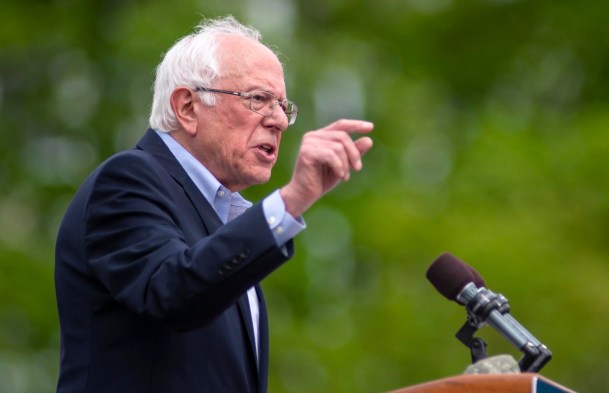
Sen. Bernie Sanders on Sunday outlined a broad plan to combat systemic racism in the country’s criminal justice system by introducing sweeping reforms to everything from police departments to after school programs, and undoing large swaths of the 1994 crime bill.
Much of Sanders’ proposal to reform the justice system is centered in beliefs he has long held, dating back to the 1980s as mayor of Burlington and his early days in the U.S. House of Representatives. However, his stance on racial inequality and how that interacts with the criminal justice has evolved over the years.
“We’re going to ask why it is that we have more people in jail in America than in any other country on earth, disproportionately African American,” Sanders said during a town hall in Columbia, South Carolina, over the weekend.
Sanders’ proposal includes legalizing marijuana, banning private prisons, stopping the practice of cash bail and demilitarizing local police by ending federal programs that provide military-grade equipment to law enforcement.

The measure would also raise the threshold for when drug charges are federal offenses, institute a full review of the current sentencing guidelines and end the sentencing disparity between crack-cocaine and powder-cocaine.
Sanders had already committed to signing an executive order legalizing marijuana. His new plan would also expunge prior cannabis convictions, with the purpose of making sure revenue from legal drug sales is invested in predominantly black and brown communities.
“We are going to end the so-called war on drugs, which has destroyed so many lives,” Sanders said Sunday.
Sanders, who supported the now controversial 1994 crime bill, did recognize at the time that criminal justice practices in the 1990s were mostly targeting non-white people. But it was not a major policy issue for him.
“It was never a central concern,” said Garrison Nelson, the longtime University of Vermont professor of political science.
Nelson added that he sees Sanders’ new criminal justice policy as a way for the Vermont independent to contrast himself with President Donald Trump and put distance between himself and other Democratic candidates.
The crime bill, which former Vice President Joe Biden helped author, has been roundly criticized by Democrats this election cycle for including a mandatory life sentence for repeat offenders and unfairly punishing crack-cocaine offenses compared to powdered cocaine, which critics blame in part for the mass incarceration of minority men.
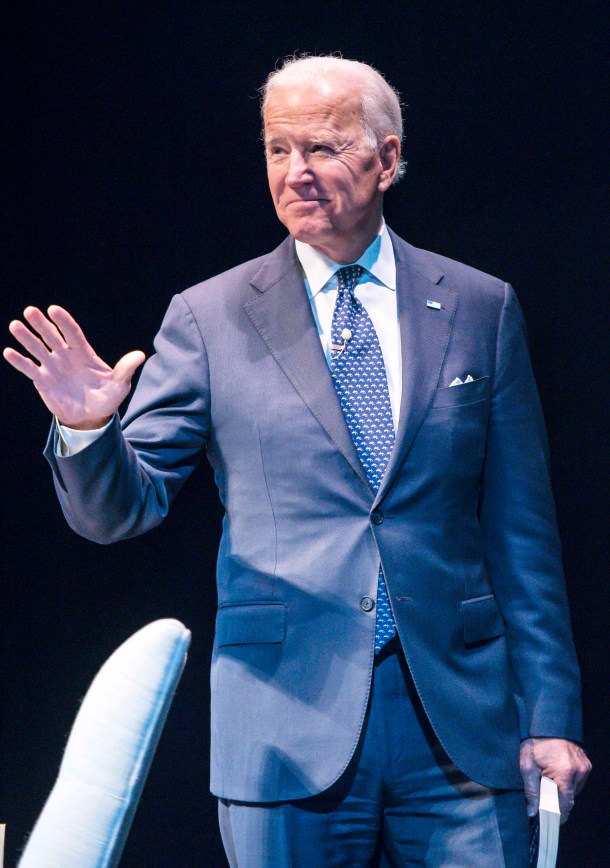
The legislation, which was the largest crime-control measure in U.S. history, also provided the country with thousands of new police officers, billions of dollars in funding for prisons and millions of dollars in funding for crime prevention programs.
At the time, Sanders was attacked by members of the progressive media for his support of the bill. But he defended his position, saying that though he didn’t agree with all aspects of the legislation, the crime prevention funding offset any negative consequences.
Sanders also strongly denied the measure was racist, according to the Associated Press, because 29 of 35 members of the Congressional Black Caucus had voted to bring it to the floor of the House for a vote.
“The reality of what goes on in Congress is if that bill had failed, the crime bill that would have gotten out of Congress would have been far worse,” Sanders said in 1994. “The bill would have been a strictly punishment bill without any prevention features.”
Sanders was castigated during his 2016 presidential bid for not seriously addressing racial injustice, but now has embraced policies aimed at correcting the “historical legacy of institutional racism in this country.”
Though his rhetoric has evolved to explicitly address institutional racism, other parts of his criminal justice policy, like his call to end mass incarceration and address the “root causes” of crime, have been measures Sanders has supported since the 1980s.
In 1986, Sanders, who was running for governor, supported the creation of a task force to concentrate on youth substance abuse in Vermont.
“In Burlington,” Sanders told the Burlington Free Press at the time. “We have started a very successful Youth Office which has developed a whole range of social, cultural and intellectual activities for our youth … Our belief is that if we can provide exciting, meaningful activity for young people, they will feel more a part of society — and much less likely to turn to self-destructive activity.”
In Sanders’ current criminal justice policy proposal, the Vermont independent says he would heavily invest in after-school programs, trauma-informed care and services, drug addiction treatment centers and financial support for communities with high poverty rates.
In 1991, Sanders told his fellow members in the U.S. House of Representatives about how the Violent Crime Prevention Act of 1991 was not a prevention bill but a “punishment bill, a retribution bill, a vengeance bill.”
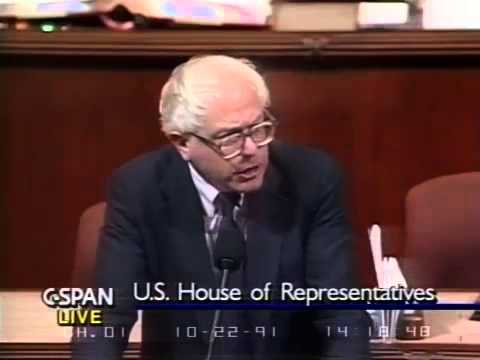
Sanders said the federal government should be focusing on the reasons behind childhood poverty and substance use instead of putting forward “tough on crime” legislation.
“Let’s deal with the causes of crime. Let’s demand that every man woman and child in this country have a decent opportunity and a decent standard of living,” Sanders said. “Let’s not keep putting poor people in jail and disproportionately punishing blacks.”
Sanders’ justice reform policy would also decriminalize possession of the opioid addiction drug buprenorphine and target cutting the country’s incarcerated population in half. Similar plans were pushed by Progressives in the Vermont Legislature last session.
A buprenorphine decriminalization bill died in the Vermont House last year. Vermont Senate leader Tim Ashe, D/P-Burlington, a Sanders disciple, has challenged his colleagues to reduce the state’s prison population by at least 15% by 2022.

