


[W]hile Vermont’s a difficult place to live if you’re a low-wage worker and need to find a rental, it’s a great place to buy a home if you’re looking for a vacation getaway. A real estate company puts Vermont at No. 2 nationally for the number of vacation homes per capita.
Maine is No. 1, and New Hampshire is No. 3, according to a Chicago-based company called Digital Third Coast. The study’s authors said they researched vacation home data from more than 29,000 census-designated places in all 50 states.
The Midwest is far less popular; Illinois ranked last on the list with just 1% of its homes categorized as vacation homes, the study said. Ohio, Iowa, Indiana and Kansas had similar numbers. Digital Third Coast carried out the study for IPX1031, a subsidiary of Fidelity National Mortgage Co.
About 17% of the housing units in Vermont – around 58,500 — are vacation homes, said Tricia Harte, an outreach manager for Digital Third Coast. Using data from 2017, the company found that about 19% of the homes in Maine – about 143,300 – were vacation homes, and nearly 12% of the homes in New Hampshire – about 75,000 – were vacation homes.
The top three locations in Vermont for second home ownership were Greensboro with 81%, Quechee with 69% and Proctorsville with 45%, according to the IPX study.
The Census Bureau defines vacation homes as housing units that are “vacant for seasonal, recreational, or occasional use,” the company said.
Second home ownership is an important part of the tourism picture in Vermont, which sees nearly 13 million visitors each year, according to the state’s division of Tourism and Marketing. Visitors spend about $2.5 billion on lodging, food and drink, goods and services, the division says.
Vermont is well-positioned as a place to attract second home owners, with Montreal less than two hours away to the north, and Boston two and a half hours from the southern Vermont ski areas. New York City is about five hours south of Killington, the state’s largest ski resort.
In March, Forbes magazine published a list of the most profitable places to own a short-term rental, and Killington was in the top five.
But second home ownership – and the online vacation rentals that often accompany it – is also seen as one of the reasons for Vermont’s high housing costs. The Vermont Housing Finance Agency says a shortage of available housing has allowed sellers and landlords to charge more, driving rental housing out of the reach of low-income Vermonters. VHFA said the rental vacancy rate in Chittenden County was 2.8% in 2017, where 5% is seen as a healthy rate.
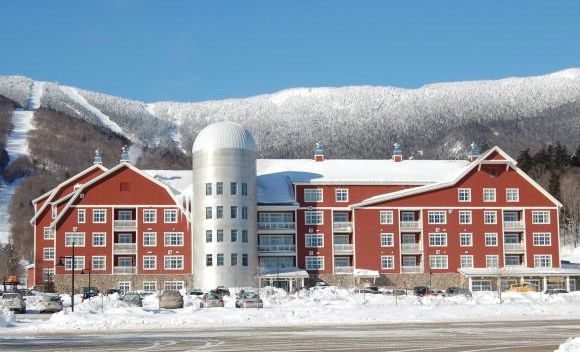
The average Vermont renter makes $13.40 an hour and can afford to spend about $700 per month on rent, according to a report published by the National Low Income Housing Coalition. But the average statewide fair market rent is much higher: $1,184 per month for a two-bedroom apartment and $945 per month for a one bedroom.
The housing shortage is particularly acute in resort areas. In Woodstock, a community group has joined forces to help medium-income people buy homes in the village, which has a dearth of full-time residents.

Win Smith, the owner of Sugarbush ski resort, is one of many business owners who positions housing as a critical employment issue. Smith, who seeks to add 500 or 600 winter people to his summer workforce of 460 full- and part-timers, has said he cannot attract workers because they can’t find a place to live. Last year he bought a local inn to use as housing for workers, and he plans to add more rentals in the coming season.
Sugarbush draws its ticket-holders from a large pool of second home owners in the Mad River Valley, and Smith characterized the high rate of second-home ownership as a “mixed blessing.” But he noted that Airbnb, VRBO, and other online vacation rental companies – which are often used to rent those second homes when the owners aren’t using them — had made it difficult for renters to find short-term housing while working at the resort.
“Looking at the valley here, there are a tremendous number of homes on Airbnb and VRBO that were not a few years ago,” said Smith.
Smith has deployed a summer intern to find out exactly how many online rentals there are in the valley. There is no statewide source of similar data, although some affordable housing organizations have said it would be useful to them.
“I bet we’re going to be surprised about how many are actually out there,” Smith said. “It gives you a good indication of how much capacity we have. In the old days, you sort of knew, because you knew how many rooms there were in existing hotels. This has added a totally new dimension.”
