


John Antonucci is director of entrepreneurship at the Lake Champlain Regional Chamber of Commerce and executive director of LaunchVT, an early stage business accelerator that the chamber started seven years ago.
Antonucci moved to Vermont from New York to attend the University of Vermont, and spent 10 years teaching high school social studies at U-32 in Montpelier before starting a soccer and human rights program that worked in the Dominican Republic and Haiti. He became the leader of LaunchVT in 2017.
Antonucci said 17 of the startups that have completed the LaunchVT program have received angel investment, and eight or nine have received venture capital. About 75% of LaunchVT alumni are still in business or have been acquired, and collectively employ 200 people, though not all those jobs are in Vermont, he noted.
LaunchVT selects eight startups to take part in an eight-week business development program each year. Antonucci said 60 people applied this year to be part of the cohort; the eight accepted receive mentorships and trainings, and this year were awarded $35,000 collectively at the organization’s Demo Night in May. Antonucci said they are now receiving services worth $100,000 from law firms, marketers and other in-kind local sponsors.
Antonucci spent some time talking to VTDigger about entrepreneurs in Vermont. His responses have been edited for length and clarity.
VTDigger: How and why did the Chamber start LaunchVT?
John Antonucci: The Chamber was getting requests, primarily from young professionals in Chittenden County, to support them in not only finding existing jobs but to start new ventures. Nobody was supporting new companies that might have interesting business models and might be scaleable in on-trend sectors, primarily technology.
The Chamber seeded it with a little capital, had internal staff raise some money, and did an initial pitch competition and awarded the top winner with $30,000 right out of the gate. It expanded into a business accelerator.
VTD: Is it modeled on a program elsewhere?
JA: The models that work in other cities and states don’t really work here. There is a recipe for accelerators, and usually it involves big multinational or large corporations that can write million-dollar checks, contributions from the state, local and federal government, and a large density of entrepreneurs. We don’t have any of those things here. We have almost 30 financial contributors, and 20 in-kind service providers.
Our primary goal is not necessarily for companies to receive investment and make lots of money. Our entrepreneurs are connected to 50 to 60 really helpful people, and these are real connections, not just exchanging business cards. Some of them we give cash, but for all of them, we say, ‘Go work with this amazing law firm to help you figure this thing out.’ If we’d just given them cash they may never have gotten around to doing that.
We know in business in general, relationships are far more important than money.
VTD: What kind of candidates do you look for?
JA: They have to be in-market and generating revenue, or have some other kind of validation that proves they have a viable product and capable entrepreneurial team.
If you’re thinking about starting a business you might not be a good entrepreneur. The best entrepreneurs are the ones who are compelled to start something because they have no other option. They think, ‘This is such a problem that I have to solve it.’ Then, ‘I have solved it, and now I have to share it with everyone else.’
Or, ‘I just discovered a far better way to do this, and I need to share this with people.’
When we are evaluating what startups to bring into the accelerator, we are looking for clarity of vision, tenacity and stubbornness and resilience in the founders as much as we are in the product and the quality of the solution.
We try to find people who have real spirit and drive.
VTD: Where does the Jump/Start program fit in with all this?
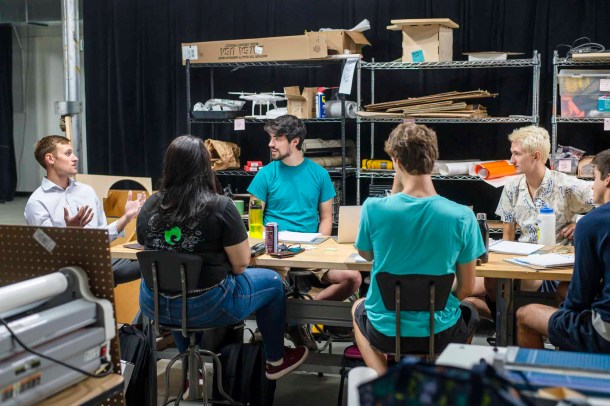
JA: That’s a collaboration between LaunchVT and Generator Makerspace. They have makers who had designed and built products they wanted to bring to market and didn’t have the business background to do it. LaunchVT provides that. Generator provides Jump/Start entrepreneurs with an 11-week training session with access to the Generator Makerspace, a $1,000 stipend and free classes to help them refine their prototypes. They can then apply to LaunchVT if they want to.
We’re now doing something similar with several organizations around the state through REACT, or Regional Entrepreneurship Acceleration Curriculum and Training. That’s the name we’ve given to the support we’re providing to partner organizations.
VTD: Doesn’t the Small Business Development Center do this?
JA: They do it in a lot of different ways. They will do one-on-one counseling, and they work a lot with a lot of Main Street businesses which we don’t typically work with, but the main difference is we take people who are just getting started, we put them in a cohort with others who are just getting started, and run them through a comprehensive program. SBDC doesn’t do that. They do counseling on specific issues.
We just trained someone from the SBDC, so I imagine we’ll be collaborating with them in the future. Entrepreneurs need multiple contact points of support to be successful; one program isn’t going to solve all their problems.
VTD: What’s next for LaunchVT?
JA: Through REACT, we’re helping other organizations around the state create their own programs. In January, we bought a license for a nine-week curriculum from an organization called Co.STARTERS out of Chattanooga, Tennessee. Vermont Community Foundation is helping by providing us with $120,000 over three years for several different things, including REACT.
We are unique in that we don’t follow the conventional recipe. If it wasn’t going to work in Chittenden County, it sure as hell wasn’t going to work in Bradford or Lyndonville or Rutland or anywhere else. Since we’ve learned how to build a successful program in a resource-strapped environment, we’re offering that level of support to these organizations.
We’re saying, ‘Would you like to support entrepreneurs?’ If they say ‘yes,’ we say, ‘What do you need?’
We offer the license at a very low cost to these organizations. We’ve now run three REACT programs at Generator. The first ones outside of Chittenden County are due to launch in late summer at The Mint in Rutland and DO NORTH in Lyndonville. Space on Main in Bradford should happen before the end of 2019.
We are providing back-end support for the application, marketing suggestions, basics for cohort management, for bringing in external partners, bringing in guest speakers, even general logistics around what do you need in terms of space and how do you accommodate entrepreneurs for whom this is their side gig and they have day jobs?
VTD: What’s the goal of these rural programs?
JA: The primary goal of REACT is to keep creative entrepreneurial people in their local communities by providing them with another type of economic opportunity. Instead of providing a job, you’re helping them create their own job – and jobs for others.
Part of REACT is designed to give people a realistic understanding of what it means to run a business. If we can help someone not start a business because it’s not the right time for them, or the right product for that market, we consider that a success.
They are an entrepreneurial person, so by giving them all these skills, we help make sure the business they do start will be a good business – and that they didn’t start a bad business that was destined to fail. That’s not our primary goal, but we still consider that a success.
VTD: Is starting a business in Vermont different in any way?
JA: Here, all the companies – almost to a fault – have social responsibility or environmental sustainability built into their business models. I say ‘to a fault’ not because that’s a bad thing. It’s a wonderful thing. However, those models typically cost more to get started, and when you are a startup you have to be super nimble and frugal. So oftentimes it’s a heavier lift when you have those things built in.
One true competitive advantage here is you have access to high-level business advisors and mentors that you would not have in a larger place. By virtue of our smallness, you can talk to our top CEOs and CFOs, our people who have started companies that have exited for a billion dollars. You can get meetings with them and they will help you. That doesn’t happen in larger places.
But in Vermont, you can’t assume that you are going to have access to all the support you need to start your company. That’s the case everywhere, but in some larger places there is far more support. If you need someone to help you with software or marketing, there’s just not a critical mass here. You might end up meeting a great co-founder, mentor, or customers, but you can’t necessarily find people to help you with all the specific things you need for your business. So you end up trying to take it on yourself, which is often a recipe for failure.
If there are lots of startups going on there will be lots of people supporting them in terms of labor and financially. Here, there are a lot of great organizations like Vermont Center for Emerging Technologies, the Small Business Development Center, and the Center for Women & Enterprise, but they are all limited by capacity.
VTD: So should entrepreneurs move somewhere larger?
JA: No. You have to say, ‘What do you want to do?’ That might be a part-time gig, it might be a sole proprietorship, a single-person shop, a five-person shop.
If they want to scale globally and create lots of jobs, at some point they’ll have to be in a location where they have the infrastructure and talent and access to markets they need. They might need to move to a place like Chittenden County or another place with more infrastructure.
However, if the right scale for you is smaller, which is fine by the way, that message hasn’t been sent out enough to entrepreneurs.
If it’s enough for you to create a job for you and a couple other people, then sure, you can start a business in a rural community; in fact it’s a great place to start, especially if you are connected with your local organizations and community.
That’s the answer I have been trying to get across: That the right goals are the important part.

