


[H]ARDWICK — Vermont Natural Coatings, a company that makes a whey-based protective finish for floors, decks and other wood surfaces, plans to roll out a line of colored paints for walls next year.
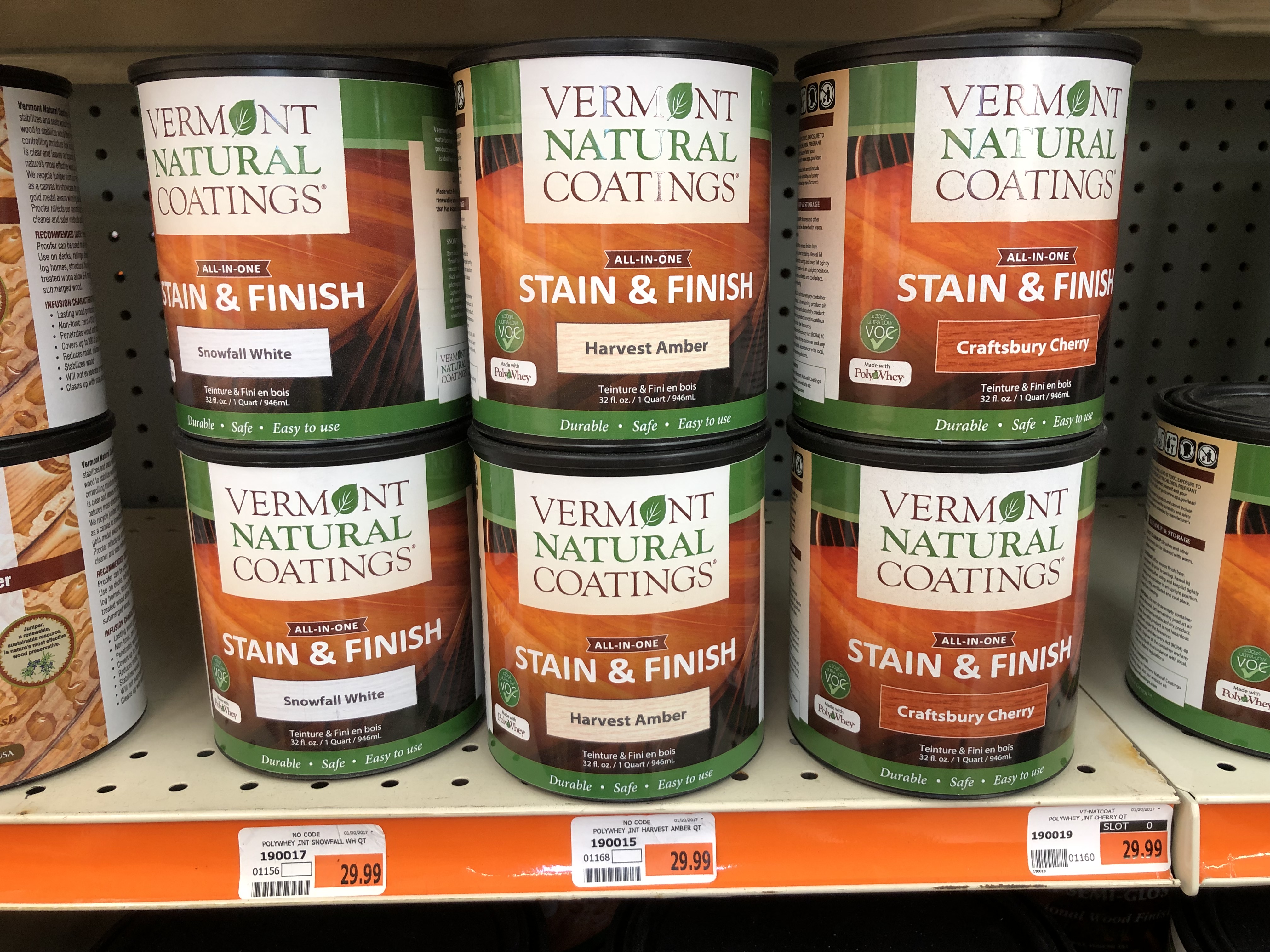
The line of paint will also be whey-based, using a finish called PolyWhey that is low in the volatile organic compounds, or VOCs, found in most commercial paint. VOCs are emitted by thousands of products and may have long-term and short-term health impacts, according to the Environmental Protection Agency.
“Nobody else has a paint like this out on the market,” said Andrew Meyer, who started Vermont Natural Coatings in 2004.
Vermont Natural Coatings sells its whey-based stains, protective films and waterproofing for sidings and decks at 300 stores around the country, including Ace Hardware stores in the northeastern U.S. Meyer, who grew up on his family’s organic dairy farm in Hardwick, earned a degree in environmental science from the University of Vermont and worked for former Sen. James Jeffords in Washington for several years before starting his company.
PolyWhey was developed by scientist Mingruo Guo at the University of Vermont. Guo had been working on a project that used whey proteins to create a film from whey —- a cheesemaking byproduct — that could be used as compostable food packaging or agricultural plastic.
As Guo started expanding the reach of his research to include coatings, Meyer, then still working for Jeffords, was part of the team that helped him secure federal funding for his research. Guo’s work resulted in the creation of the whey protein polymer that strengthened the coatings, replacing some of the chemicals that are typically used in commercially produced wood surface protectants.
Back in Vermont, Meyer raised money from family and friends to buy the licensing agreement for PolyWhey from UVM, built a small factory in Hardwick and spent two years experimenting with batches of wood coatings to sell in stores. He had stainless steel mixing tanks custom-made by a dairy industry manufacturer in China.
Now Vermont Natural Coatings, which has 11 employees, makes several protective products and a wood cleaner for decks, floors and other surfaces. The company uses whey from other states; Meyer said nobody in Vermont makes the purified whey his product requires. The company also has a research partnership with the small family-owned floor coating company called Böhme in Bern, Switzerland, and makes some of that company’s formulas for the North American market.
A few of the products made by Vermont Natural Coatings are certified by the USDA as bio-based, meaning they are derived from plants and other renewable sources and provide an alternative to conventional petroleum-derived products. The company is going through all of its formulations to seek that designation for more, Meyer said.
The paint, which Meyer expects to be ready for the market in the first quarter of 2020, will be unlike any other commercially available, Meyer said. He noted that it’s not milk paint, a popular specialty product often used for crafts.
“What will make this paint different in the worldwide market is it will have PolyWhey technology and also be bio-based, which means we’ll have the highest content of plant-based resins,” Meyer said. “Our goal is to make the highest quality, safest product.”
Meyer’s products are up against a widespread perception that non-toxic wood coatings are less durable than their solvent-based counterparts. That means it’s his role to perpetually explain where Vermont Natural Coatings fits into the market.
Bjarki Gunnarsson, the owner of the Wood Mill of Maine, a log home supplier, said he’d choose a higher-VOC product on his own floors because those products are more durable. Gunnarsson has been selling 5-gallon buckets of Vermont Natural Coatings finishes for about five years. He estimated about 10 percent of his floor finish orders were for Vermont Natural Coatings.
“It is a nice clean option if the customer has kids running barefoot over the floor,” he said.
But “it’s very difficult to make a low-VOC product that stands up to be as good as the regular VOC products, honestly,” Gunnarsson said. He added that the VOCs only off-gas when the product is wet; it’s safe when it’s dry.
Meyer said many of the very toxic products used decades ago have been discontinued because of regulation. Meanwhile, water-based coating technology has advanced since then, he said — so the natural products are more similar in durability to the mainstream ones.
“There’s old-school thinking that if it stinks, and it’s what my dad used, it must be good,” Meyer said. “But these technologies we’re using are new, and many are from Europe and aren’t in the U.S. It’s all shifting now.”
Vermont Natural Coatings also spends time and energy educating customers about how to keep floors clean from the shoe dirt and other grit that erodes finishes.
When floor finishes fail, “it’s the cleaning process a lot of the time,” Meyer said.
When it comes to paint, Vermont Natural Coatings is competing against an array of products with green claims on the labels, including low or no VOCs. The new paint, which will be made in Hardwick, “will give the consumer the choice of having an OK product that they can buy at one price point, and a very high-quality, environmentally safe product they can buy at another price point,” Meyer said. “New innovative things aren’t cheap, and we never set out to compete at that level where it’s just another low-margin high volume product.”
Meyer’s company is one of a few in the Hardwick area that have worked together to find mission-based investors; for Vermont Natural Coatings, that has meant an infusion of cash through convertible debt, which allows investors to recoup their stake in equity or cash.
Meyer thinks awareness of VOCs and their impact is growing.
“If someone is going to go out and buy organic grapes, the same can be true about what they breathe in and out in their home,” he said. “People are more aware of health.”
As for the paint, Pittsburgh Paints, a Fortune 500 company, sells a PolyWhey product now for cabinets and trim, and Meyer said he’ll continue to promote that while he sets about creating paint colors that match the industry standards. He has been working for six or seven years toward coming up with a line of paint, and he plans to add some mixing machines at his factory in Hardwick and construct a new building next summer to house the expanded product line. The company is also working on making a hemp-based floor coating.
As with the wood products, the bio-based paint will cost more than its mass-produced counterparts.
“We can’t just sell a can of paint at the lowest margin and compete at the lowest level,” Meyer said. “You really can’t make a mediocre product in Vermont and compete.”

