

[S]tate and federal officials have decided to spend an $850,000 settlement from the former owner of the state’s closed asbestos mine on road improvement projects in Eden and Lowell.
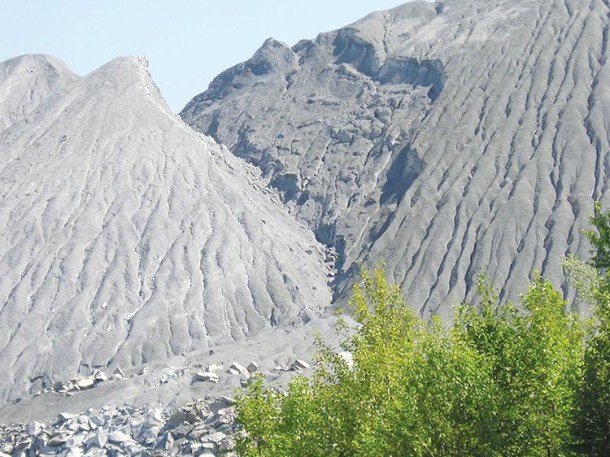
During the 1950s, the mine at the eastern base of Belvidere Mountain was the largest producer of chrysotile asbestos in the U.S. Now, the defunct mine, situated at the headwaters of the Lamoille and Missisquoi rivers, is a hazardous site with no clear plan for long-term cleanup.
Erosion from waste rock and mine tailing piles, the two largest total an estimated 30 million tons, polluted nearby streams and wetlands with heavy metals and asbestos.
In 2009, the state and federal government jointly reached a settlement with former mine owner, G-I Holdings. Representatives from the Vermont Agency of Natural Resources and the U.S. Fish and Wildlife Service opted to spend the settlement on road culverts in Eden and a culvert and road erosion projects in Lowell.
They say, in a plan finalized last week, that the projects will allow for better fish passage and improve water quality. Under CERCLA, the federal law that governs how the trustees can spend the settlement money, the money cannot go toward cleaning up the mine.
Eden and Lowell had expressed concerns that the initial plan for the money did not align with town priorities. Eden residents took issue with most of their share being used to replace a culvert on a seasonal, Class Four road. The Lowell selectboard wrote in a comment letter that they wanted to see road erosion projects funded.
Linda Elliott, a hazardous site manager with the state Department of Environmental Conservation, said the trustees reached a “compromise” in the final proposal for how to spend the settlement.
The final plan reallocates funding to cover part of the cost of replacing two culverts on Knowles Flat Road — a priority for the town — with the rest of the money going to replace a culvert on Square Road. In Lowell, the trustees decided to put $70,000 toward road erosion control projects prioritized by the town, with the rest going toward replacing a culvert on Irish Hill Road.
The trustees note that money from the settlement for the Square Road and Irish Hill culvert replacement projects will result in $300,000-$400,000 in additional federal matching funds.
“These projects are high priorities for state and federal biologists because of the benefits they provide to fish passage,” states the plan.
Leslie White, an Eden resident who has been active in the settlement plan discussions, said she was in support of having more money for roadwork on Knowles Flat Road. She still feels, however, that the trustees could have used the remainder of the funds for projects that would be more beneficial for residents than the Square Road culvert replacement.
“But they were only looking at it really from the natural resources side,” she said.
The $850,000 is not the only money for remediation efforts at the mine. The 2009 settlement also required G-I holdings to establish a trust to fund air monitoring and security measures at the site.
And in 2013, the Vermont Attorney’s General Office, along with the EPA, reached a settlement with current mine owner Vermont Asbestos Group.
In 1975, a group of workers bought the mine from G-I Holding’s predecessor, forming VAG, which owned the mine until it closed in 1993. In 2004, the state ANR started investigating the extent to which mine tailings were moving off-site. They found evidence of extensive pollution in the Hutchins Brook in Eden and Burgess Branch in Lowell — poor aquatic life, diminished canopy cover and asbestos fibers and other mining metals.
VAG, now owned by Morrisville businessman Howard Manosh, was found to be financially unable to cover the full remediation costs. The settlement obligates VAG to pay $5,000 a year until 2023 and to try to obtain as much as possible in insurance claims.
VAG also has to continue maintaining the temporary mitigation structures put in place by the EPA since 2007 — environmental features such as water bars, diversion trenches and berms to minimize runoff — for a decade after the settlement.
The DEC had hoped to designate the site as a Superfund site to provide federal cleanup money. John Schmeltzer, a hazardous site manager for the DEC, said in an interview last fall that natural resources damages, which is the class of settlement that the $850,000 belongs to, are structured to go “above and beyond” a cleanup that, in this case, never happened.
State and federal officials have estimated the cost of cleanup to be somewhere between $129 million-$203 million.
“It’s really just a small chunk of change on what the larger environmental damage is,” said Elliott, of the natural resources settlement.
Residents of Lowell and Eden both voted against the Superfund designation, leery of government intervention after the state Department of Health mistakenly reported that people living near the mine had an above-average rate of asbestos-related diseases.
Manosh has previously said he is seeking to remediate the site by trucking the mine tailings to an as-yet unbuilt processing plant in Groveton, New Hampshire. He could not immediately be reached for further comment Monday afternoon on his long-term plan for the site.
