


[V]ermont Tourism and Marketing Commissioner Wendy Knight is stepping down from her job after two years.
Knight’s last day is July 18, after which she’ll move to a job at her brother’s car dealership in Plattsburgh, New York, she said. Knight, who lives in Addison County, said the three-hour round-trip commute to Montpelier had prompted her decision to leave the post. She started in May 2017. The job pays about $103,000 annually.
One of Knight’s jobs at Tourism and Marketing was to promote Vermont not only to visitors but to people who might decide to stay and work in the state. She was instrumental in creating a program called Stay to Stay that welcomed visitors to visit on their own dime and meet with local employers, real estate agents, and others who could tell them about moving to the community.
The three-day Stay to Stay programs in Rutland, Bennington/Manchester, Brattleboro, and Burlington, which began last year, did prompt some people to move to Vermont. Matt Harrington, executive director of the Bennington Area Chamber of Commerce, said that he knows of three or four people who have moved to the Bennington area after learning more about Vermont in Stay to Stay weekends last year.
“Another dozen are very interested in my county; I can’t speak for others,” he said. The state held the weekend get-togethers in four locations last year. “And another dozen are kind of going through the motions (of preparing to move).”
Stay to Stay is separate from the $10,000 Remote Worker program, which reimburses the moving expenses of people who relocate to Vermont to take a remote job outside the state. Last year, the Legislature added a new program that reimburses people up to $7,500 to move to Vermont to take a job in the state. The new program is separate from the 2018 remote worker program, and neither falls under the purview of Knight’s department.
Tourism makes up about 5% of Vermont’s GDP, according to the Agency of Commerce and Community Development. Nearly 13 million people visit the state each year, spending $2.5 billion on lodging, food and drink and goods and services, according to credit card data analyzed by a research firm that submitted a report in 2017 to Tourism and Marketing.
Summer is Vermont’s busiest season, but the state’s tourism businesses also sees a brisk trade in winter and fall.
During Knight’s tenure, Vermont Life, the state’s regional magazine, ceased print publication, a decision made by Gov. Phil Scott.
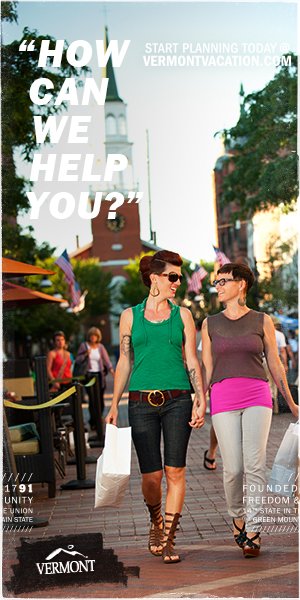
Under Knight, the state has also updated its marketing and his rolling out advertisements this summer that go beyond the usual image of Vermont as a place with black-and-white cows, red barns and rolling green fields. The new ads include photos show people with diverse ethnic backgrounds, physical abilities, and family structures.
“We’re making a concerted effort to acquire or shoot new images we need to represent a more modern Vermont,” Knight said Tuesday.

She said the Scott administration will commission a study this summer on how the short-term rental market is affecting tourism and also the rental housing market, with a goal of having the research ready before the start of next year’s legislative session. The study will look at how many short-term rentals there are, where they are, and who owns them, she said.
The Stay to Stay program is being expanded this year from four weekends to 15 in several new towns, including St. Johnsbury. Tourism and Marketing has also added weekends focused on skiing or mountain biking to the mix, and Knight said her staff members are now considering weekends aimed at specific sectors of the economy, such as technology and hospitality.
Harrington said Knight had modernized tourism marketing through better use of social media.
“It’s more social media than we ever had in the past,” he said. “And from a design and graphics standpoint, they’re tightening up Vermont’s image so it’s not just cows and farms anymore.”
Correction: A previous version of this article incorrectly stated annual tourist spending in Vermont. It is $2.5 billion, not million.
