


[B]URLINGTON — Suresh Garimella kicked off his tenure as the University of Vermont’s new president Monday declaring that the state of the university was strong and that he is “very optimistic” about the future.
“It’s clear that UVM has had stable, successful leadership now for years, and great stewardship from the board of trustees,” he said. “Really, my sense is UVM is in a great place with an upward trajectory.”
Garimella comes to UVM from Purdue University, where he was the executive vice president for research and partnerships. At Purdue, Garimella oversaw four consecutive years of record research funding and increased the university’s international partnerships.
Garimella assumes the position at a time when colleges and universities across the country are facing challenges including demographic changes with fewer students graduating from high school and increasing tuition costs.
“UVM is not an exception, but I think our assets are strong and we will be able to weather these challenges,” Garimella said.
Garimella replaces Tom Sullivan, who announced in August he was stepping down this summer. Sullivan had been the university’s president since 2012, and had overseen a successful $500 million fundraising campaign, an increase in graduation rates and a record number of applications.
But during Sullivan’s tenure, the implementation of a controversial budgeting model and racial incidents led to controversy, including student anti-racism protests that included calls for Sullivan’s resignation.
During his final month as president, Sullivan issued a formal apology for the university’s participation in the Vermont Eugenics Survey.
Garimella said he believed there had been a “fair amount of change” brought about since the anti-racism protests organized by the student group, No Names for Justice, in spring 2018.
“Obviously the work of social justice is never done,” he said. “We continue to work on it. I need to understand more … about what is the actual challenge, the core of it.”
Garimella said ensuring student success was his first priority, and said that he would encourage experiential learning and student internships.
“As president, I also need to be cognizant of and very careful about the financial picture, fiscal prudence, fiscal responsibility,” he said.
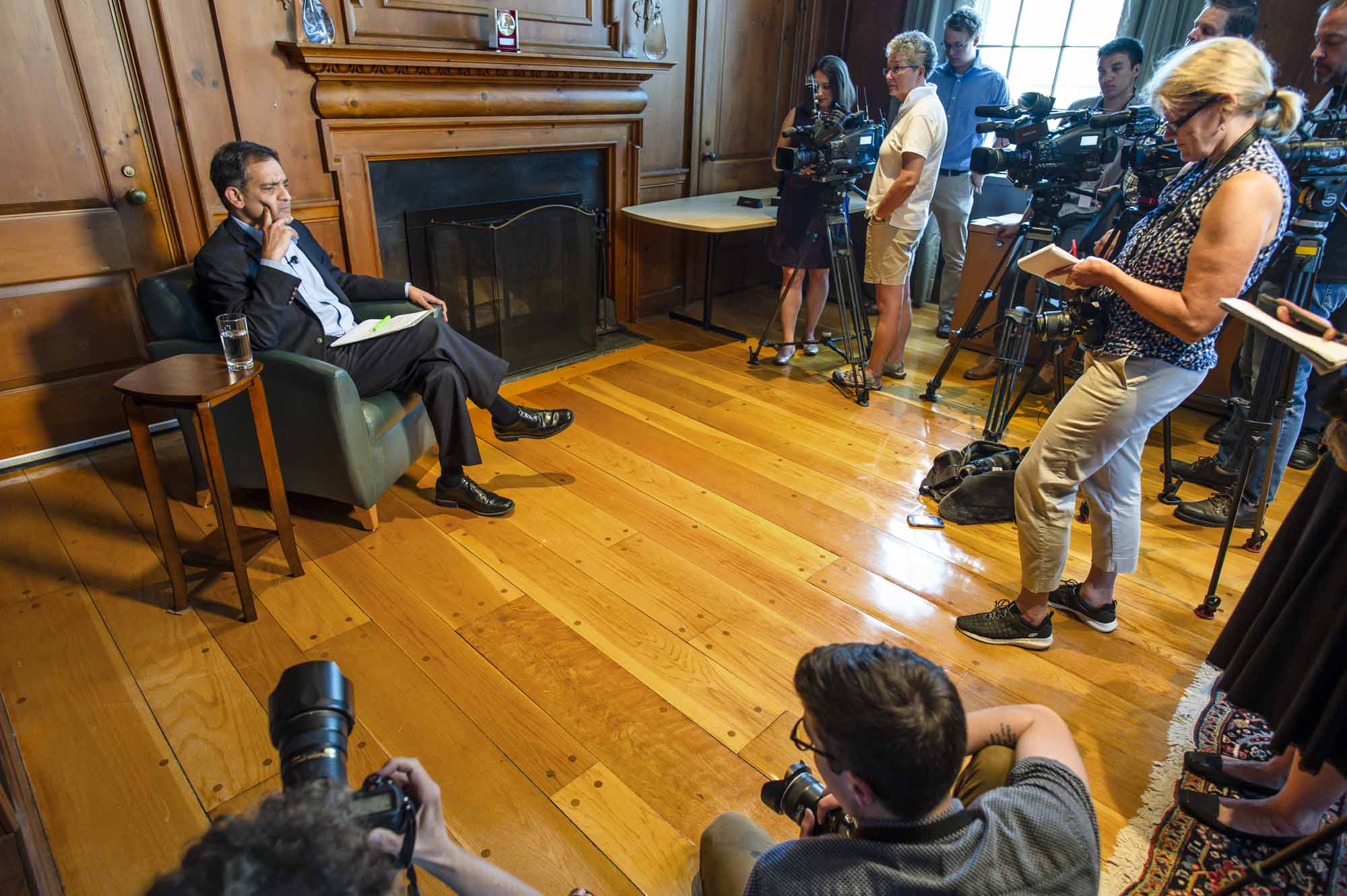
Garimella was the “sole finalist” in the university’s presidential search and the only candidate to appear publicly on campus. The university had originally vowed to bring multiple finalists to campus for a public vetting, but reversed course on the advice of the executive search firm contracted to lead its search.
Garimella visited the campus in February amid protests from faculty and students about faculty cuts in the College of Arts and Sciences and the university’s decision to have a closed presidential search.
He said that he intended to meet with students, faculty and staff to learn as much as he can about the campus community during the start of his presidency.
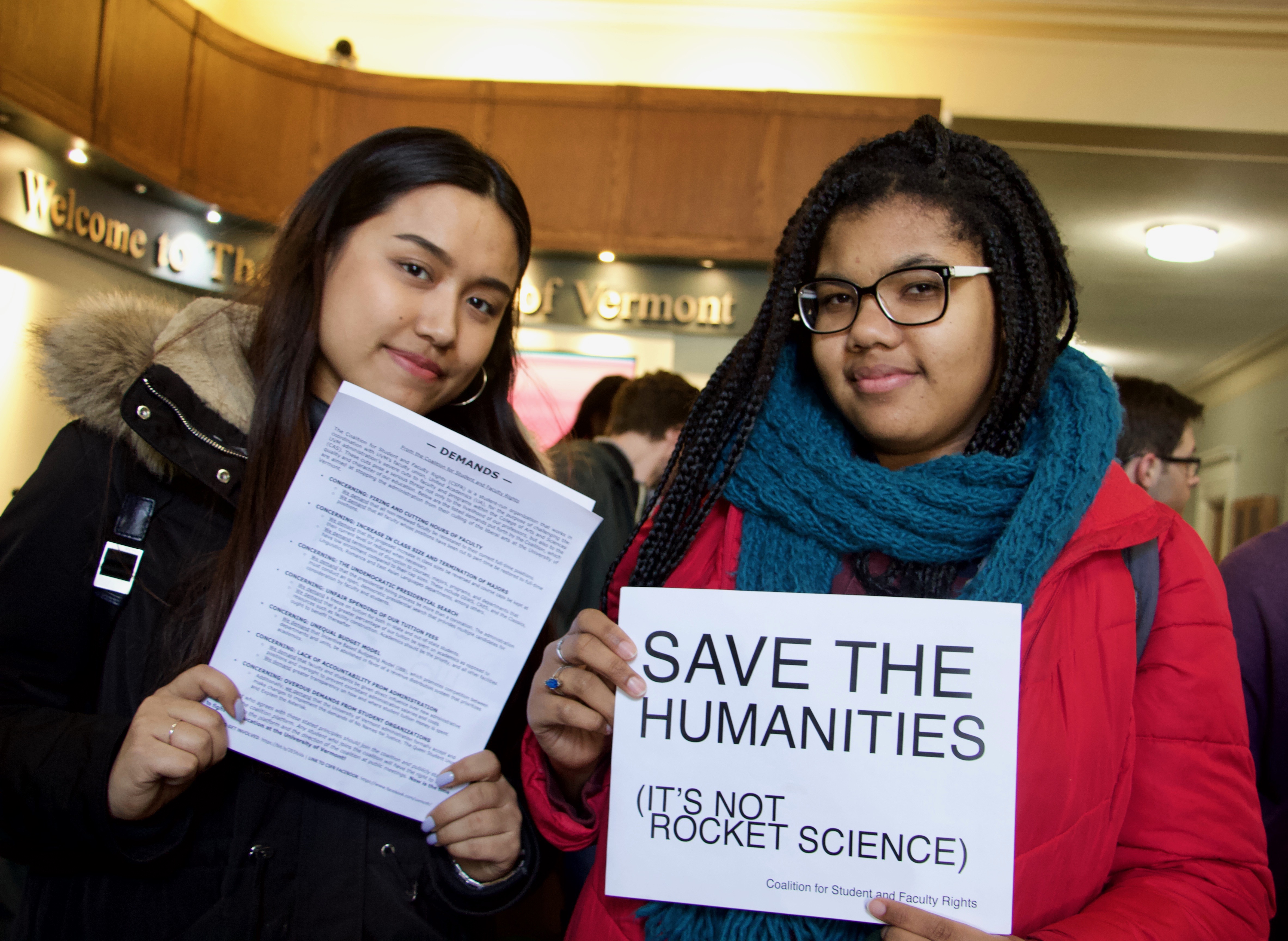
During those protests, faculty and students also questioned the construction of a new $95 million multi-purpose athletics facility on campus amid cuts elsewhere.
The new athletics center is in line with the university’s focus on wellness and will provide all students a nicer area to work out in, Garimella said. It will also help bolster recruiting, he said.
“There are a lot of positives that come from an investment like that,” he said. “Obviously, as you know, there have been some key alums who have been very supportive of that, and I hope they continue to do that.”
Garimella will make $630,000 a year as UVM’s leader. Of that, $480,000 is base salary, $50,000 is deferred compensation and $100,000 is in a retirement plan.
UVM’s status as a land-grant university was a major draw in his taking the position, Garimella said.
“It’s about access, that anyone should be able to access higher education, it’s about being useful to the community,” he said. “I just think it’s a beautiful concept.”
Garimella said he grew up going to public schools in India and also received higher education at public universities in the United States.
“I am a product of public schooling, I don’t come from means,” he said. “I think that everyone should have that opportunity.”
