



[B]URLINGTON – After an apology from the University of Vermont for the “destructive” impacts of the Vermont Eugenics Survey, an Abenaki chief involved in lobbying for it hopes the same message will follow from state government.
The Vermont Eugenics Survey was conducted from 1925 to 1936 and included “stereotyping, persecution, and in some cases, state-sponsored sterilization.” Led by UVM professor Henry Perkins, the program aimed to legislate a reduction in Vermont’s “social problem group,” including Native Americans, French Canadians, people of color, those with disabilities and the poor.
Don Stevens, chief of the Nulhegan Band of the Coosuk-Abenaki Nation, had been working to lobby Sullivan for the apology along with other Abenaki around the state. He would now like to hear an apology from the state, which passed legislation to implement eugenics efforts in Vermont.
“That’s a huge step. But it’s a first step,” he said of the UVM decision.
Stevens said on Monday that the Abenaki community had been working with UVM for more than three decades to push for recognition of the eugenics survey. University president Tom Sullivan, who will be stepping down later this year, issued a statement apologizing for the survey to faculty, staff and students on Friday.
“I offer sincere apologies for the suffering that resulted from this unethical and regrettable part of our legacy,” Sullivan said in the statement.
The Abenaki are Native Americans who have lived in the area that forms modern-day Vermont, New Hampshire, Maine and parts of eastern Canada, for thousands of years. The state of Vermont has recognized four tribes since 2011, but none have succeeded in obtaining federal recognition.
The Abenaki population was heavily reduced by the eugenics movement and state-sponsored sterilization efforts.
Stevens’ own grandmother was targeted by the survey, but changed her name three times to avoid the sterilization program. He said the history is “fresh” for him and the impact continues to be felt for the Abenaki today.
“People were afraid to acknowledge their heritage, so that really suppressed our people and suppressed families learning their heritage,” he said. “It caused people to fear the state of Vermont and the colleges.”
While the UVM-led Vermont Eugenics Survey stopped in 1936, sterilizations occurred in Vermont through the late 1960s, primarily among women.
Sullivan said the apology follows a Board of Trustees decision in October to remove former UVM president Guy Bailey’s name from the school’s Bailey-Howe library building. The vote followed student protests and a petition signed by more than 100 faculty members last year.
Bailey was involved in fundraising and supporting the Vermont Eugenics Survey, and advocated for Vermont’s 1931 sterilization law.
The board of trustees created a renaming subcommittee, which also recommended the university work to establish a lasting educational effort around the eugenics movement, UVM’s role and its impact on various groups.

“Let us move forward, together, as an educational community to ensure that such a grave injustice never be repeated,” Sullivan said in the letter.. “By providing relevant, accessible educational initiatives going forward, we have an opportunity to better come to terms with the past and learn from these tragic lessons.”
The apology also comes after a unanimous recommendation by the Vermont Board of Libraries to remove the name of Dorothy Canfield Fisher from the prestigious children’s book award. The decision came after months of discussion about the author’s ties to the eugenics movement. Following a change in state librarian, it was announced in May that the name will be dropped in 2020.
The eugenics survey tracked where Native Americans, people of color and others targeted went, and what they did. The documentation and records helped Abenaki tribes begin to receive state recognition in 2011, because it was necessary to prove lineage and reach a membership threshold.
But many Abenaki, such as Stevens’ grandmother, changed their names to avoid sterilization, making it sometimes difficult for descendants to track their ancestors.
Stevens said he would also like to see the establishment of a Native American studies program, places to display traditional artists’ work on campus and improved Abenaki student enrollment.
“If you look at the college there’s probably not a lot of native or Abenaki people enrolled because of the distrust,” he said.
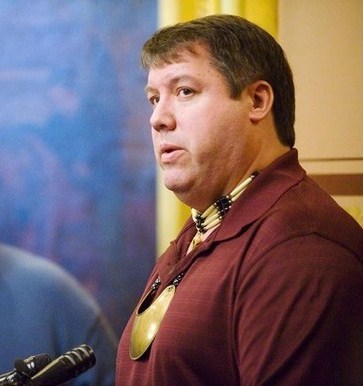
The apology on Friday was issued 83 years after the Vermont Eugenics Survey concluded at UVM. Stevens said he thinks there may have been fear of a need to make reparations, possibly delaying acknowledgement for so long.
“A lot of it was sweeping it under the rug. If you don’t have a large voice, your voices may not matter as much,” he said.
The Abenaki chief is turning his focus toward seeking an apology from the state.
Rep. Anne Donahue, R-Northfield, sponsored a resolution in 2010 that expressed regret for the sterilization of Vermonters. But that legislation stalled in the Human Services Committee and did not advance.
Rebecca Kelley, Gov. Phil Scott’s spokesperson, did not respond by Tuesday afternoon to a Monday email asking if the governor would support a state apology for the eugenics movement and survey.
Stevens said he hopes the state will follow the university’s decision.
“We were very happy that UVM has taken that step to heal,” Stevens said on Monday. “I think it’s a very positive thing to have done.”
