

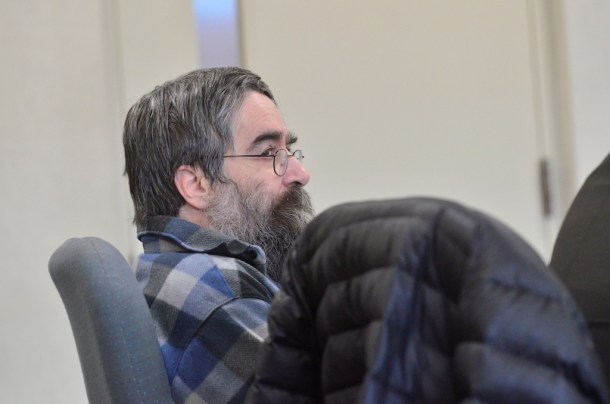
Editor’s note: It was announced Friday morning that Jose Pazos has died from complications of a heart attack.
BURLINGTON — The Burlington Police Department received an alarming call around 4 a.m. Tuesday morning — Jose Pazos, who faces first-degree murder and kidnapping charges, was a patient at the University of Vermont Medical Center without law enforcement supervision.
Pazos is under the care and custody of the Department of Mental Health as he has not been ruled competent to stand trial for the 2010 murder of Kathleen Smith, a Burlington woman.
Police say they are alarmed that a man facing a murder charge would be left unsupervised. But a Department of Mental Health official says that while gaps in law enforcement supervision of patients facing criminal charges do happen when patients suffer health care emergencies, the public is not put at risk.
The incident comes at a time when the department is in the spotlight after Chittenden County State’s Attorney Sarah George recently dismissed two murder charges and an attempted murder charge after determining the state would be unable to rebut the defendants’ insanity defenses.
That decision has sparked a conversation about the roles of the criminal justice system and Department of Mental Health in ensuring public safety after individuals are determined to be insane at the time they commit crimes.
Jon Murad, deputy chief of operations for the Burlington Police Department, said the BPD received a call from an “interested party” at the hospital early Tuesday morning that Pazos was there unattended.
“He was there for medical treatment, he did not appear to have an escort, and that gave us a great deal of concern,” Murad said.
UVMMC spokeswoman Annie Mackin said that Pazos is a patient at the hospital in critical condition, but that the hospital could not share any more information about his condition due to health care privacy laws.
Murad said that Pazos had suffered a “serious health condition” but that he did not have any more information about his medical status.
“That is a serious case in our department’s history,” Murad said. “We followed that through believing he was a dangerous person, and having him back in the city without communication with us gave us a lot of concern.”
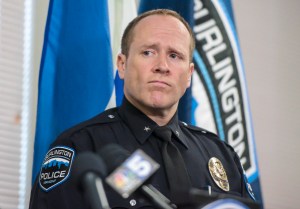
Murad said the department was told the Chittenden County Sheriff’s Department had taken over a supervisory role around 9 a.m. Tuesday.
While the Chittenden County Sheriff’s Department say they never had custody of Pazos, Lamoille County Sheriff’s Department Capt. Bill Morley said his department has had an officer dispatched to the hospital since 7:45 a.m. Tuesday.
Mourning Fox, the deputy commissioner of the Department of Mental Health, said he could not speak about any specific cases or individuals due to federal health care privacy law.
When a DMH patient facing legal charges suffers a medical emergency, Fox said, it can take some time for the department to find a sheriff’s department able to provide supervision at the hospital where the patient is taken.
“Since an emergency medical event happens very quickly, there can be a lag between the time there is a medical emergency and a medical admission to when we’re able to facilitate some type of sheriff supervision,” he said.
Fox said the public is not put in danger by the gaps between patients arriving at hospitals for medical treatment and sheriff supervision, which can sometimes take “many hours” if sheriffs do not have staff readily available.
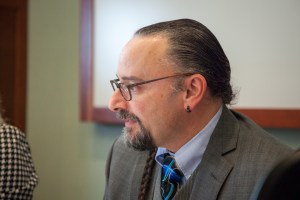
“They are going to a place where there is already facility staff, UVM has its own law enforcement as well,” Fox said.
Patients remain in the “care and custody” of the commissioner of the DMH while they are at a medical hospital, Fox said, and cannot just walk out of the hospital after being discharged.
While patients are technically discharged from DMH treatment when they are admitted to other hospitals, the DMH is in steady contact with their doctors at the admitting hospitals, Fox said. Patients are then re-admitted to DMH treatment when they are released from the admitting hospital.
“In the meantime, we don’t admit someone into his bed, because we need to ensure that we are able to take someone back into that bed,” Fox said.
Police Response
Murad said the Burlington Police Department sent an officer to UVMMC to learn more about the situation after receiving the call early Tuesday morning,
But he said the department had been unable to determine if taking any action to supervise Pazos would have been in its jurisdiction.
“The legality of his custody is unclear, and whether or not there would have been an ability for an officer to prevent him from leaving if he had chosen to do so, those were issues we were discussing,” Murad said.

The officer who responded to the hospital determined it was clear that Pazos “wasn’t going anywhere” due to the seriousness of condition, Murad said. Once the sheriff’s department had an officer at the hospital, the department’s public safety concerns were eased, Murad said.
“Appropriate steps have been taken to ensure public safety,” he said.
Still, Murad said the incident was concerning.
“In my experience, in many other jurisdictions, somebody in his position would have never been unaccompanied,” he said.
Mackin said the safety of patients, families and staff was the hospital’s top priority.
“We have security throughout the hospital 24/7 to ensure that we maintain a safe environment for healing,” she said. “When our staff believe a situation requires the support of law enforcement, we call them. They assist us several times each week.”
Morley said when called upon, sheriff’s offices provides basic security overseeing patients.
“We basically just keep an eye on the patient,” he said.
Pazos Case
Pazos is accused of murdering Smith because she had taken a position against him in a child custody dispute, according to court records.

Pazos plead not guilty to the charges in November 2010, and has been at the Vermont Psychiatric Care Hospital in Berlin for years as he has not been ruled competent to stand trial.
“He is still liable to be tried for the murder for a particularly terrible murder that involved a lot of planning and a lot of effort,” Murad said. “This wasn’t an act of passion.”
Judge Martin Maley ordered another competency examination for Pazos in January. The results of that examination, conducted in March, are confidential and a hearing is scheduled for July 9.
George said she had heard that Pazos was at UVMMC.
“Any time Mr. Pazos is left alone in the community, I would be concerned,” she said. “It is my understanding that since he’s been at the hospital, he’s been incapacitated, so I don’t have any information to show he was ever a risk to anybody.”
George said that she believes Pazos was sane at the time of the crime.
“We don’t have expert testimony one way or the other on his sanity, but I do not believe he was insane at the time,” George said. “Just given the level of evidence against him and the motive behind it.”
