

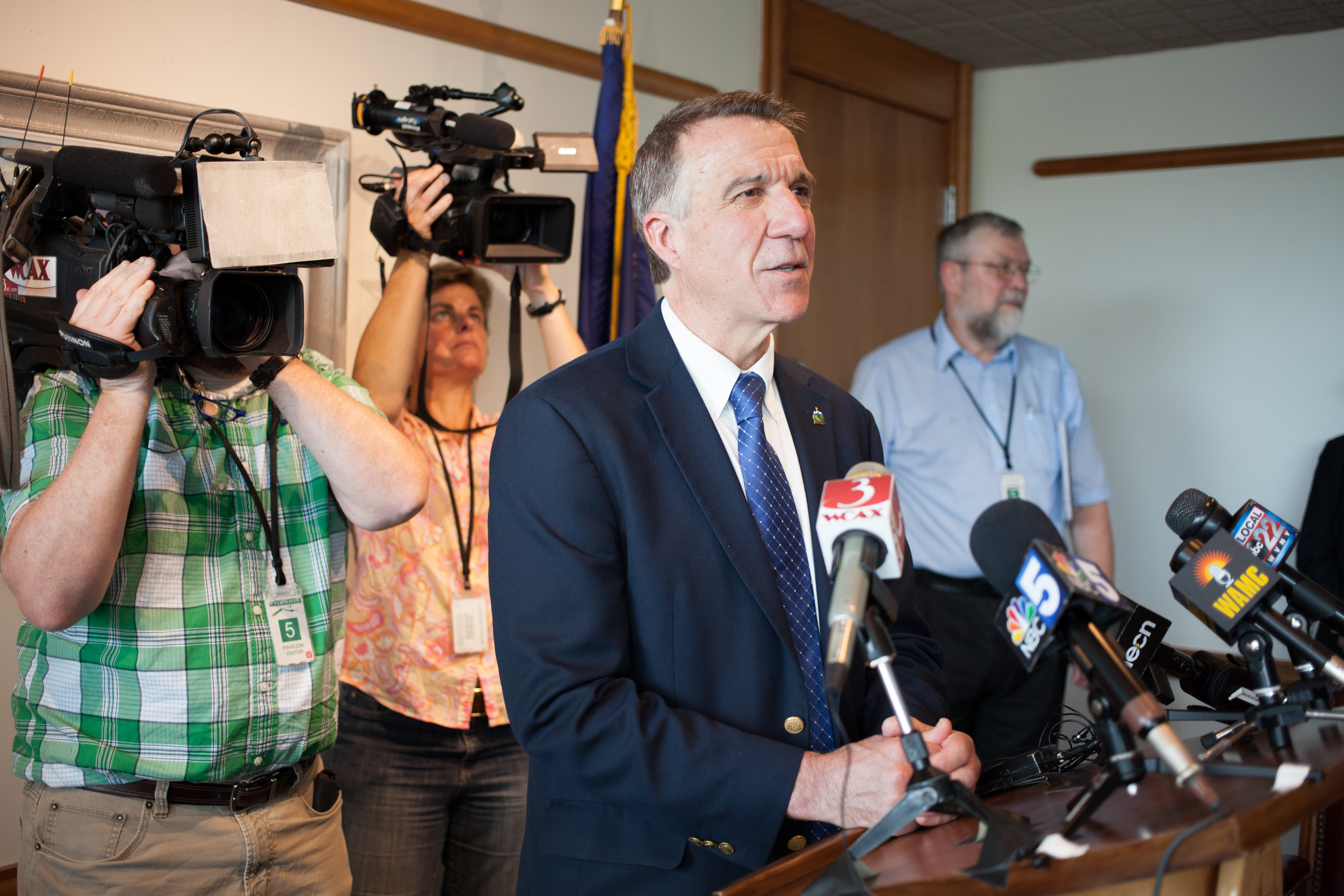
[G]ov. Phil Scott, along with 11 other governors, signed a letter Monday asking congressional leadership to support legislation that would allow states to legalize and regulate marijuana without fear of federal intervention.
The bill in question, the Strengthening the Tenth Amendment Through Entrusting States (STATES) Act, would ensure that states’ emerging legal marijuana industries are untouched by federal law enforcement. Though this is already common practice, the act would codify that in federal law.
The letter, first reported by Marijuana Moment, got bipartisan support, with signatures from the governors of California, Colorado, Maryland, Massachusetts, Nevada, New York, North Dakota, Oregon, Pennsylvania, Utah, Washington State and Vermont — a group that includes seven Democrats and five Republicans.
A similar letter sent to legislators in 2018 saw neither Scott’s signature, nor that of Utah’s governor, but did include the governors of Alaska and New Jersey, who didn’t sign this year’s version.
Jake Perkinson, who served as co-chair of the governor’s marijuana commission, said Scott’s change of heart is pretty typical when it comes to marijuana policy, since so much new information is learned about the industry every year.
“This is an area where things really do develop quite quickly,” Perkinson said. “Things aren’t necessarily consistent year to year, both because of the development of reality and the information learned about cannabis itself and the cannabis business.”
He said the commission’s 2018 report gave the governor a lot of information that could have helped him reach that conclusion.
“It would be a positive step for the federal government to back off in the realm of cannabis regulation and let states take that on,” Perkinson said.
The last time the federal government got involved in Vermont marijuana regulation was in January, when a Church Street business, Good Times Gallery, was accused of selling marijuana to customers, resulting in a raid by federal, state and local authorities during which the shop’s owner was arrested.
Andrew Subin, a lawyer and the co-owner of Vermont Cannabis Solutions, said that since marijuana was legalized in Vermont in July 2018, he hasn’t seen any prosecutions for cannabis or THC being illegally bought. What he has seen, Subin said, is the involvement of federal agents in state investigations — as was the case with Good Times Gallery — and one federal forfeiture of property. The property in question was involved in illegal cannabis cultivation, and was ultimately returned without explanation after his firm filed a claim for the property, Subin said.
But Subin said there are still a number of negative impacts that federal marijuana law has on Vermont residents. He said that Vermonters who live in federally funded housing can’t smoke weed at home like other residents can. Subin said the group also has seen people run into problems in child custody cases because DCF can view cannabis users as being willing to violate federal law. He said registered users of medical marijuana can also lose their right to possess a firearm under medical law.
“There would be some on the ground real impacts for some people,” Subin said. “Not so much in the setting of criminal law, but there are other rules linked to this.”
In the letter, the governors wrote that they were encouraged by a banking bill that would protect from federal law financial institutions that service marijuana businesses.

“As a result, companies in our states are forced to operate on a cash-only basis that creates unnecessary burdens and risks for consumers, businesses, employees and governments,” the letter says.
Subin said that regardless of Scott’s reluctance, it’s clear that marijuana legalization is sweeping the country, and he’s probably just following suit.
“You can’t put the toothpaste back in the tube,” Subin said. “The marijuana industry is here. Their holdouts are because they’re still living in a time where it’s all prohibited, but they’re starting to come around and see the things they were scared of, no one needs to be scared of those things.”
A bill to create a legal market for marijuana died in the Vermont Legislature during the recently adjourned session. After the state legalized limited possession and cultivation of marijuana last year, many observers believed lawmakers would quickly approve a system to tax and regulate cannabis.
