

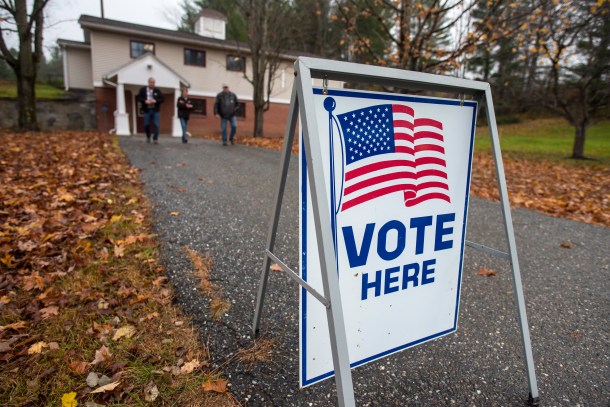
The Legislature left two towns waiting until next year on proposed amendments to their voting laws, one allowing non-citizens to cast ballots and another that would lower the voting age to 16.
Both charter changes passed in the towns themselves, but must also be approved in the Legislature, where their fate will be decided next year.
In Montpelier, voters approved a ballot initiative to allow noncitizen voting in city elections. In Brattleboro, the charter amendment would permit residents age 16 and over to vote, again only for municipal races and issues.
Montpelier became the first municipality in Vermont to approve noncitizen voting in November, and Brattleboro agreed to change its voting age in March.
But despite the towns’ approvals, the bills will remain in limbo until at least next January. As of the end of the 2019 legislative session, Montpelier’s voting bill passed in the House and ended the spring waiting in the Senate, while Brattleboro’s bill remained in the House.
Proponents of both bills said that they want voters to represent their towns’ populations — and that towns should be able to make their own choices on such issues.
Rep. Sarah Copeland-Hanzas, D-Bradford, chair of the House Government Operations Committee, noted that a decreased voting age for local elections would allow students to practice voting before they gain full voting rights at 18.
“For that first voting opportunity to happen as an 18 year old means that we’re missing out on opportunities to really teach young Vermonters how to participate in their democratic process,” Copeland-Hanzas said.
“If they were allowed to vote as 16 and 17 year olds… [voting] could be a part of the curriculum of their high school social studies class,” she added.

Vermont, like states around the country, has seen a steady decrease in democratic participation in recent decades, although the percentage of eligible voters that are registered to vote hit an all-time high in the last election at 92.5% thanks to some of the most progressive election laws in the U.S.
Copeland-Hanzas added that she was interested in reducing the local voting age on a state level, not just in Brattleboro. However, the House “did not have the time in a short and very busy legislative session” to make it happen in 2019, she said — but the initiative will return in 2020.
When discussing the Montpelier noncitizen voting bill, advocates focused primarily on the importance of inclusion.
“I think this is a small way of encouraging people who have made their homes in Montpelier to be part of our community,” said the bill’s sponsor, Rep. Mary Hooper, D-Montpelier.
Copeland-Hanzas added that it “only makes sense” for people who live and pay taxes in a city or town to be able to participate in local government.
The Montpelier and Brattleboro bills are among five out of the 12 charter changes that were not passed this session, the first of the two-year biennium.
According to Karen Horn, an advocate from Vermont’s League of Cities and Towns, the bills’ delay is connected to the broader difficulties that towns face while changing their charters.
“I think the issue of charter changes and how the legislature deals with proposals that have been adopted by the local voters is something that everybody should be concerned about,” Horn said.

Sen. Jeanette White, D-Windham, chair of the Senate Gov Ops Committee, added that the voting bills in particular pose “an issue of constitutionality and legal ramifications” — making them potentially more difficult to pass.
The noncitizen voting bill faced particular controversy in the House, where some members argued that the bill was unconstitutional.
Despite the hurdles that the bills are facing at a state level, Hooper said that she had heard no criticisms from Montpelier residents themselves. “One is always more likely to hear if people are not in favor of something, and I have not heard anybody in Montpelier not be in favor of this,” she said.
But local support for the bills may not be enough to convince the state legislature that they should be passed. In Vermont, municipalities require state approval to change their charters, a practice that means Montpelier and Brattleboro will maintain their current voting laws until lawmakers in the Statehouse decide otherwise.
“Particularly with respect to the 16 and 17 year olds voting in municipal elections, you don’t really see the downside of that for the state,” Horn said. “It sort of gets back to this whole issue of local issues that don’t affect the rest of the state — why not let town voters make their own decisions?”
