


[P]ROCTOR — You know the entrepreneur who can fix anything on the place with the materials at hand? That’s Proctor-based Carris Reels Inc., only on a different scale.
Although the premise of the reel company is simple (“we make squares into circles,” as CEO Dave Ferraro puts it) there are parts involved, and most of those parts are made at one of the company’s premises.
The wire and cable reel company makes the long bolts that hold its reels. It does its own shipping with its fleet of six trucks, which the company services in its own garage. It operates a freight dispatch of sorts that enables it to fill the trucks on their return trips so they’re not running empty.
The company, with $140 million in annual revenues, owns plastic plants in Rutland, Virginia, Mexico and Texas where it makes the plastic parts for its spools, and a mill where it machines plywood for the wooden components. Research and development happens at the company’s Center Rutland facility.
Pretty much the only big ingredient Carris Reels doesn’t own is the wood supply itself; that softwood comes from New England, Quebec and Arkansas. Even the ownership of the company happens in-house; Carris Reels is structured through an Employee Stock Ownership Plan, or ESOP.
“We have a governance model where we try to give our employees as much say in decision-making in how we run our company as we can,” said Ferraro.
Carris Reels was founded in Rutland in 1951 by Henry Carris, who passed the company to his son, Bill Carris, in 1981. It was the idea of Bill Carris — now chairman of the board — to convert the company to employee ownership, said Ferraro. One hundred percent of the company’s wealth is owned by the employees.
“This is a dream he had,” said Ferraro. “It was largely his design.”
Back in the early 1990s, when Bill Carris started working on the ESOP, there weren’t many specialists in Vermont to help structure the company; Bill Carris had to work with law firms in the Midwest, Ferraro said. Nowadays, ESOPs are much more common; Vermont has at least 40 of them, according to the nonprofit Vermont Employee Ownership Center. They include Gardener’s Supply Co. in Burlington, King Arthur Flour in Norwich and Chroma in Bellows Falls.
Carris Reels became 100% employee-owned in 2008. Every worker receives shares in the company, with 95% of the allocation based on salary, Ferraro said. The allocation formula has a salary cap of $49,000, meaning somebody making $60,000 or $100,000 doesn’t get any more stock than the person making $49,000 or less.
Bill Carris’ objective was to share the wealth, Ferraro said.
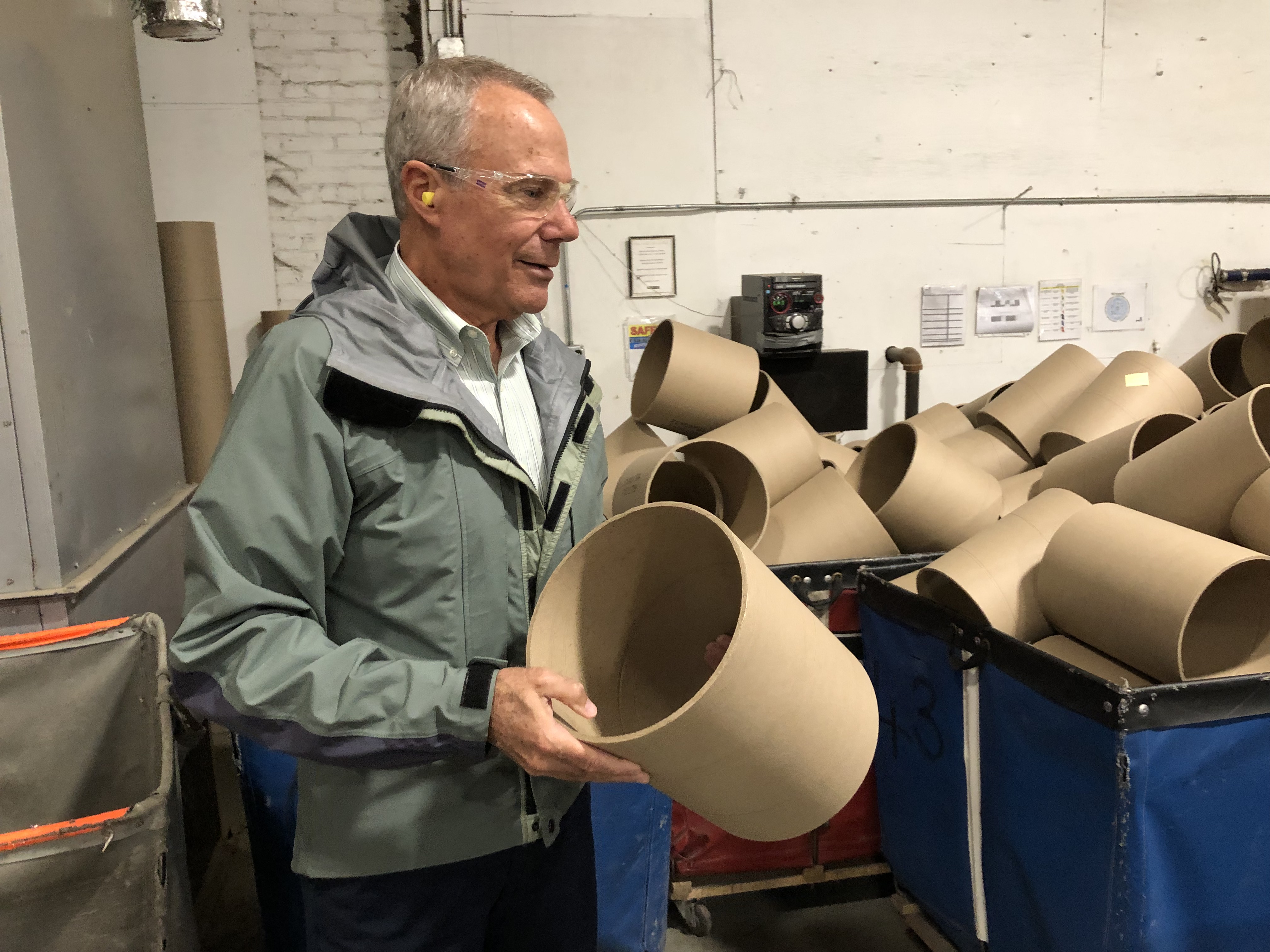
“He was all too familiar with the fact that capitalism can be weighted toward the higher-income people,” Ferraro said. “He made sure that as we came up with a way to divide up our company, the guys on the floor had as many shares as the senior management team.”
Workers who leave sell their stock back to the company, or roll the profits into a retirement plan such as a 401(k), Ferraro said.
The sharing philosophy extends to governance. One-third of the company’s 24-person steering committee is made up of workers who are elected by their peers. Another third is site managers, and the rest is management. The committee members – who come from all of the Carris Reels locations – get together twice a year in Proctor to talk about matters such as health care and strategic planning.
Carris has very few customers in Vermont, although it does do a brisk business with Champlain Cable, a company in Colchester that makes a billion feet of coated copper wire per year. Back in 1979, when Ferraro – a former Rutland EMT – started working at the company as a salesman, Carris Reels was a $25 million business with two locations, one in Rutland and one in Indiana. Today Carris Reels has 10 locations in North America, including two in Canada and one in Mexico. Carris Reels has 125 employees in Vermont and 755 total.
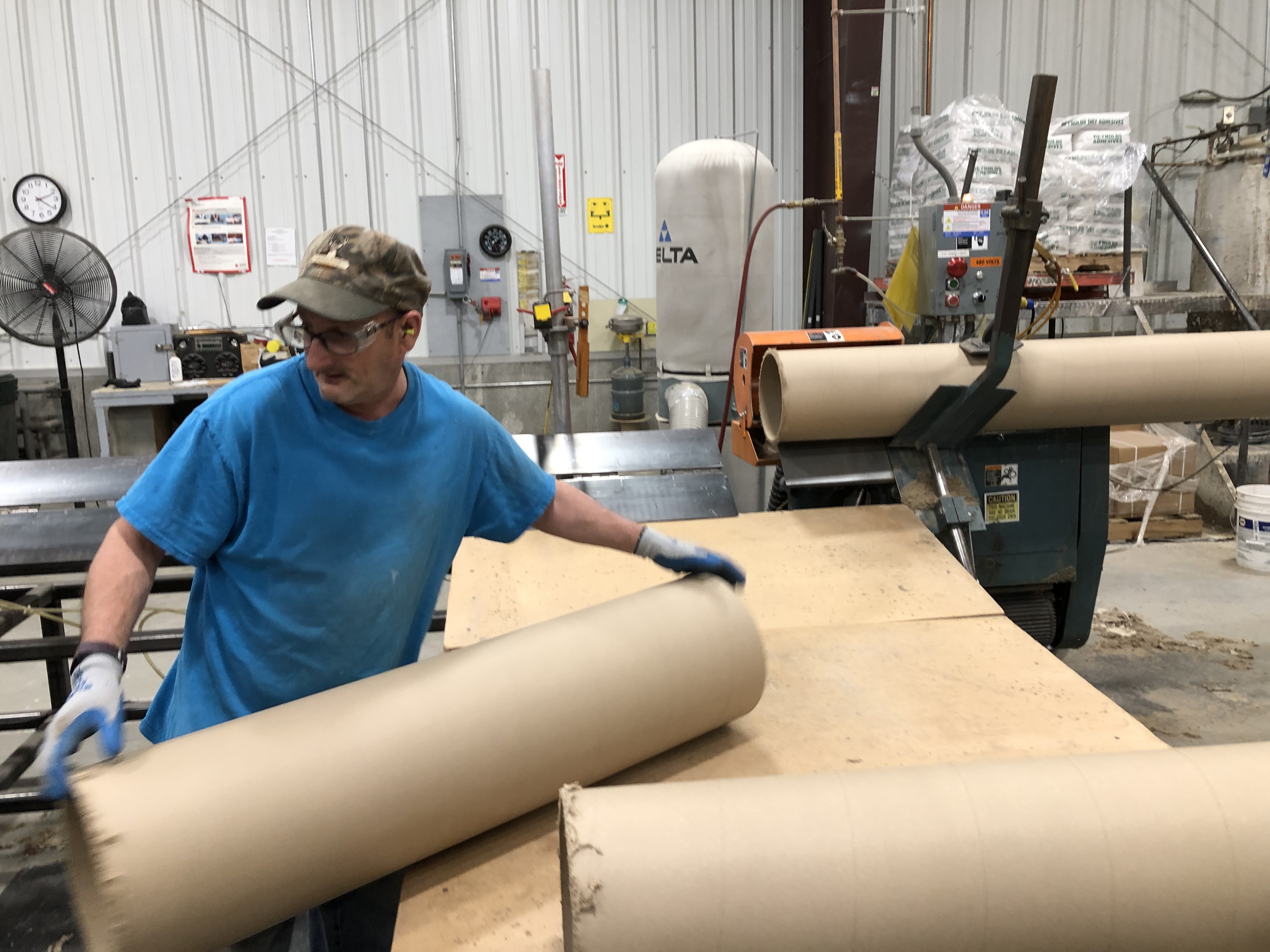
The Carris Reels home base looks nothing like the corporate offices of a large manufacturer that makes a commodity type product. Carris’ administrative offices occupy the former headquarters of OMYA, a mining company that was based in Proctor, a town that was once the worldwide center of the marble mining industry. The Vermont Marble Co., established there in 1880, employed several thousand people and at one point held all the rights to the marble deposits in Vermont, Colorado and Alaska, according to the Vermont Marble Museum, which is across the street from Carris headquarters. Vermont marble quarried there was used to build structures like the U.S. Supreme Court building and the Jefferson Memorial. The Tomb of the Unknown Soldier was carved in Proctor.
OMYA acquired Vermont Marble in 1976, and in 2007 started moving its headquarters from Proctor to Cincinnati. Many of the structures in Proctor, a peaceful and verdant small town, are made of marble. It’s a setting that Ferraro, a Rutland native, greatly appreciates and wouldn’t change, even though his frequent work travel has him driving nearly two hours to Albany to catch a plane.
Carris Reels can’t find one industrial building to contain all of its operations, so it has adapted to using seven of them, spread out over the Rutland region.

Many of the reels are returned, refurbished and resold. The Carris plant in Mexico recycles 1,400 reels a week and the Vermont plant 400 to 500, Ferraro said. The company is considering buying a plant in Chicago that focuses on reel recycling.
With 3,000 different types of cable being used to carry power, Ferraro feels confident about the future, and is investing in new equipment, thanks to innovations like autonomous vehicles and the advent of 5G cellular networks.
“It’s a huge opportunity,” he said. “For every wireless router, there are wires running somewhere. Look at our paperless society: There’s an awful lot of paper.”
At the beginning, all the reels were made of plywood. These days, they’re made from plastic, although many still have plywood centers and others have cardboard centers. It’s still more cost-effective to make any reel more than 3 feet in diameter – such as those used to carry ski lift cable – from lumber, Ferraro said. Its smallest reels are 4 inches, used for a welding wire package.
Most of the products made by Carris Reels go to the Northeast, with some shipped to the Midwest. A few go to Vietnam and Europe. Truckloads of reels are heavy, so it’s not cost-effective for companies to buy reels from far-off places.
“There are other competitors between us and them,” Ferraro said.
As for doing business in Vermont, where workers are scarce, Ferraro said he thinks employee ownership helps him in hiring.
“Everybody is pulling the wagon with the same objective of profitability,” he said. “Our ESOP is a good draw.”
