


[T]here was one holdout juror in the Steven Bourgoin murder trial, but that person eventually agreed with the rest of the panel that found the former Williston man was sane when he drove his pickup truck the wrong way on the interstate and killed five central Vermont teens.
That’s according to a different juror who spoke Thursday on the condition that her name not be used. She provided a glimpse of the deliberations that took place in secret for about 12 hours over parts of two days this week in a room outside a third-floor Burlington courtroom.
“I think we did the best we could is all I can tell you,” the juror said. “It was pretty gut-wrenching, the whole thing. There are so many ripples to this incident that will continue to go on forever.”
The juror then added that given the law and jury instructions, “I felt good about our decision, I think it was the only decision we could make.”
Asked about the toll of watching the emotional trial play out before her over 12 days of testimony, the juror said, “I’m still kind of in shock over the whole thing.”
Other members of the 12-person panel either couldn’t be reached for comment, or declined comment about the deliberations, a day after convicting Bourgoin of five counts of second-degree murder in the death of the teens, as well as other offenses.
Much of the trial, and according to the juror, much of the jury deliberations, centered on Bourgoin’s state of mind at the time of the fatal crash late on the night of Oct. 8, 2016.
Bourgoin, according to prosecutors, was behind the wheel of his 2012 Toyota Tacoma pickup truck driving the wrong way in the southbound lane of I-89 in Williston when he crashed into the 2004 Volkswagen Jetta with the five teenagers inside.
The teens killed in the crash had been on their way home from a concert at Higher Ground in South Burlington.
They were Mary Harris, 16, and Cyrus Zschau, 16, both of Moretown; Liam Hale, 16, of Fayston; Eli Brookens, 16, of Waterbury; and Janie Chase Cozzi, 15, of Fayston.
Moments following the crash, after the first Williston police officer arrived on the scene and ran to help the teens trapped in their vehicle, Bourgoin drove off in that cruiser.
He returned to the scene minutes later, and crashed into his already heavily damaged pickup at more than 100 mph.
The defense argued that Bourgoin was insane at the time of the crash, while the prosecution countered that his actions were fueled by anger.
The juror who spoke to VTDigger said Thursday that when the panel went behind closed doors to start deliberations Tuesday they finally talked about the case, which they had kept from discussing with anyone while the 12-day trial played out in front of them.
“At first, it seemed like everyone had a lot to say,” the juror said of her fellow panel members. “We finally did just provide each other with time to just look at notes and figure out if we had any burning questions and what might answer them.”

They didn’t vote right away, the juror said.
There were several panel members who appeared to be leaning toward accepting the insanity defense raised by Bourgoin’s lawyers.
“I don’t know exactly what the numbers were,” the juror said when asked about the early split during the deliberations between the panel on the matter of Bourgoin’s sanity.
She said there were jury members who had to be convinced or swayed that Bourgoin was sane at the time of the crash.
The juror said, for her, it came down to the definition of insanity provided during the jury instructions.
For the insanity defense, Bourgoin had to prove “by a preponderance of the evidence,” or more likely than not, that he suffered from a “mental disease or defect” at the time of the crash.
Also, the defense had to prove, according to the instructions, that the “mental disease or defect rendered (Bourgoin) incapable of appreciating the criminality of the alleged offenses, or that he was incapable of conforming his conduct to the requirements of the law, at the time of the alleged offenses.”
For her, the juror said, those last two prongs were key. She said in the end she believed that Bourgoin could appreciate the criminality of his actions and was capable of conforming his conduct to the law.
At a point late in the deliberations, the juror added, a vote was taken regarding insanity and one of the 12 panel members still believed Bourgoin was insane.
After further discussion on the definitions provided in the instruction, the juror said, the holdout came to side with the rest of the panel for the unanimous decision.
“It was very respectful,” the juror said of the deliberations. “Everyone got a chance to say what they thought.”
She added, “We had several go-arounds where people said what they thought, what they were thinking, and I’m sure that the way people spoke influenced others to some degree.”
The juror said while she entered the deliberations not knowing herself how she would decide the matter, she was satisfied with the panel’s ultimate decision, given the law they were asked to follow.
“I feel like a great burden has been lifted from my mind, at this point,” she added, “and placed on my heart, quite frankly.”
What’s next
Now that the jury has returned guilty verdicts on five murder counts and other charges against Bourgoin, the process of sentencing and setting the table for his appeal moves to the forefront.
Legal experts say they expect it will be several months before he is sentenced, and as long as three years for his appeal to the Vermont Supreme Court to be heard and an opinion issued whether the jury’s convictions will stand.
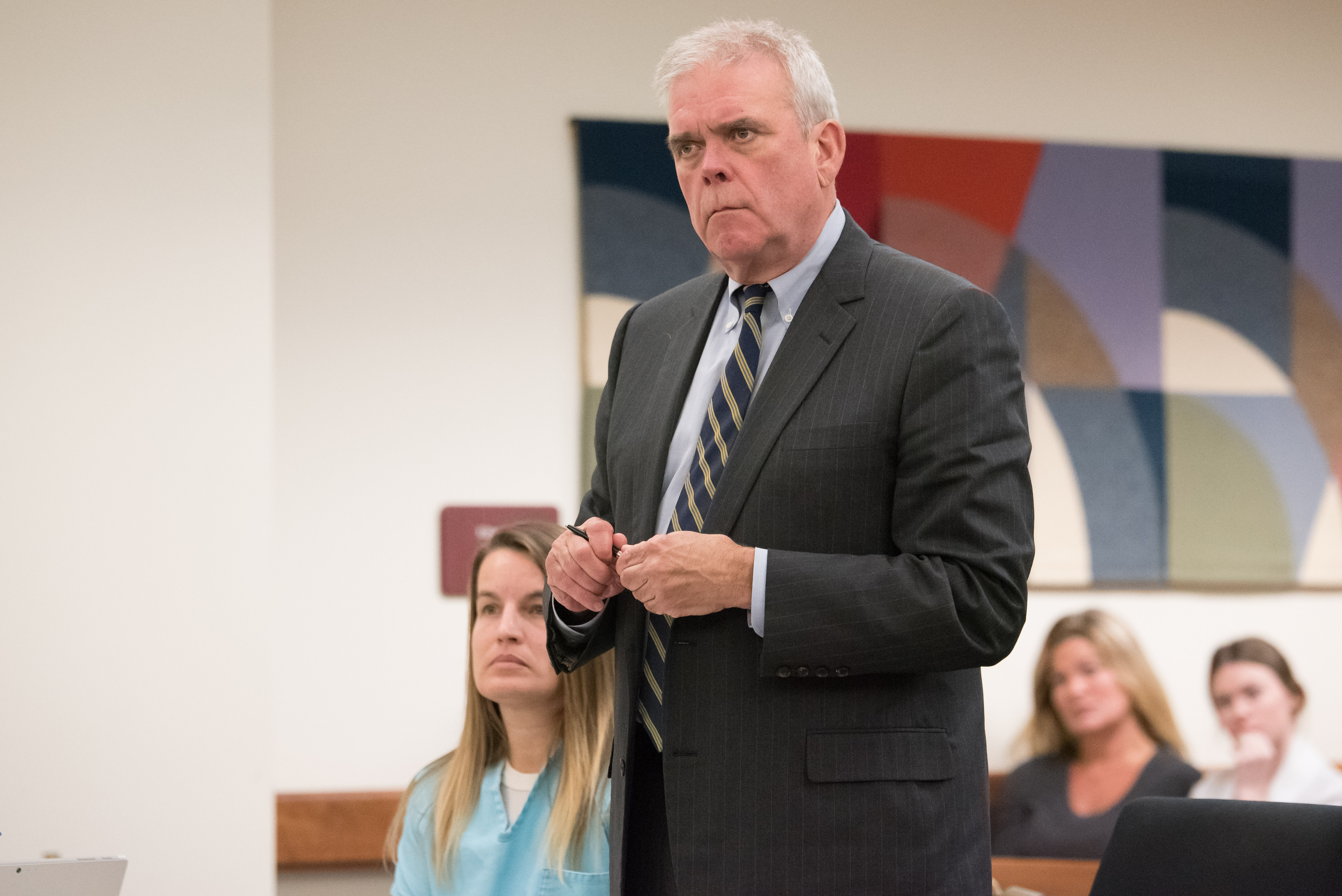
David Sleigh is a St. Johnsbury defense attorney who has represented clients facing murder charges and has no connection with the Bourgoin case.
He said he expected post-trial filings by the defense will likely include ones seeking a new trial or asking the judge for a “judgment of acquittal,” arguing that the evidence presented during the trial did not prove the elements of the charges beyond a reasonable doubt.
Those motions, Sleigh added, are rarely granted.
Once ruled on by the judge, he said, sentencing will follow, where one of the big questions will be whether the judge will impose consecutive prison terms on the murder charges, meaning they run one after the other, or concurrent, meaning they are served at the same time.
In this case, each charge of second-degree murder carries a sentence of 20 years to life. If Bourgoin received that sentence on each charge, consecutively, he would receive a prison term of 100 years to life.
But if Bourgoin is sentenced to 20 years to life on each of the five murder charges, to be serve concurrently, his sentence would be 20 years to life.
Chittenden County State’s Attorney Sarah George, the prosecutor, said following the verdict Wednesday that she would need to talk to the victims’ families before commenting on what sentence she will be seeking in the case.

Sleigh said that the Vermont Supreme Court a few years ago did weigh in on a case involving a person charged with grossly negligent operation with death resulting in which there were multiple fatalities in the same crash.
In that case, he said, the high court ruled that a person could only get one sentence, not one for each death, since each death stemmed from the same incident.
“The Legislature has since amended that statute, saying you can be sentenced for each fatality even if there’s only one incident,” Sleigh said of the statute regarding gross negligent operation of a motor vehicle with death resulting.
“My suspicion,” he added, “is that with the second-degree murder charge, a judge could sentence consecutively for each count.”
At this point, Sleigh said, it’s too hard to predict how the sentence would likely be structured in Bourgoin’s case. “It will be interesting to see what the parties argue for and how Judge (Kevin) Griffin ultimately puts it together,” he added.
Attorney Craig Nolan, a former state and federal prosecutor whose practice now includes criminal defense and civil litigation, also has no ties to the Bourgoin case.
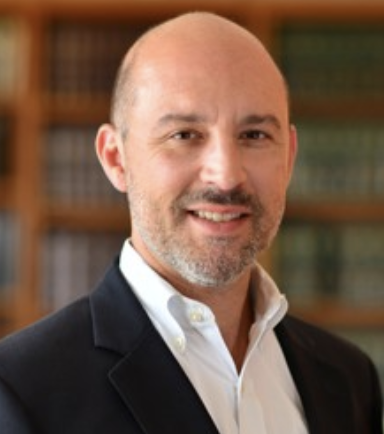
He said Thursday that from a prosecutorial perspective, the attorneys will look for a sentence that is “consistent and proportionate” to other cases, taking into account any mitigating and aggravating factors, as well as hearing input from the victims’ families.
“Ultimately, you come down with a recommendation,” he said.
Nolan said the post-trial motion phase of the case in Vermont Superior Court, where the case was just tried, leading up to the sentencing will provide some insight into the subsequent appeal to the Vermont Supreme Court.
“This maybe the first written round of briefing on the issues,” Nolan said of the post-trial motions. “It will be, in part, preserving issues for appellate lawyers who handle this at the next stage.”
Quiet meals
The juror who spoke to VTDigger said Thursday she didn’t know exactly what to expect when she was selected to serve on the jury.
“I didn’t ask to be dragged through this, I’ll tell you,” she said of serving on the panel. “Having been dragged, I tried to do a good job.”
The juror also said she took her pledge not to discuss or learn anything about the trial very seriously while the matter remained pending over the course of the more than two weeks.
“My husband and I couldn’t speak at night over dinner,” she said. “We kind of ate in silence with the elephant in the room.”
