


[B]ARRE — The central bank of the United States, the Federal Reserve, is stepping into the discussion of poverty and economic development in the nation’s neediest areas.
For the Boston Fed, which covers almost all of New England, that means a new program called the Working Communities Challenge aimed at helping Vermont communities obtain grants to improve areas such as health care and education.
The Boston Fed has already implemented its program in Massachusetts, Connecticut and Rhode Island. On Wednesday, several representatives from the Fed, nonprofits and the administration of Vermont Gov. Phil Scott held an event at the Barre Opera House to introduce the Vermont effort.
The Boston Fed will release a request for proposal, or RFP, in the autumn for Vermont planning grants. Community groups will use those grants to prepare proposals for larger, multi-year grants that will be awarded to three Vermont communities in the spring. Applications for both sets of grants will be judged by a steering committee of community development leaders, most of them from Vermont.
The fed and its funding partners, including the Doris Duke Charitable Foundation, Robert Wood Johnson Foundation, and NeighborWorks America, are not setting many limits on what type of project is eligible, said Steve Michon, director of the Fed’s Working Communities Challenge program. Several public and private Vermont entities are also funders, including the National Life Foundation, the Vermont Community Foundation, Green Mountain Power and Pomerleau Real Estate.
“What is a big idea that your community is already united around or something new that your community wants to unite around? “ Michon said.
Boston Fed President Eric Rosengren said at the Barre event that the steering committee will likely award planning grants worth $10,000 to $15,000. He didn’t estimate how much the multi-year grants might be, although he said that in earlier iterations of the program in other New England states they were $300,000 to $400,000.
“That’s part of the steering committee decision on how to structure that,” said Rosengren. “We’ll get details over the course of the summer and make sure we have the funding in place. This is one of the situations where we’re kind of building the plane while flying it.”
Rosengren used Lawrence, Massachusetts, as an example of a community program assisted by the Fed. A group there used the grant program to provide social services through the schools.
Lawrence, a struggling city with many Spanish-speaking residents, was a place where a number of people were not comfortable with authority, said Rosengren.
“The schools were viewed as a safe place to actually have those connections,” he said. “They’ve been very successful in getting additional employment for family members. That results in greater success for students.”
The program also supplies technical assistance, often in the form of expert speakers from other communities that have succeeded in economic development.
“It’s cross-sector collaboration,” Rosengren said. “We try to get people to think about how they are organizing in a different way.”
Working Communities Challenge is a departure for the Federal Reserve System, which is best known to the public for its work in regulating financial institutions and influencing the supply of money and credit, for example through setting interest rates. The Fed has a board of governors in Washington, D.C., and then 12 regional banks.
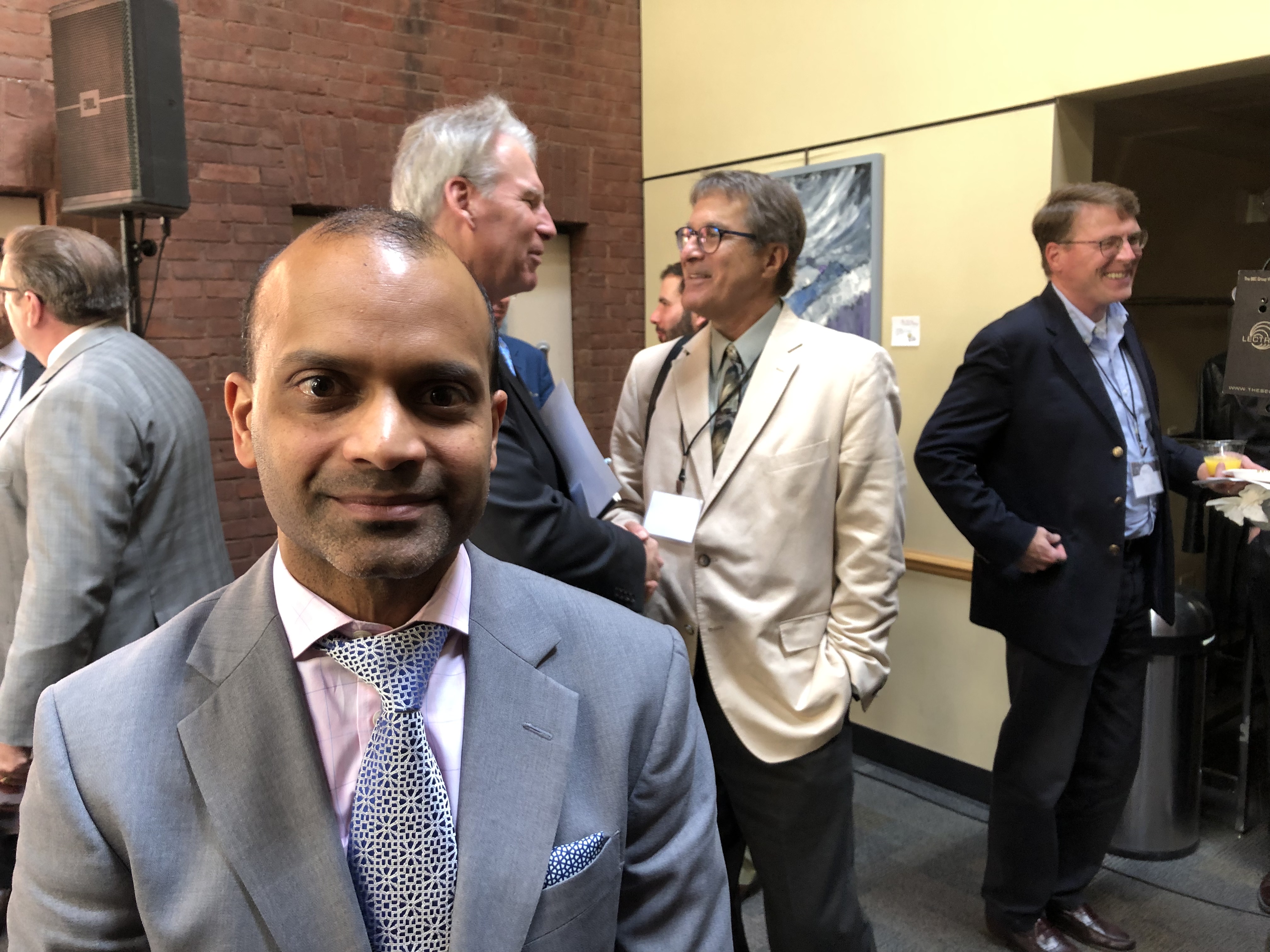
But Prabal Chakrabarti, senior vice president at the Boston Fed’s regional and community outreach department, said the grant program falls well within the traditional goals of the system. The Fed has always sought to promote full employment and sustainable economic growth, Chakrabarti said. He added Fed presidents in other regions are also taking more action in the area of economic development and community assistance.
“We’ve been concerned about the inequality that has been happening geographically as well as by race and by class,” he said. “We have a stake in helping small- to medium-size cities and rural communities participate in the economy, and that comes from the full employment mandate.”
He said the Fed has traditionally addressed structural economic issues through conferences and research.
“It’s not a changing mission,” Chakrabarti said. “It’s a change over the long term in concern and attention.”

