

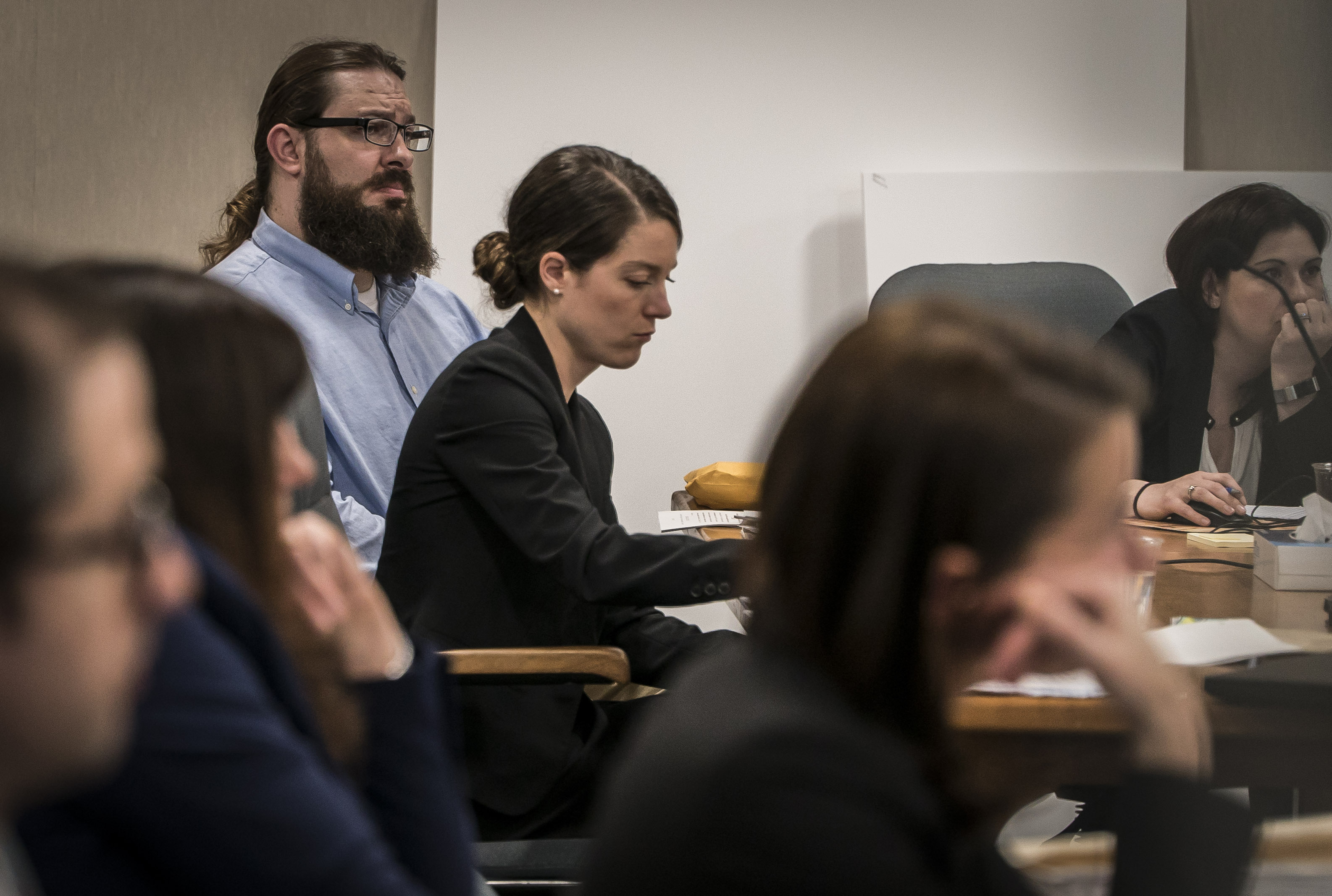
[B]URLINGTON — A prosecutor painted a picture of Steven Bourgoin as a conniving man who minimizes his out-of-control actions, while his attorney countered that a psychotic episode prompted his actions that led to a wrong-way crash that killed five teens.
A jury is expected to start deliberating Tuesday morning whether Bourgoin should be convicted of five counts of murder in that fatal crash late on the night of Oct. 8, 2016, or lesser charges, or found not guilty by reason of insanity.
“We’ll see you here first thing tomorrow morning,” Judge Kevin Griffin told the jurors late Monday afternoon.
At that time, the judge added, he will read them the 20-plus pages of jury instruction and then send them off to begin the deliberations in the case that has drawn widespread media coverage from outlets around Vermont over the more than two weeks of court proceedings.
Bourgoin faces five counts of second-degree murder in the death of the five teens in the fatal crash more than two years ago on Interstate 89 in Williston.
Bourgoin told the judge Monday he did not want to testify in his own defense.
The five friends killed in the crash were Mary Harris, 16, and Cyrus Zschau, 16, both of Moretown; Liam Hale, 16, of Fayston; Eli Brookens, 16, of Waterbury; and Janie Chase Cozzi, 15, of Fayston.
Attorneys for the prosecution and defense spent more than two hours delivering their closing arguments to those jurors Monday afternoon — the 11th day of the murder trial, after a morning of testimony from a psychiatrist testifying for the prosecution.
“Mr. Bourgoin knew what he was doing,” Chittenden County State’s Attorney Sarah George, the prosecutor, told jurors in her final remarks.
“Mr. Bourgoin was aware of every decision he made, and he ignored the risks of each of those decisions,” the prosecutor added. “He made the choice to go the wrong way.”
Then, she said, while behind the wheel of his 2012 Toyota Tacoma, heading north in the interstate’s southbound lanes, he slammed nearly head-on into an oncoming 2004 Volkswagen Jetta with the five teens inside.
George recalled witness testimony from motorists who were on the interstate that night, who described the scene as a “war zone,” like “Armageddon.”
In the closing statement for the defense, Robert Katims, Bourgoin’s attorney, told the jurors that the evidence was clear that Bourgoin was insane at the time of the fatal crash.
“Steven Bourgoin wasn’t suicidal, he wasn’t rageful,” Katims said, “he was psychotic.”
Sane or not?
Bourgoin’s attorneys have contended that he was insane at the time of the crash, pointing to defense witnesses who testified the 38-year-old believed he was on a top-secret government mission, getting messages through devices, such as his computer and his pickup truck’s radio.
“He’s confused, he’s psychotic, he’s delusional,” Katims said in his closing argument to the jury Monday afternoon, later adding, “He’s saying things are speaking to him.”
Prosecutors have contested the insanity defense.
They suggest Bourgoin was in a rage, possibly suicidal. They say he was upset over his finances and a child-custody dispute with his ex-girlfriend, and after the crash may have been feigning symptoms of a mental disease.
George said drivers of cars heading the correct way on the interstate around the time of the crash tried to make Bourgoin aware he was going the wrong way by honking their horns and flashing their headlights.
The prosecutor said a witness reported seeing Bourgoin get on the interstate driving the correct way, then after only a short distance, turned around and began traveling the wrong direction.
The five teenagers killed in the crash were on their way home from a concert in South Burlington at about 11:50 p.m. that night. Bourgoin crashed his pickup into their car going an estimated 78 mph, according to witnesses.
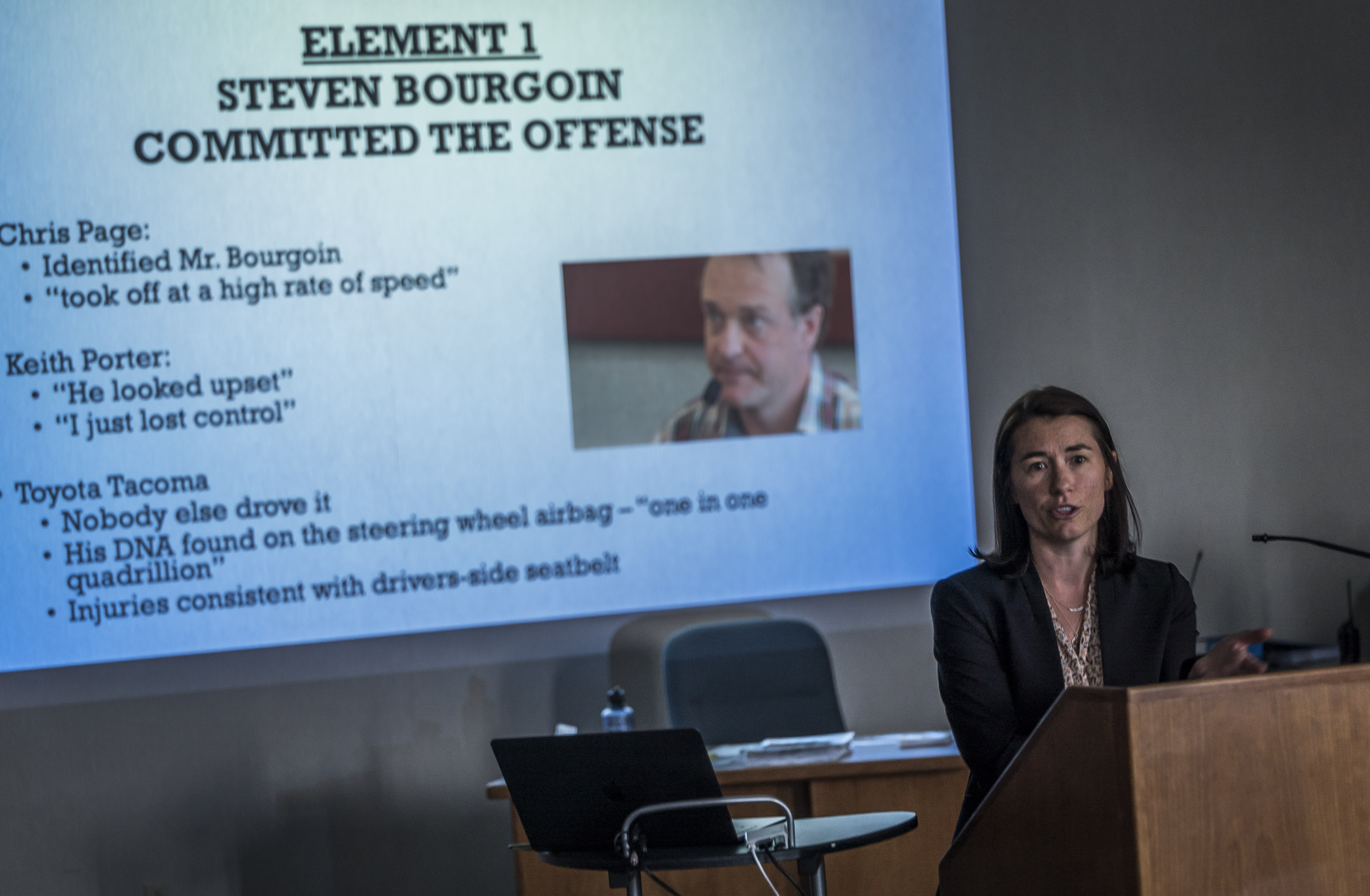
Then, George said, Bourgoin stole a police cruiser from a Williston police officer who had arrived at the crash scene and was out his car helping the teenagers.
In the cruiser, Bourgoin drove south, before he turned around and headed back to the scene, crashing at more than 100 mph into several stopped vehicles, including his already heavily damaged pickup truck that had remained on the interstate, according to the prosecutor.
Katims, in his closing statement, said that Bourgoin drove past several vehicles when he was traveling the wrong way on the interstate, and if he were truly suicidal he would have hit one sooner.
Instead, according to Katims, Bourgoin was not aware he was driving the wrong way on the interstate, staying in the passing lane while cars drove by him in the travel lane.
“All of this only makes sense in the eyes of psychotic Steven Bourgoin,” Katims said. “You can’t make this up, no one could. It doesn’t even make sense to try.”
George, in her closing argument, was aided in her presentation by a Power Point-like display projected onto a blank wall in the courtroom for the jury to follow along. Her arguments were punctuated by video of witnesses on the stand earlier in the trial.
Katims had large poster boards he placed on an easel in front of the jury highlighting points in his argument. The difference between murder and manslaughter charges comes down to his client’s state of mind at the time of the crash, he told the jury.
Jurors had been asked by the judge that in weighing the evidence to consider a “lesser included” offense for each of the murder charges of involuntary manslaughter.
“Both involve the unlawful killing,” he said, “but they are separate by essentially the level of risk undertaken by the person.”
A person with a “wanton disregard” for human life would qualify for second-degree murder, Katims said, while involuntary manslaughter would involve a person who “failed to appreciate the dangerousness” of what they did when they should have.
Proving insanity
To prove insanity, the defense needs to establish that Bourgoin was insane by a preponderance of the evidence, according to Vermont law.
“A person is not responsible for criminal conduct if at the time of such conduct as a result of mental disease or defect he or she lacks adequate capacity either to appreciate the criminality of his or her conduct or to conform his or her conduct to the requirements of law,” the state statute reads.
Under the law, the terms “mental disease or defect” includes “congenital and traumatic mental conditions” as well as disease.
If the jury does find Bourgoin insane, the court can decide whether he should remain in custody.

Battle of the experts
Both the prosecution and defense in their closing arguments to the jury pointed to experts called to the stand to bolster their positions during the trial.
Dr. David Rosmarin, forensic psychiatrist at the McLean Hospital in Belmont, Massachusetts, testified last week that he examined Bourgoin and determined that he was insane at the time of the crash.
Rosmarin, hired by the defense, said Bourgoin was “grossly psychotic” and suffering from a bipolar disorder.
Dr. Reena Kapoor, a forensic psychiatrist at the Yale School of Medicine in New Haven, Connecticut, also testified last week, called to the stand by the defense.
Kapoor, initially hired by the prosecution, diagnosed Bourgoin with a personality disorder, with traits of borderline personality disorder and paranoid personality disorder.
She said a person with such a condition have “vulnerability,” or “predisposition,” to becoming psychotic under stress. Kapoor, like Rosmarin, determined Bourgoin was insane at the time of the fatal crash.
Katims, in his closing arguments, said to the jury that Kapoor, after being brought into the case as a prosecution expert witness, testified during the trial that she was at first skeptical of Bourgoin’s claim of insanity.
Kapoor’s assessment changed, Katims said, after she had worked on the case and reviewed the evidence. She ultimately concluded that Bourgoin was indeed insane at the time of the crash.
Dr. Paul Cotton, a Burlington-based psychiatrist who is contracted with the state Department of Mental Health to conduct forensic psychiatrist exams for the courts, was called to the stand by the prosecution Friday and returned for a cross-examination on Monday.
Cotton was brought on as a prosecution witness after the state’s attorney’s office dropped Kapoor.
Under questioning by the prosecution, Cotton said he diagnosed Bourgoin with an adjustment disorder with disturbance of mood behavior, a condition that arises from “identifiable” stressors.
Those stressors, according to the doctor, included the child-custody dispute and Bourgoin’s financial problems.
Katims, in cross-examining Cotton for several hours Monday morning into the early afternoon, repeatedly asked him why he did not review more of the records in the case that were made available to him by the prosecution after he was retained as a state witness earlier this year.
The doctor said he focused his review of the records on the time span between the fatal crash and his examination of Bourgoin about six weeks later.
“That’s when I formed my opinion and that’s when I wrote my report,” Cotton testified.
“I was being examined and asked for my opinion at the time,” he later added. “I wanted to focus my attention on my opinion and my examination, not what occurred subsequent to seeing (Bourgoin) and forming my opinion.”
Katims continued to press Cotton, asking the doctor if thought reading such items as the examination transcripts by the other psychiatrists would be helpful in reaching an opinion about Bourgoin’s sanity.
“Two years later, not so much,” the doctor replied.
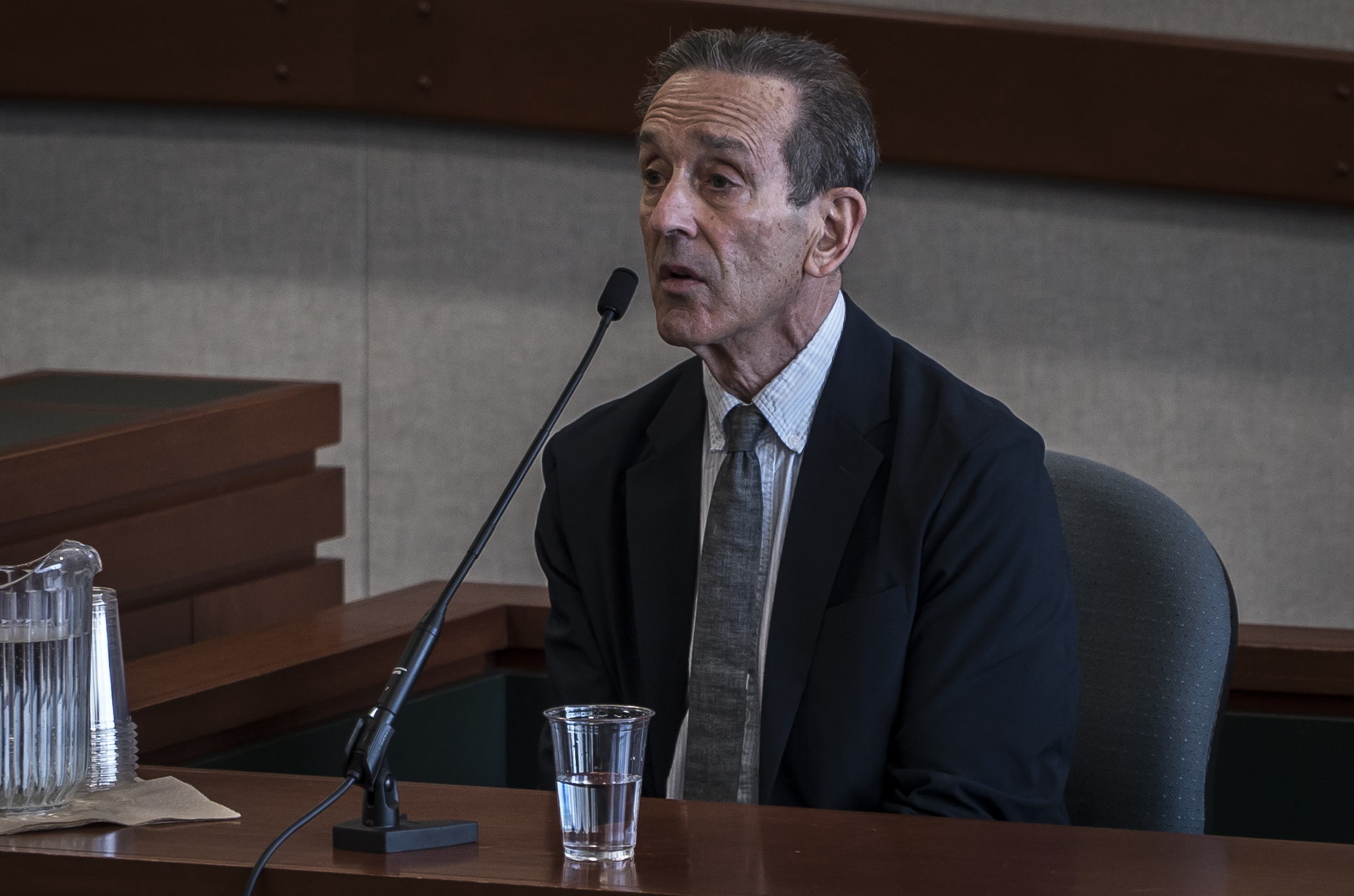
During his closing argument later Monday, Katims questioned the timing of the prosecution’s expert testimony from Cotton.
The defense attorney said the prosecution was “stuck” with Cotton and added him to their witness list after Kapoor rendered her opinion that Bourgoin was insane at the time of the crash.
“He doesn’t want to find him insane, so he doesn’t,” Katims said of Cotton.
George, in her final remarks to the jury, said Katims was drawing conclusions that were not based on the evidence.
“Mr Katims telling that to you is not evidence,” she said.
Witnesses testified on the stand about interactions they had with Bourgoin in the days leading up the crash said he seemed stressed, not manic or psychotic, the prosecutor said.
George said once Bourgoin realized he was in trouble, he did what he had always done in such instances, deflected blame and minimized his own role. She pointed to two other times he had been arrested, both for domestic assault of the same woman, in 2014 and in May 2016.
In those cases, the prosecutor said, Bourgoin did not take responsibility for his actions, but blamed his ex-girlfriend and felt sorry for himself.
The prosecutor then played a video of Keith Porter of Montpelier, one of the first motorists on the fatal crash scene on the interstate, from his time on the witness stand earlier in the trial.
“He said, ‘I don’t know what happened, I just lost control,’” Porter recalled Bourgoin telling him on the interstate that night.
