


[A]s the U.S. trade dispute with China intensifies, A.N. Deringer in St. Albans, a customs broker, is working closely with its customers on strategies for adapting and surviving.
“We spend a lot of time talking with clients about how they can change their valuation, or in some cases manufacture their product differently, because there’s a long list of goods that are subject to the tariffs,” said CEO Jake Holzscheiter, who estimated existing and expected tariffs will cost the company’s clients $500 million in the coming year.
“Some have moved their manufacturing to a country like Vietnam that we’re not having a trade war with,” he said. “But not everyone has that luxury. If it’s a raw material it’s easier to change suppliers.”
Businesses of all types have been drawn into the trade battle between the world’s two largest economies. The Trump administration has announced plans to put a tax on almost everything that is imported to the U.S. from China.
Manufacturing makes up about 9 percent of Vermont’s economy, so tariffs on goods have a direct impact on many Vermont employers. One is Ann Clark cookie cutters, which employs 50 people in Rutland. President Ben Clark said he expects higher steel prices to cost the company about $32,000 over the next year.
Chroma Technology, a Bellows Falls company that makes microscope filters, is helping its Chinese customers pay the extra costs of importing Chroma filters. About 15 percent of Chroma’s business is in China, said CEO Paul Millman, who on Tuesday relayed an email from Chroma’s general manager in China.
“She says, ‘Unfortunately this morning Mr. Trump published a note on his Twitter to increase 25 percent on China goods, which increased panic among our customers,’” said Millman, who was on a sales trip to Israel at the time.
“We’re trying to help them so they don’t leave us and go to filter companies that are in countries that don’t impose tariffs and aren’t engaged in a trade war,” said Millman.
“I don’t know that this guy has any understanding of the effect of what he is doing,” he said of Trump.
Some of the company owners and managers who are struggling to cope with the tariffs said they see themselves in unaccustomed agreement with President Trump on the need for taking a hard line with China.
But they don’t see tariffs as a way to improve the relationship.
“I’m not a fan of Trump at all; I dislike this administration like most people in Vermont do,” said Wolfgang Hokenmaier, who started Green Mountain Semiconductor in 2014 with two partners. The Burlington company now employs 25 people and has important customers in China.

“But it’s a double-edged sword,” Hokenmaeir said. “I also do see how the Chinese government is actively trying to secure intellectual property from the U.S.
“This is not something that tariffs will help,” added Hokenmaeir. “I think the U.S. government should look more into how does China procure our intellectual property and then eventually become a dominant force in technology.”
With some of the politicians who usually oppose Trump showing support for the tariffs, Trump might feel emboldened to keep them in place for a long time, said Holzscheiter.
“I felt a few weeks ago that this was really going to start to go away, and was going to improve, and I feel like it’s escalating now,” he said. “We are seeing some of the leaders of the Democratic Party are also supporting Trump in this. The more he feels that support from the other side of the aisle, the stronger he’s going to be on this.”
China is an important trading partner for the U.S. and for Vermont. The Office of the U.S. Trade Representative said Vermont exported $1.3 billion in goods to Canada, its largest trading partner, in 2018 – about 43 percent of its total goods exports.
Canada was followed by Hong Kong, with $262 million in exports; Taiwan, with $195 million; South Korea, with $186 million; and China, with $168 million, the office said.
A group called the U.S. China Business Council said Vermont’s largest areas of export were semiconductors and components; navigational and measuring instruments; dairy products; sawmill and wood products; and manufactured commodities.
China was Vermont’s third-largest export market for manufactured goods in 2017, after Canada and Hong Kong, according to the Center for Manufacturing Research.
Forbes reported that Vermont is the only state where total trade with China has fallen, due to a 4.5% drop in imports in August.
Nonetheless, state officials don’t seem alarmed by the idea of a prolonged trade impasse.
Tim Tierney, director of recruitment and international trade at the Vermont Agency of Commerce and Community Development, said he hadn’t heard much discussion about trade restrictions.
“A lot of these have not taken effect and so the impact right now hasn’t been felt,” he said.
The issue also affects Vermont’s growing cannabis industry, where new laboratories are gearing up to process hemp into CBD.
“We’ve already spoken to instrumentation companies” about the tariffs, said Carl Christianson, who recently started Northeast Processors in Brattleboro. Christianson said the company has eight employees and expects to process 400,000 pounds of dried hemp in the coming year.
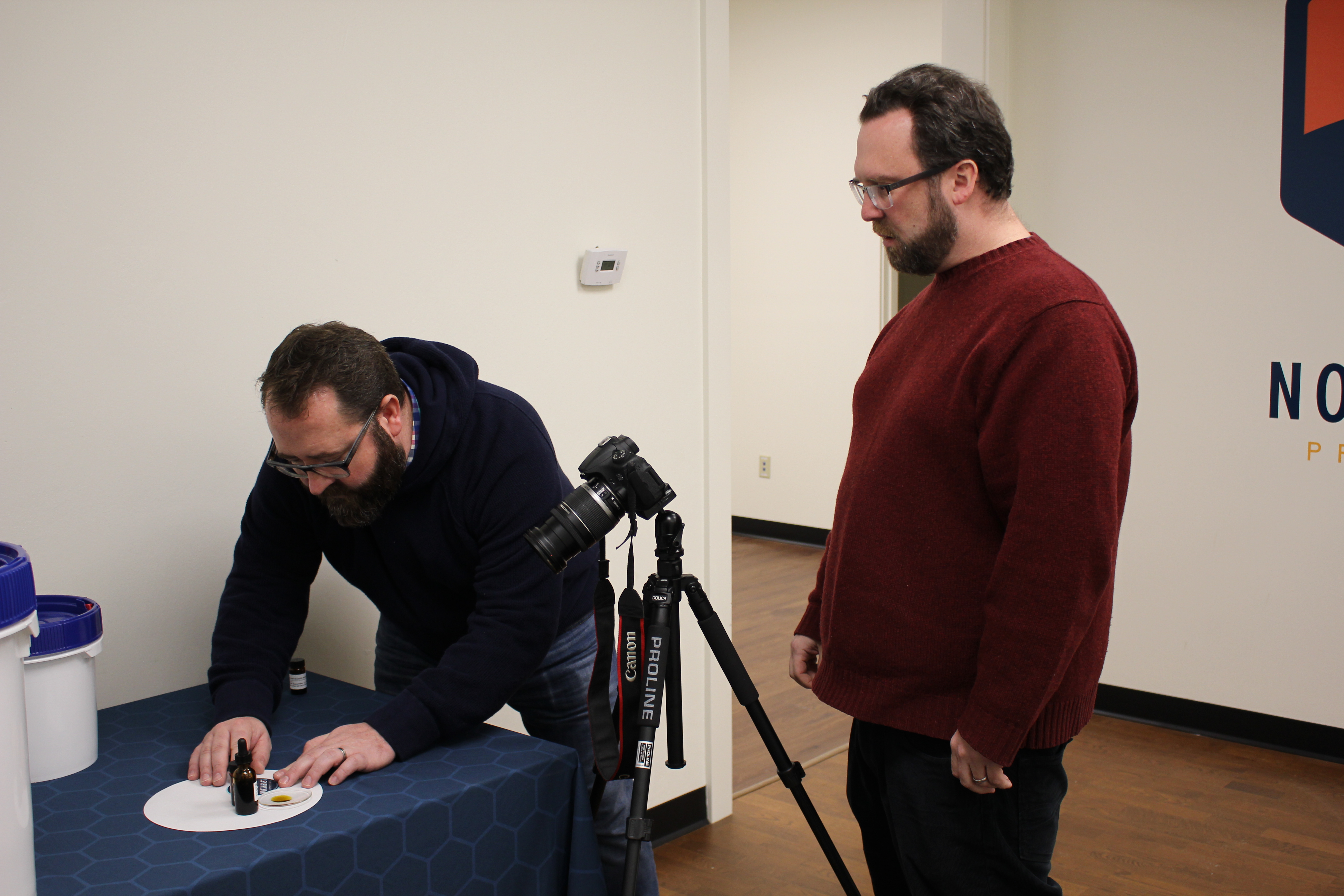
“We have had people say, ‘order now or it’s going to go up by 25% in the next couple of weeks,’ ” said Christianson. “We’re talking about instruments that cost hundreds of thousands of dollars, so 25% is pretty substantial.”
It’s not even that the new company is buying its instruments from China, Christianson added.
“They’re manufactured in America, but the global economy is so intimately tied together that source material comes from all over the world and there are these unintended consequences that affect small business owners,” he said.
Correction: A.N. Deringer CEO Jake Holzscheiter estimated existing and expected tariffs will cost the company’s clients $500 million in the coming year, not $500,000.
