

[A] controversial fuel tax increase passed by the House won’t see the light of day in the Senate. But the upper chamber has come up with a different funding source for weatherization: savings from Efficiency Vermont.
Increasing funding for weatherization this session has been a key part of Democrats’ two-pronged approach to addressing the state’s rising greenhouse gas emissions. As most of the state’s emissions come from transportation and heating, lawmakers are looking to boost incentives for electric vehicles and home energy retrofits.
The House passed a 2 cent increase to the fuel tax earlier this session to increase funding for the state’s low-income weatherization program. Gov. Phil Scott and Sen. President Pro Tem Tim Ashe, D/P-Chittenden, found common ground in opposing the proposal, citing concerns that the tax increase would raise costs for the Vermonters it was aimed at helping.
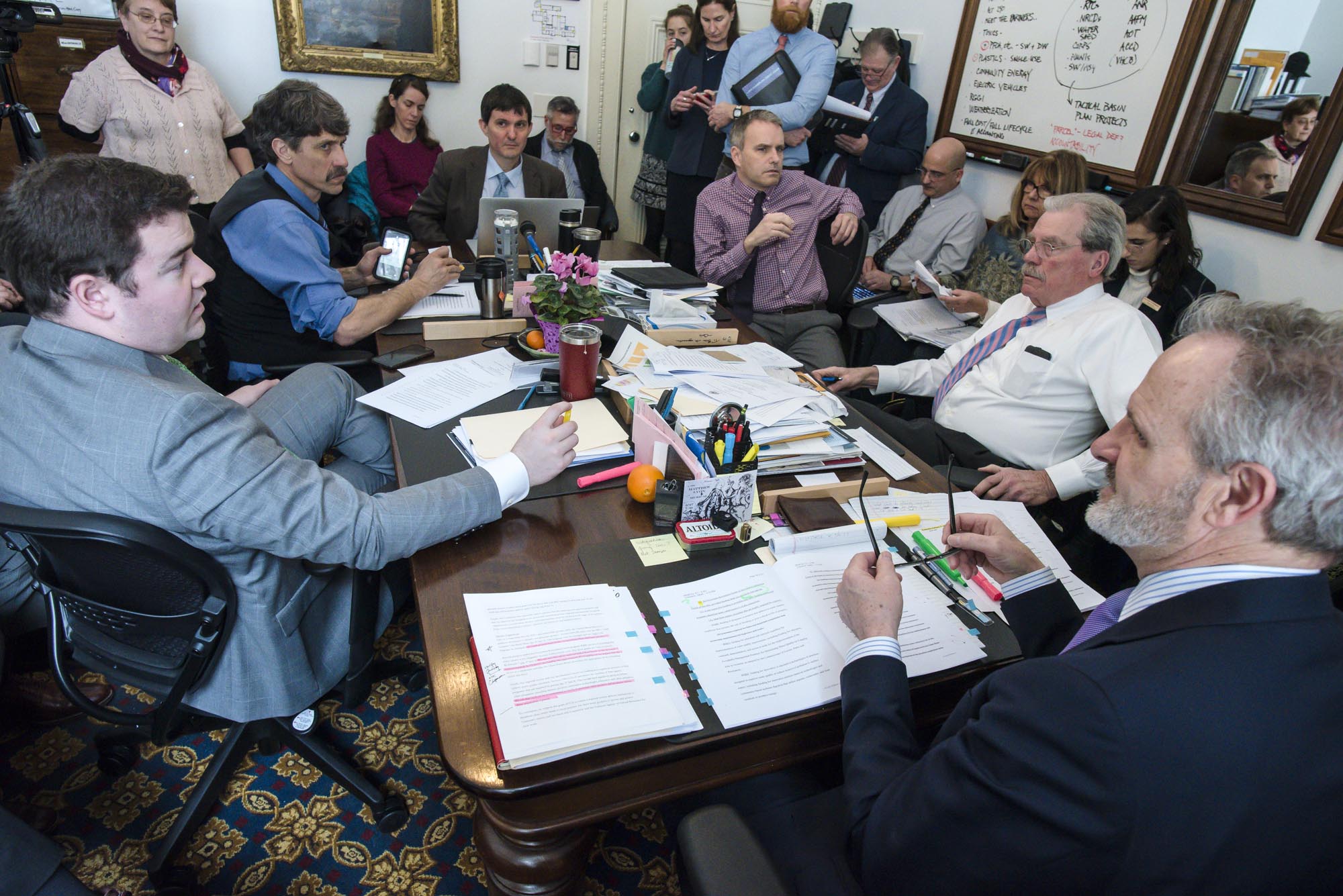
The Senate’s counterproposal is now part of the end-of-session frenzy. The Senate Natural Resources and Energy Committee tacked on provisions from a climate change bill to a bottle deposit bill, H.63, which the Senate Finance Committee approved 5-1 on Monday.
The bill directs Efficiency Vermont, the state’s energy efficiency utility, to put money left over from the efficiency charge on electric bills toward weatherization incentives for Vermonters who make between 80% and 140% of area median income. Under current law, that money cannot go toward weatherization.
The utility has around $4 million in projected savings for the rest of 2019 to 2020, said Abby White, public relations director for Efficiency Vermont.

Sen. Chris Pearson, P/D-Chittenden, put forward a proposal that the utility could use up to $2.25 million this year for moderate-income weatherization incentives, with the rest to be used next year.
Efficiency Vermont was created in 1999 by lawmakers and the state’s utility regulator to serve as the statewide utility to reduce Vermonters’ electricity use. Starting in 2008, funding from Vermont’s participation in the Regional Greenhouse Gas Initiative and New England’s forward capacity market goes toward home weatherization and other heating efficiency efforts.
Incentives from the efficiency utility help weatherize around 800 homes a year for moderate-income Vermonters, according to Efficiency Vermont. White said that the average incentive provided by Efficiency Vermont is $1,200 per home, while total costs per house weatherized range from $7,000-$10,000.
In contrast, the state’s weatherization program provides home audits and energy efficiency retrofits — such as insulation, air sealing and heating unit upgrades — free of charge for Vermonters who make at or below 80 percent of median household income.
The Senate’s plan also directs the Vermont Low Income Trust for Electricity to use dividends from stock it owns in Vermont Electric Power Co., the state’s transmission operator, toward low-income weatherization. VLITE, which was formed when Central Vermont Public Service Corp. and Green Mountain Power merged in 2012, receives $1.03 million a year in revenue from that stock, according to Executive Director Paul Craven.
VLITE directs the revenue it receives from its stake in VELCO toward grants that are supposed to further the goals of the state’s comprehensive energy plan. Starting in fiscal year 2019, 75% of that money will specifically go toward energy efficiency projects for low-income Vermonters, according to the organization’s website.
The Senate has also added $350,000 in one-time money from the general fund for weatherization through Efficiency Vermont.
“We’re doing our level best to match the House,” Pearson said of the funding package in committee.
But Johanna Miller, climate and energy program director for the Vermont Natural Resource Council, said looking at the overall funding amounts is not an “apples to apples” comparison.

Vermont has fallen behind on meeting state weatherization goals. In 2017, the state had weatherized a cumulative 25,409 homes —- a little over a third of the 60,000 homes targeted under the state’s Comprehensive Energy Plan.
“I have concerns about the use of one-time funds (by the Senate) when we need long-term, sustainable funding to make the type of investment that’s required in weatherization,” said Miller.
Karen Lafayette, director of the Vermont Low Income Advocacy Council, applauded both chambers for increasing the fuel tax base by almost a $1 million by removing exemptions and keeping additional revenue that the administration had sought to redirect.
She added that if the Senate was not going to take up the House’s proposal to raise the fuel tax, using one-time money to increase the total number of homes weatherized was “the next best thing.”
“Even if something happens on a temporary basis, if you do a hundred more homes … those hundred homes continue to reap the benefits of lower (energy) costs every year,” she said.
Sen. Randy Brock, R-Franklin, the lone committee member to vote against the proposal, expressed reservations about the plan to increase funding for moderate-income weatherization.
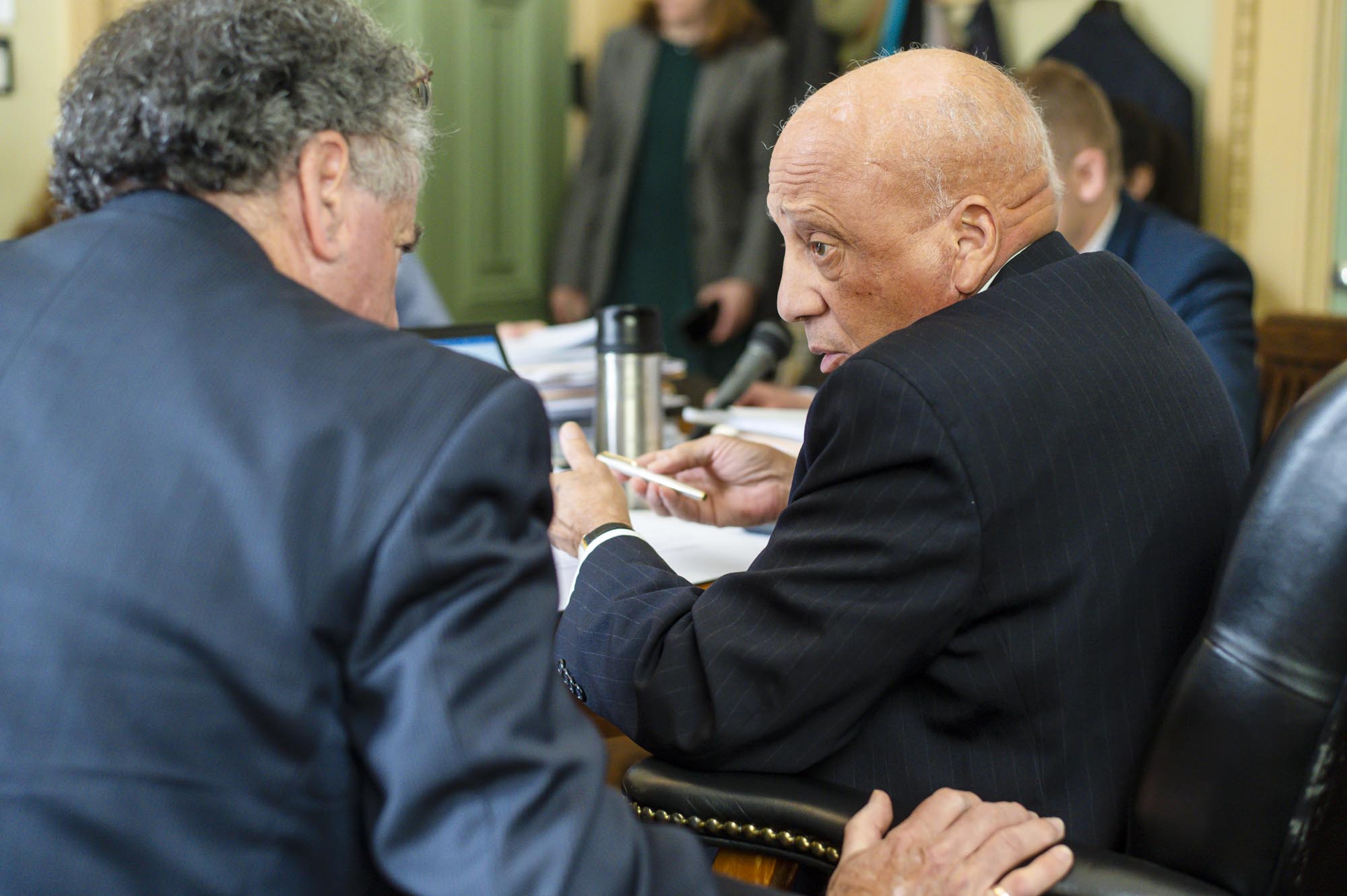
“I have some discomfort about subsidizing people who are above the median income with taxpayer money,” he said.
Brock added that he would prefer a program that issued loans for low-income weatherization but required recipients to pay back the energy savings over time.
Pearson responded that such loans do exist, but had not had much success. He also said that the Senate’s plan to increase moderate-income weatherization would result in more homes being weatherized overall than the House’s proposal.
H.63 also directs the state’s utility regulator to open a docket looking into the creation of an “all-fuels” efficiency program to expand on work done by Vermont’s efficiency utilities. Pearson added that the Senate’s funding plan should be viewed within the context of a broader “transition” to a new model for energy efficiency work in Vermont.
The full Senate will soon weigh in on the weatherization plan before it heads to the House for consideration.
