


[S]enators are throwing their support behind replacing a deteriorating mental health facility, but they’re not interested in making a big investment in Statehouse technology.
Those are two takeaways from the latest version of H.543, a $123.2 million capital bill approved by the Senate on Friday.
The Senate nixed a $728,000 proposal to upgrade the House’s audio system and related Statehouse communications technology, as officials say the project is not ready for that kind of funding at this point.
But senators agreed with the House’s recommendation to allocate $4.5 million to begin building a replacement for the Middlesex Therapeutic Community Residence, a psychiatric treatment center that’s been described as “failing” in state documents.
“I think it is very safe to say that one of the highest priorities we have right now in the state is doing something with that facility,” said Sen. Joe Benning, R-Caledonia and chair of the Senate Institutions Committee.
H.543 lays out a roadmap for state spending on capital projects over two fiscal years – 2020 and 2021. The House approved its version of the bill earlier in the session, and senators have been working on the legislation since then.
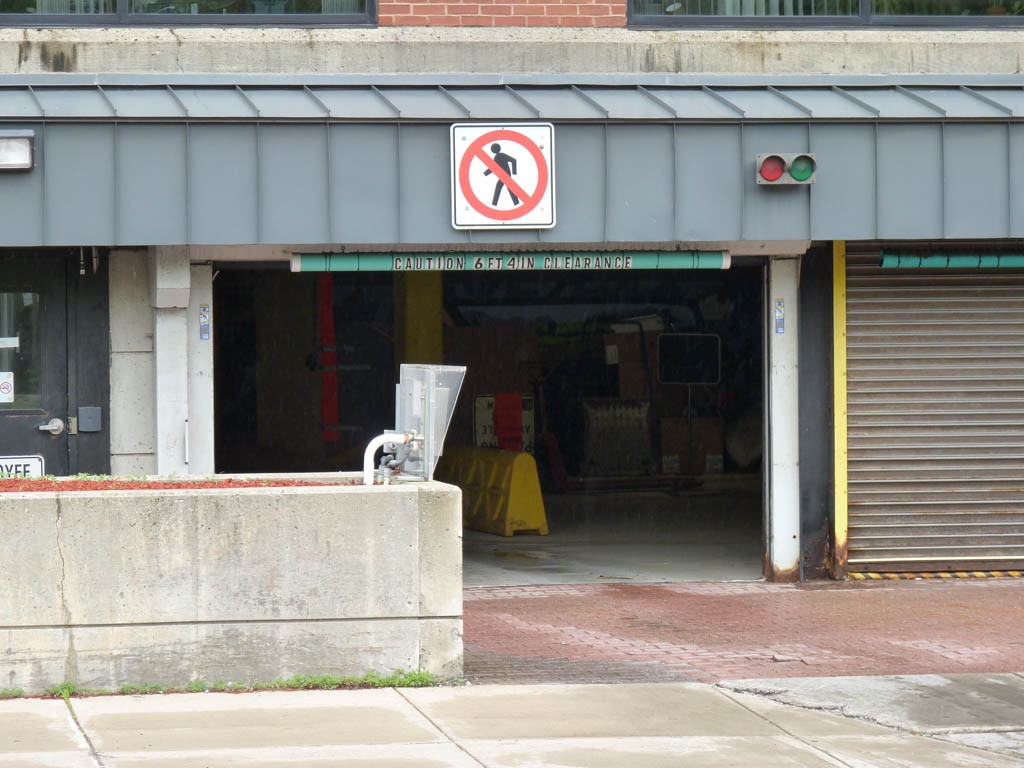
The Senate’s version agrees with the House’s recommendations on a number of major spending items, including $10.5 million over two years to repair a parking garage under the Zampieri State Office Building in Burlington. Officials have said road salt and poor drainage have damaged the concrete structure.
The bill also calls for replacement of two state police barracks: There’s $5.4 million for construction of a new Williston Public Safety Field Station and $700,000 for “design documents” supporting relocation of the Middlesex Field Station.
Both projects have been in the works “for a number of years,” said Sen. Dick Mazza, D-Grand Isle.
The highest-profile spending may be for replacement of the Middlesex secure residential mental health facility. Built as a temporary facility after Tropical Storm Irene’s flooding in 2011, Middlesex is meant as a step-down for those leaving psychiatric hospitalization.
But it consists of only seven beds inside two fenced-in mobile homes, and state officials are pushing hard for new secure residential treatment center. Benning said Middlesex “is well beyond its full productive life.”
The current plan is for the state to purchase land in central Vermont and build a new secure residential facility featuring as many as 16 beds. The money in the 2020-2021 capital bill won’t cover the entire project, which could carry a price tag of $14 million to $16 million.

On a related note, the House’s version of the capital bill had included $100,000 to support an eight-bed “therapeutic community residence” planned by Rutland Regional Medical Center and Rutland Mental Health Services. Hospital administrators had proposed operating the new mental health facility under a contractual agreement with the state.
The Senate’s version strips that funding, though it says the Department of Mental Health should submit a report later this year “containing an analysis of operating secure residential recovery beds” in Rutland.
Sen. Ginny Lyons, D-Chittenden, said, “Rutland has agreed to continue the conversation” with the state.
In the same section of the bill, the Senate now has earmarked $100,000 for completion renovations at Serenity House, a Wallingford alcohol and drug rehabilitation center.
In addition to specific allocations for those and other projects, the capital bill sends $13.8 million over two years to the Department of Buildings and General Services for “major maintenance” statewide.
“We are suffering in a major way in several of our state buildings,” Benning said. “We have brick and mortar that we are responsible for, and a lot of that brick and mortar is starting to deteriorate, and we need to address it.”
The Senate’s major maintenance spending is a $728,000 boost from the House’s allocation. That money came from the deletion of the proposed Statehouse sound and communications-technology upgrade.
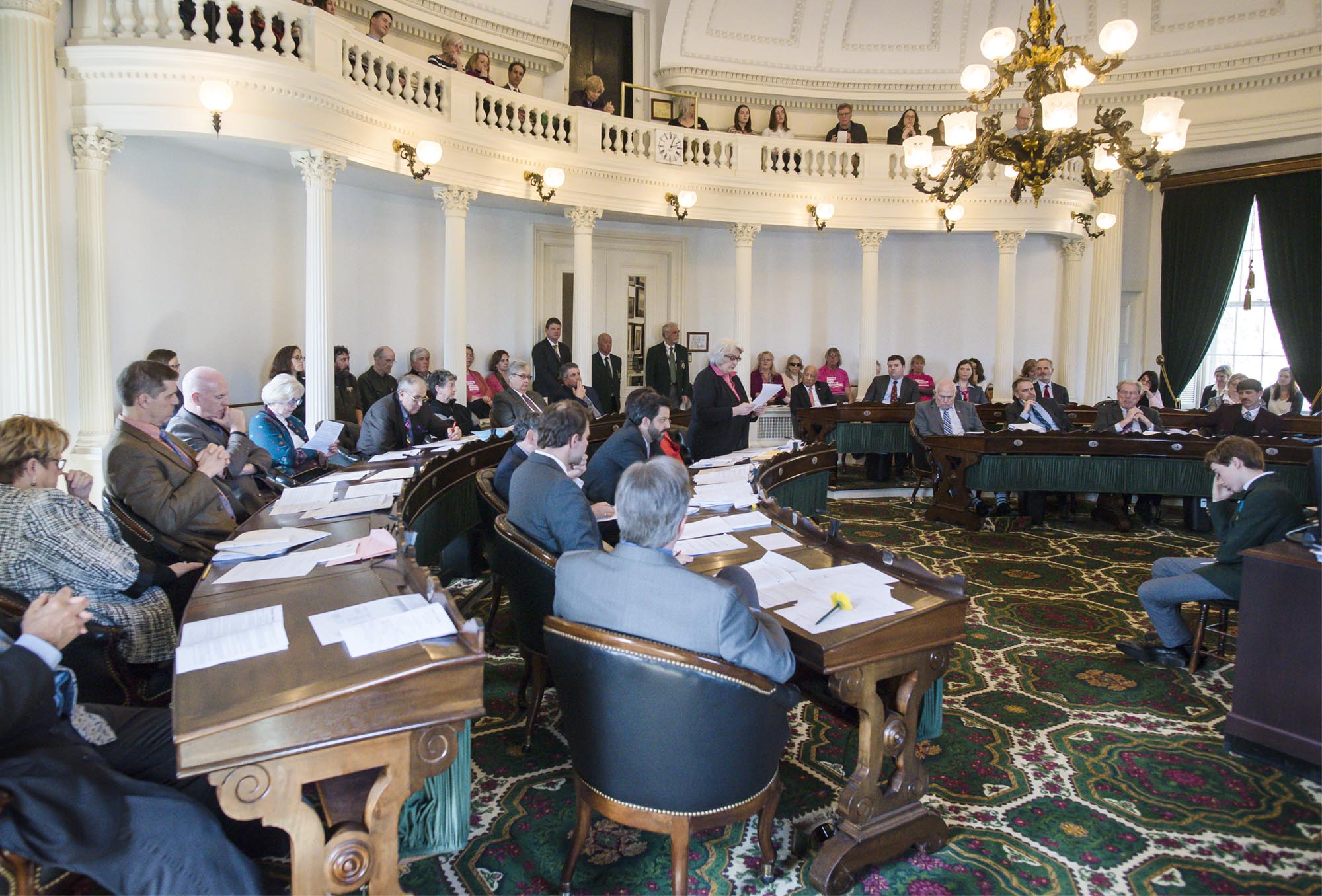
There seems to be general agreement that the House’s sound system is outdated and inadequate. Sen. Alison Clarkson, D-Windsor and a former House member, called the system “terrible” and said she was “very frustrated” that funding to replace it had been deleted.
“We pride ourselves on our transparency to the public,” Clarkson said, but she added that House proceedings and events held in that chamber often are “inaudible.”
But Benning said the project, which also could involve a number of technological and communications-related upgrades to the Statehouse, has not been fully fleshed out for such a large appropriation.
“This is a conversation that has to continue,” Benning said. “But taking $728,000 at this point in time, without knowing the policy decisions that will be made to make sure that is all done properly, would literally be putting the cart before the horse.”
Benning said he expects “an interesting conversation” about the deletion when the House considers the Senate’s changes to the capital bill.
A sampling of other projects funded in the capital bill includes:
• $8.65 million for the state’s ongoing “integrated eligibility” technology project to streamline and modernize state benefit applications. The plan is to create “a single point of entry … so that people can have their eligibility determined and then become enrolled in the programs that they are qualified for,” Lyons said.
• Nearly $1.5 million for the state’s judiciary system to continue upgrading its case-management system. That project “helps to move from paper files to electronic,” Lyons said. “This will be a vast improvement for that part of state government.”
• A combined $4.25 million over two years for infrastructure upgrades at two prisons – Northeast State Correctional Facility in Newport and Southern State Correctional Facility in Springfield.
• The bill appropriates $500,000 over two years for “major maintenance” at historic sites across the state. There also are separate allocations for several sites, including $50,000 for repairs to the Schooner Lois McClure and $100,000 for slope stabilization at the Highgate Native American Cemetery.
• The bill also orders up several studies, including a Council on State Governments-led review of “programming, transitional services and population trends” in Vermont prisons. That may include a review of the women’s prison population and “the programming and services needed to meet their needs.”
• Another directive in the bill is for the Human Services secretary to “develop an alternative proposal for secure beds for delinquent youth” and deliver it to the Legislature by Jan. 15, 2020. State officials are trying to come up with a plan to replace the Woodside Juvenile Rehabilitation Facility, which has lost federal Medicaid funding.
