


[K]ILLINGTON — The Vermont Foodbank usually plays up healthy eating through programs such as its traveling produce truck VeggieVanGo. So why is the state’s primary supplier for community cupboards, soup kitchens and shelters venturing into the unsmiling topic of “Understanding Trauma and Stress”?
“I’ve come to believe trauma is a significant reason why people find themselves in poverty,” Foodbank chief executive officer John Sayles says. “If we’re really going to tackle solving hunger, we need to understand and address trauma.”
That’s why the nonprofit organization is educating workers from more than 200 local food shelves and free meal sites about how to recognize and help clients wrestling with toxic stress.
“Trauma is an epidemic,” Dr. Ken Epstein told 300 attendees at the Foodbank’s recent Hunger Action Conference at the Killington Grand Resort Hotel. “It needs a response to an epidemic, which means training everybody.”
Epstein, a former Vermonter turned head of the San Francisco Department of Public Health’s Trauma Informed System Initiative, told Foodbank workers they could nourish clients through ways other than food.
“You do an incredible job of feeding people,” he said. “The question for today is when you get into that space, what else do you do?”
Many clients seeking services arrive with what experts term “adverse childhood experiences” — be it abuse, neglect or parental issues including divorce, mental illness, alcohol and drug use, domestic violence or incarceration — as well as current-day physical, psychological or economic strains.
“The people that we see have complex issues,” Epstein said.
But too many social service workers simply question why clients won’t change, he continued, rather than inquire about the cycle that makes it difficult for them to do so.
Hunger, for example, can set off a chain reaction of unhealthy coping strategies, chronic ailments, medical bills, less money and even more hunger. Yet many organizations intended to help can be just as fragmented, reactive, overwhelmed and unstable as the living situations clients are seeking to escape.
Epstein’s prescription: Social services need to recognize stress and trauma both in individuals and themselves and respond with compassion and a strong sense of safety and security.
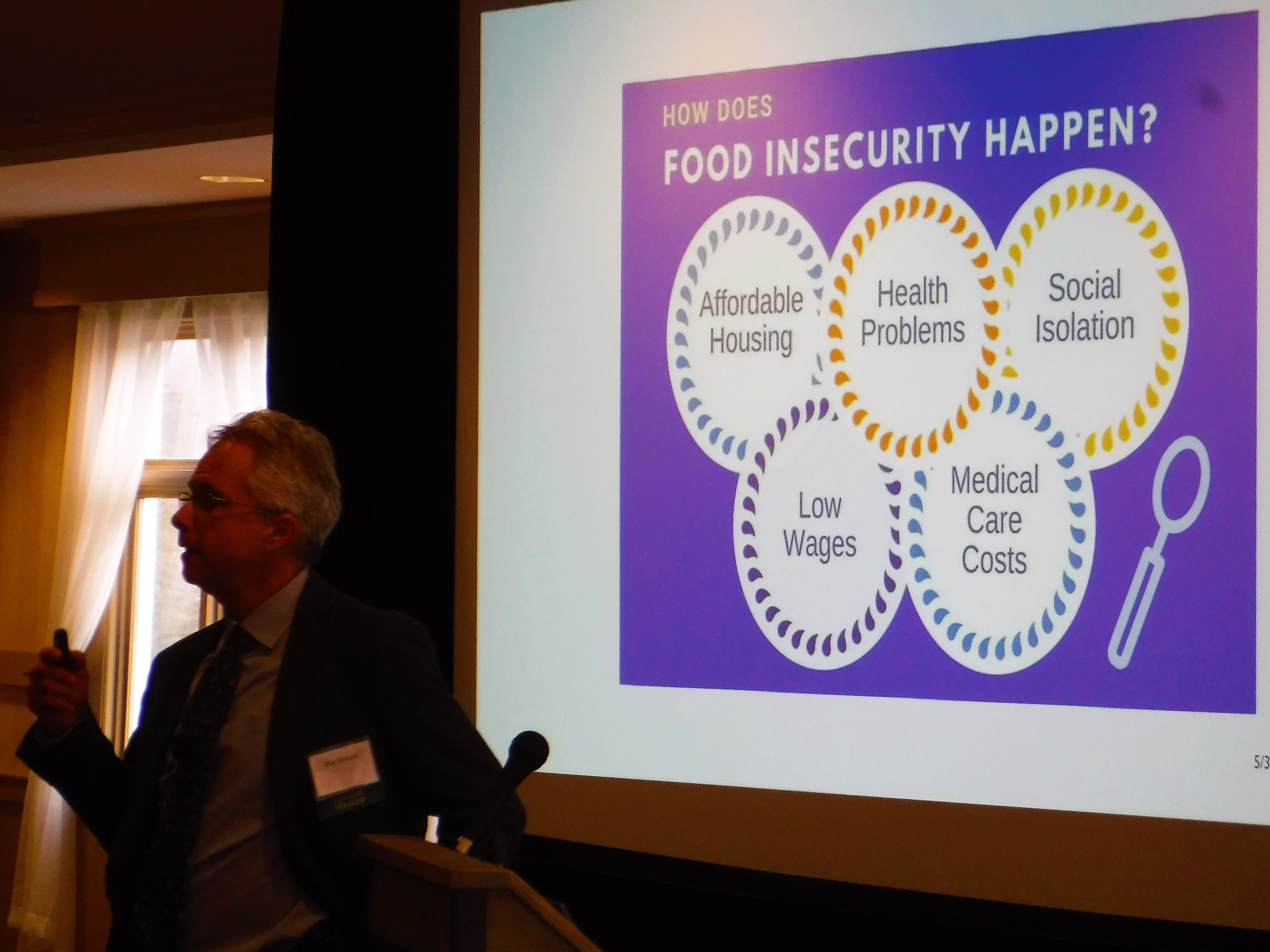
“It’s our responsibility,” he concluded, “to collectively reduce trauma.”
As the state’s largest hunger relief organization, the Foodbank is on track to distribute roughly 12 million pounds of staple goods this year from regional warehouses in Barre, Brattleboro and Rutland. Its $8 million annual budget (add in donated food and labor and the figure rises to $20 million) is funded 70 percent by community donations and the rest by corporate and government support.
Five years ago, the Foodbank thought it biggest challenge was correcting public misperceptions about the reality of hunger in one of the nation’s consistently ranked “healthiest” states.
The organization since has sought to educate Vermonters through collaborations with other social service agencies and appeals for community engagement and empathy.
It also has turned inward with staff trainings about how to discover and deal with a range of often unconscious personal bias and now trauma.
“This is a challenge not just here in Vermont, but other food banks and organizations across the country,” Sayles says. “It’s about us joining together with housing, health care, education and other human services and getting on the same page about the kind of culture change we want to see. Trauma is one of the main causes of poverty. If we start addressing it, we’re going to start making a difference.”

