


The Department of Disabilities, Aging and Independent Living is looking for legislative help to head off a potential “upsurge” in the number of Vermonters who are eligible for developmental disability services.
The department says a recent state Supreme Court decision could more than double that caseload by expanding the state’s benefit-eligibility standards, leading over time to “an increased fiscal need of $293 million annually.” The department spends $220 million on developmental services now.
Commissioner Monica Hutt wants lawmakers to put language in the fiscal 2020 budget bill that would preserve the department’s current eligibility criteria while officials develop new rules on the issue.
“The purpose of the legislation would be to maintain the status quo,” said attorney Stuart Schurr, the department’s general counsel.
But the Disability Law Project at Vermont Legal Aid says DAIL’s concerns are inflated and “alarmist.” The proposed legislative fix is an “overreaction” that will allow the department to deny benefits to some people who deserve them under the standard set by the Supreme Court, Legal Aid attorney Barb Prine said.
“I think that they need to take a deep breath and get some more information,” Prine said.
The Supreme Court decision at the center of the dispute is titled “In re R.R.” It details the struggle of the plaintiff, identified only by those initials, to receive state developmental disability services.
Court documents say R.R. has been diagnosed with fetal alcohol spectrum disorder, along with other disorders, and has “functional delays and behavioral challenges.” But his first application for benefits was denied because his 2015 IQ test score was 77, and a score of 70 or lower was required by the state.
R.R.’s parents appealed that denial to the state Human Services Board, and a series of decisions and reconsiderations followed.
There was debate about whether R.R,’s earlier IQ score of 75 should be used. That score was important, because there also was debate about whether the state should be using a “standard error of measurement” that allows for a five-point variance in IQ test results.
In the end, the Supreme Court decided that “the plain language of the applicable regulations incorporates the standard error of measurement.” Therefore, R.R.’s previous IQ score of 75, “combined with the other evidence in the case,” meant he qualified for state benefits.
That set off alarms for the department. In her letter to the House and Senate appropriations committees, Hutt says the court’s decision “means that all individuals with an IQ score of up to 75 would now be potentially eligible for developmental services.”
Based on national statistics, “the practical reality of the expansion of eligibility criteria … would lead to a very real possibility of more than doubling the population who might be considered eligible for services,” Hutt wrote.

Department Deputy Commissioner Camille George said officials’ concern is based on estimates that 2% of the population has an IQ of 70 or below, while 5% has an IQ of 75 or below. George said the cost-impact calculations include the fact that the department serves about 25% of those who meet the current IQ threshold.
“The best that we could do is try and estimate based on our past experience and our knowledge about the demographics in Vermont,” George said.
Based on those estimates, officials want the Legislature to put language in the fiscal 2020 budget bill saying that the department “shall not provide services … to any individual on the basis of an intellectual disability who has not received at least one score of 70 or below without application of any standard error of measure” on the IQ test.
In other words, the department is looking for the Legislature’s OK to not implement the standard set by the Supreme Court. Asked about the department’s authority to circumvent the court decision, Schurr said, “It’s within the authority of the Legislature to make the laws.”
The department’s proposed statutory language would head off a big benefit-spending jump, officials say. And it would give the department authority and time to draw up new eligibility rules, “returning us to our historical and consistent practice and reflecting the department’s long-standing intent,” Hutt wrote.
Schurr said that doesn’t mean that the department has predetermined its future eligibility rules. There will be opportunity for public comment, he said, and the department “intends to make further consideration of the issues.”
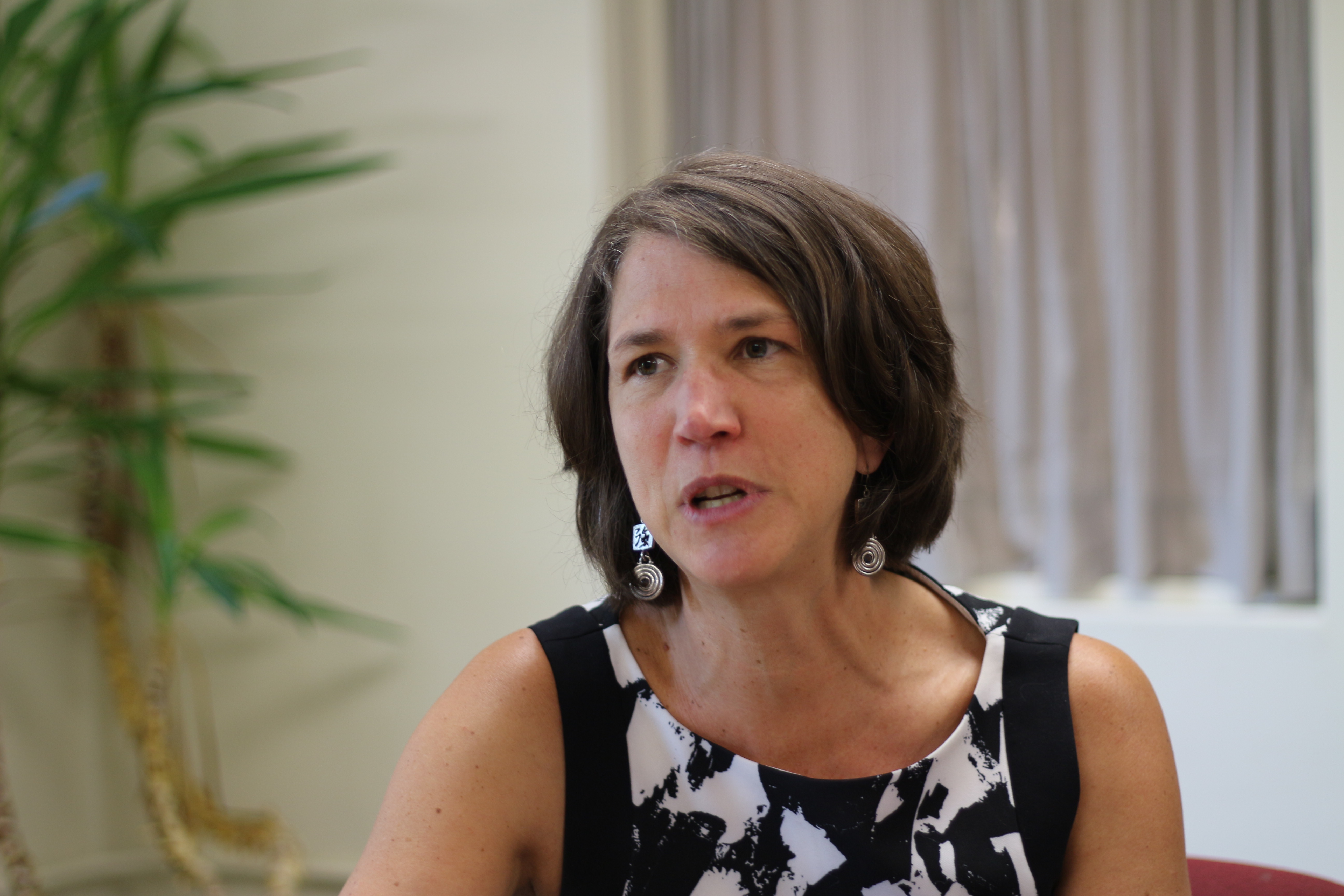
But Prine, who represented R.R. in the Supreme Court case, says the department’s proposals are too much, too soon.
For one thing, she said cutting off benefit eligibility at an IQ test of 70 has “no scientific or medical basis.” Prine said allowing for a standard error of measurement in IQ scores is “accepted practice by treatment professionals” across the nation.
The idea that “one point on an IQ test means you’re not going to get services – that’s not recognizing the reality of people’s lives,” Prine said.
She also isn’t convinced that the benefit impact the department fears has any basis in reality. Prine said IQ tests are only one of three factors used in determining benefit eligibility, and she also said relatively few people in Vermont have been denied benefits because their IQ scores fell between 70 and 75.
Furthermore, Prine said some people with scores in that range already are receiving state benefits because the department’s cut-off has been inconsistently applied.
Under the Supreme Court decision, “I think there will be a handful of people (newly) eligible,” Prine said. “I don’t think it’s going to be a floodgate.”
It’s not yet clear what lawmakers will do. On Thursday, the chairs of the House and Senate appropriations committees said they are still discussing the department’s recommendation and have yet to decide how to move forward.
Xander Landen contributed to this report.
