


The Deeper Dig is a weekly podcast from the VTDigger newsroom. Listen below, and subscribe on Apple Podcasts, Google Play, Spotify or anywhere you listen to podcasts.
[T]he Vermont Supreme Court will soon decide whether Burlington resident Reed Doyle can view, free of charge, police body camera footage he requested in 2017. But a hearing on the case last week presented a broader question: How should police videos fit into the parameters of Vermont’s public records law?
City of Burlington attorney Justin St. James argued that making necessary redactions to bodycam video is costly, and that the police department was on solid legal ground to charge Doyle a fee. Doyle’s attorney, Jay Diaz of the Vermont ACLU, argued that public records law is clear that inspecting a record — without taking home a copy — must be free of charge.
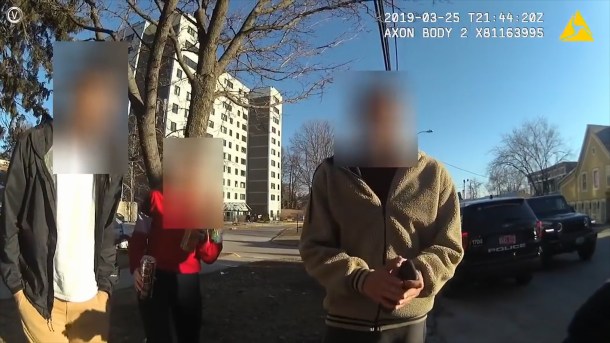
The hearing took place amid a wave of police investigations involving the use of body cameras. Footage recorded by four Burlington police officers shed light on a recent encounter between a local teenager and two federal agents. The Burlington police union and the city are fighting about whether to allow an officer under investigation by the Vermont State Police to view footage of an altercation last month. And charges in a Washington County drug case were thrown out after a bodycam recording failed to show the officer getting the search consent that he swore he got.
Use of body cameras by Vermont law enforcement agencies is inconsistent. Every Burlington police officer uses one when conducting police business, but the Vermont State Police only equips its tactical team with cameras. Some local departments use them. Many don’t.
“That gives us the geographic inequality we have in so many issues in Vermont,” Diaz said this week, ”where you’re going to get treated one way in one town and another way in another town.”
The ACLU believes body cameras can help hold police accountable, but only with strong policies governing their use. Diaz says policies in Burlington and elsewhere — like those allowing police to turn their cameras off and on, or allowing police to review footage before giving a statement on an incident — fall short.
“What we’re seeing is that body camera footage is difficult to get,” Diaz said. “It’s not readily accessible when the public wants it.”
Burlington Police Chief Brandon del Pozo said bodycam use cuts both ways: it holds officers accountable, but also insulates them from false allegations from others involved in police encounters. “Although we get into debates about how to best release the footage, and redact it, etc.,” he said, “I think net, it’s an important accountability mechanism. And I stress it’s a mutual one.”
On this week’s podcast, Diaz and del Pozo discuss the questions raised by bodycam use. Plus, VTDigger’s Alan Keays describes the role of bodycam footage in the Doyle case and others.
[showhide type=”pressrelease” more_text=”Read full transcript” less_text=”Hide full transcript” hidden=”yes”]
Last week, the Vermont Supreme Court heard arguments in a case about how police body camera footage gets shared with the public. There’s been a wave of recent investigations involving body cam footage. And all together, they’ve revealed that sometimes those cameras raise more questions than they answer.
Alan Keays: July of 2017, a Burlington man named Reed Doyle was walking his dog in Roosevelt Park in Burlington, and he came across what he said was a confrontation between police and some teenagers. He says he saw what he believed was excessive force.
Our criminal justice reporter Alan Keays has been following this case.
Keays: And he wanted to see the body cam footage to see if what he saw lined up with what the body cam footage would show.
But the Burlington Police Department says, “not so fast.”
Keays: Correct. He just wants to see it, inspect the body camera footage, which wouldn’t cost him any money just go in and view it. He doesn’t want to take it home. He just wants to confirm or see if the body cam footage confirms, what he believes he saw. But in order to allow Mr. Doyle to view that footage, the Burlington Police says “We have to make a copy, because we have to make redactions to the video to remove images of minors and people who weren’t charged or whose cases went to diversion as a result of that incident.”
What happens next?
Keays: They say no, it’s going to cost a certain amount of money to view it. He doesn’t want to pay the money. He wants to view it. And eventually it ends up in a lawsuit in Washington County Superior Court, and he’s represented by the ACLU.
OK, so the ACLU gets involved, takes it to Washington County Superior Court. What do they say?
Keays: The judge rules in favor of the Burlington Police Department. And that led to the appeal from the ACLU to the Supreme Court.
Supreme Court clerk: Good morning, your honors. The matter before the court this morning is the case entitled Reed Doyle versus the City of Burlington, docket number 2018-342.
What kind of arguments were we hearing from the ACLU in this hearing last week?
Keays: Just that it’s a simple — he just wants to go in, Mr. Doyle wants to go in and view the bodycam footage. Making redactions does not mean you’re making a copy, according to the ACLU.
Jay Diaz [in court]: With regard to charging requesters, you can only do so — and there’s a quote from this section 316C — when complying with a request for a copy of a public record.
Keays: The footage is the footage, it’s not a copy, according to them.
What does the lawyer who’s representing the Burlington Police Department say?
Keays: He says anytime you manipulate or change an original, it is then a copy, in which case you have to pay for that copy under the Public Records Act, as well as the process of making the redactions. In this case, it’s a few hundred dollars.
Justin St. James [in court]: What really is at issue here is it’s a verbiage issue. At the most elemental level of public records law, the moment redactions are applied to original public records, those records cease to be an original and must be treated as a copy. A request to inspect records that need to be copied, reviewed and redacted prior to being shown to a requester must be treated as a request for a copy under 316C, regardless of the verbiage that a requestor uses.
I mean, we at Digger pay a few hundred dollars for public records all the time. What’s the big deal? Like, what’s the broader significance of this case?
Keays: Well, there are several groups, First Amendment groups, including the Vermont Journalism Trust, the parent company of Vermont Digger, who filed amicus briefs in this case. And they did so because if you limit the ability to inspect a record for free, you’re eliminating the access people have to watch over their government.
Diaz [in court]: And this Legislature has always said we want to encourage government transparency and government accountability. We want to encourage a free press. We are wary of what the government will do if it can hide certain records that might be embarrassing to it with exorbitant fees. We want to allow every Vermonter to access those records and not allow it to depend on whether they can afford to pay for it.
Keays: If a governmental agency is allowed to charge for simply inspecting a record, that could prove a barrier to lots of organizations and the public as a whole, to viewing records of their town and state government.
Including us.
Keays: Including us.
To the City of Burlington, this is an administrative issue. With this video technology still fairly new, someone has to pay for the time it takes to redact a file.
Brandon del Pozo: I think the thing about technology that you see everywhere, is that everything’s getting cheaper and faster. So a lot of the problems we have today, which is how much do you charge somebody for spending hours to do something, will be things that are quick or free or just take minutes or seconds later on.
This is Burlington Police Chief Brandon del Pozo.
Del Pozo: To put a finer point on it, we’re always going to have a question about privacy and transparency and the tensions that they have in Vermont. But that problem will become less acute when the technology allows us to balance both of those quickly and inexpensively. And that’s where we’re headed.
But where we are now, I mean, we’re right smack in the middle of some of these cases where there are arguments about what should be made public and what’s not. Until we get there, is the answer that we just kind of charge people more money for it?
Del Pozo: No, I mean, I think that the answer is — so even in the last year or two, the speed at which we can do redactions, and the scale at which we do them, is increasing, and the prices are going down. So the answer is just not, hey, we’re going to charge a small fortune to do something. That would be in bad faith. What the government is clear about, though, is that, when you’re making these redactions and preparing copies for distribution or inspection, we can recover the cost for that. It’s not a trivial amount of time. It is a taxpayer expense. Where the argument that’ll be decided is, can we recover costs?
But to the ACLU, this is about more than administrative fees.
Diaz: This case will determine the amount of government transparency that we have in Vermont.
This is Jay Diaz, the attorney we heard representing Reed Doyle.
Doyle: It will determine whether Vermonters, regardless of their income status and regardless of their involvement in any kind of public matter, will actually be able to access government without worrying about the cost of those records.
At its core, body camera footage — we want to make sure that that is still a public record. We believe it is. There’s no reason under our Public Records Act that it shouldn’t be. And we think it’s a vital tool for accountability. So it also seems like the perfect case to bring here, where we’re talking about the need for transparency and accountability in government.
It is the ultimate tool. It is showing us exactly what happened. With the body camera footage in hand, we can really know a lot more about what our government is doing, as opposed to reading emails or looking at photographs or things like that.
We may not see a ruling in the Doyle case for a while. But these questions about accountability and body cameras aren’t going anywhere in the meantime. We’ll hear more after the break.
[sponsor break]
A quick message from our sponsors this week at AARP Vermont. And please keep in mind that VTDigger is nonpartisan. We don’t endorse or warrant the claims of political or advocacy messages.
There was a time when access to the internet was considered a luxury. But those days are long gone. Today, fast, reliable and affordable internet access is as much a necessity as electricity. The digital revolution touches us all — children needing access to homework, businesses requiring a connection, access to telehealth services, and everybody’s need to stay connected with friends and family. A bill now in the Statehouse moves us closer to solving this issue. Please join AARP Vermont in asking your state senator to support H.513.
[end of sponsor break]
Alan, what is that like for you as a reporter? When you’re working on a story and there is body camera footage of an actual incident, how does that affect your reporting?
Keays: It obviously confirms the stories that are being told. Is what the police are saying accurate? Or is what the defense saying accurate based on what the body camera footage shows?
There’s a case in Berlin, Vermont involving the Berlin Police Department and body camera footage that is, according to the officer, ambiguous. A lot of people who have viewed the video, including the officer, says he did not hear the person who ended up getting arrested on drug charges, consent to a search.
Sgt. John Helfant: You want me to search the vehicle and its contents? Get it over with? OK.
Keays: But if you watch the video, and listen to the video, you can’t hear that. But the officer who did the search says when he was on the scene, he could actually hear it and see the person’s mouth moving to agree to the search, but it doesn’t pick it up on the body cam footage.
There was a case of a teenager who had an encounter with the Secret Service federal agents in Burlington.
Phin Brown: He came up to me, that man right there. Yes.
Burlington police officer: Let’s walk across, we’ll talk over here.
Keays: That body cam footage was released by the Burlington Police Department. And there’s also a case of an officer who had an encounter with a with a man at the University of Vermont Medical Center. Douglas Kilburn was found dead days after an encounter with the Burlington City Police Officer Corey Campbell. Kilburn punched the officer in the face, according to police, and Campbell then punched Kilburn to subdue him, according to police, and the medical examiner has determined it was a homicide. People have been trying to get a copy of that body cam footage, which hasn’t been released yet. The state police are doing an investigation.
It seems like in each of those cases, the release of the body cam footage was done in a different way, right? When do we typically see this footage?
Keays: Typically, it’s after an investigation has been complete and a case has been closed, unless it’s introduced as evidence in the case, at which point then it would become public. I mean, there’s cases of police shootings, for example, officer involved shootings, that the attorney general’s office investigates. And when the shooting happens, we request the body cam footage and are denied oftentimes, because they’ll say there’s an investigation ongoing. And then when they announce the conclusion of that investigation, they’ll typically have a press conference where they’ll actually show the body cam footage.
So it’s inconsistent, to say the least?
Keays: Yes, very inconsistent.
The other thing about body cameras is that they’re only used sometimes. Burlington police officers use them, but most state troopers don’t. Local police departments vary. Jay says that’s a problem.
Diaz: This is really being done at a piecemeal level. It’s agency to agency, police department to police department. That gives us the geographic inequality we haven’t around so many issues in Vermont, where you’re going to get treated one way in one town and another way in another town. Whether you’re a victim or a suspect. You never know.
We at Digger at least, for even just the past few weeks, have seen a lot of stories that we’ve been reporting on that involve body cam usage. And I’m curious just generally, bodycams raise this interesting issue where — they can be a police accountability tool. They can also be seen as sort of a surveillance tool. How do you square those two things?
Diaz: It’s not easy to square those two things. And that’s why the ACLU has put out a very specific model policy around body camera usage by police departments. We want to make sure that law enforcement doesn’t use body cameras for just their own purposes. We don’t want them used as a surveillance tool. We want to make sure they don’t include facial recognition software, we want to make sure they’re not just keeping files on everybody. And we want them to be used to hold people accountable.
This discussion really got started after Ferguson, when people were fed up with law enforcement uses of force without accountability. And the thought was that if officers have body cameras, we’ll be able to know what happened instead of just trusting one side of the story. Now, what we’re seeing is that body camera footage is difficult to get. It’s not readily accessible when the public wants it. Law enforcement is not publishing it readily when the public wants it, particularly when there’s a use of force by a law enforcement officer. And instead, they’re being used to exonerate officers in the public eye or to push back against certain narratives. And I think it’s a big concern that what was supposed to be an accountability tool is kind of being turned on its head to be for law enforcement purposes only. And that’s a dangerous precedent.
Has your office pushed that model policy here in Vermont?
Diaz: We have. We were involved in the original discussions to create a statewide model policy. Those discussions didn’t end up being entirely fruitful, and the state model policy that’s out there from the law enforcement advisory board, we strongly disagree with. It allows for a lot of the things that we just find antithetical to police accountability, such as law enforcement officers being able to view body camera footage before they write down their statements of what happened in a given situation.
Another problem that comes to mind is that, for instance, in Burlington, officers can turn on and off their cameras at will. So when they want to have a discussion, or they want to change things up, all they gotta do is press a button, and the camera goes off and the microphone goes off. Then they press it when they want it to go back on. That means that we don’t really know what happened there, why certain decisions were made, and it certainly leaves a lot of questions. When officers say ‘oh the camera doesn’t show anything’ or ‘the video was not taken, or it was lost.’ The question is why? Giving officers that kind of discretion only plays into the fear that officers are not being wholly truthful, as well as prevents us from holding them accountable when things may have been done incorrectly.
Del Pozo: The Burlington Police Department rolled out its first wave of body cameras, I think, maybe a year and a half before I got here, a little more. And we’ve been using it ever since. And now we have a body camera for every employee.
In the time that you’ve been using them, do you think that the use of those body cameras has had the intended effect?
Del Pozo: I think for the most part it has. I think the more you film yourself, or the more you are filmed, the less conscious you are of it, the more you revert to whatever your normal baseline for your behavior is. But nonetheless, officers know they’re on film. I think there’s a an effect of making them not always, but oftentimes, more courteous and more patient and, you know, they know that they’re expected to follow the rules and there’s proof about that.
I also think it has helped exonerate a lot of police officers when people make false allegations. And it’s also helped us really provide evidence in cases where we had to discipline officers, or at least in one case, for example, fire them. So I think all in all, creating this record, although it does intrude into people’s privacy in public spaces, and sometimes their homes, and although we get into debates about how to best release the footage, and redact it, etc., all of that, I think net, it’s an important accountability mechanism. And I stress it’s a mutual one, right? It helps hold the public accountable for being honest about how it treats the police. And it also helps the police be accountable for how they treat the public as well.
Do you think it’s had an overall effect on public trust in your community of the department?
Del Pozo: Well, it’s hard to tell, because I’ve been here for three and a half years, and the cameras were in effect before I got here. But I think in general, the effect on public trust is positive, because — People know that it’s not always perfect, right? Sometimes the camera footage is ambiguous and doesn’t give you all the clarity you’re hoping for. But at least it provides a fairly objective set of eyes that you can use to determine what happened. And I think it’s good that it provides that recourse.
Some of the other folks we’ve been talking to — and in the Doyle case specifically, the opposing counsel here is the ACLU — they’ve definitely come out and said, you know, we believe generally as a policy that body cameras should be a little bit better regulated in terms of how officers are operating them, and then what happens to the footage afterwards. Do you feel like you would be open to additional regulations around how officers use body cameras? Or do you feel like the rules that you have in place are adequate?
Del Pozo: I’d always be open to hearing good ideas about how we can make sure that body cameras are used fairly and that they offer good accountability for both police and the public, when the public makes allegations or has concerns. We are open to the length of retention, retaining different things for different reasons, for example, like critical incidents, so use of force allegations or serious crimes, you want to retain things longer. Routine footage, I think that we’d have an interest in keeping ir for a modest amount of time and purging it.
But then there are also cases where we have to debate, you know, should officers be able to review their footage before they make statements? And, you know, there’s a wide range of opinions on that. But we feel that if we’re going to make an officer carry a camera and record everything he or she does, and that the government is always going to be accessing that evidence, that the officer that wears that camera on his or her body should be able to see it too. That’s a really different labor standard than most Americans work under. And in order to have the buy-in of the cops to wear a surveillance device about themselves on their chest, you know, we feel it’s fair to say, well, you’ll be able to see what the government surveilled of you, and you can use it to write your reports and make your statements. Some people disagree about that. But I think it’s an indispensable part of this program.
You disagree with the notion, and we’ve heard this come out in the case around Douglas Kilburn, that that could color the way an officer is testifying or giving a statement about what happened in a given incident?
Del Pozo: I mean, listen, when people see their recollection refreshed or refined or influenced by the evidence about what they’ve done, it could change what they say. That is the contention that every person who reviews evidence before he or she testifies has the answer to. That’s not only for the police. I mean, if you were just a defendant in a case, your attorney wouldn’t let you take the stand until the attorney had reviewed all the evidence and sat down and said, listen, your statements need to be informed by the evidence. Police officers and anyone else who takes the stand are no different, their rights are no different. I mean, that’s something I’m curious about. Police don’t have any fewer protections or prerogatives than anyone else who the state possesses evidence about and is asked to speak about it.
I asked Jay, in light of all these open questions, whether more officers should be using body cameras or not.
Diaz: The ACLU’s position is that we’re comfortable with officers having body cameras when there are strong policies in place that ensure they can be used by the public to hold those officers accountable when necessary. When we have policies like officers can turn their cameras on and off at will, or we have policies like law enforcement will show body camera footage before officers make a statement, or where they’re going to be recording in the general public when nothing’s going on, like a tool for surveillance, or even that video of victims and witnesses is going to be taken without their permission. That’s when we have a problem. And right now, the policies don’t seem to match up with the goal of accountability.
Del Pozo: One of the things we’ll see that we have to be just aware of is that policing will continue to be challenging. People will continue to want accountability from the police. The police will continue to want to be vindicated when they haven’t done anything wrong. And body cameras help in that regard. However, they’re getting faster and cheaper and more technologically advanced, and I think we’re going to see a whole new set of questions of, you know, if a body camera can scan the area around it and alert you to wanted criminals, is that going to be a possibility? I think what we’re going to see is body cameras one day soon linking to smartphones, and officers getting a whole bunch of information about the world around them through what the camera’s seeing. And that’s going to introduce real privacy concerns. It’s also going to introduce public safety opportunities, and it’s going to be really, really interesting to resolve those. I think both concerns and opportunities are valid.
Despite all these big questions, you feel like officers using body cams is is an improvement over the days before that was around?
Del Pozo: I think that it’s an improvement, definitely, but also consider how much of a big change it is. So you have this thing that is a surveillance device issued by the government that an officer wears on his body to not only surveil what the officer is doing, but to record everything that is happening around him when he’s interacting with the public. That is, in some ways, unremarkable, because it’s the world we live in, and in England and other places, there’s cameras everywhere. But that’s a big shift from the world we lived in even, you know, 15 years ago. Or ten. So I just think it’s a really interesting time to be in policing and watch how the profession is shifting because of this technology.
Alan, what happens next in the Doyle case?
Keays: We’re awaiting a Supreme Court decision, and that could take several months to get to. Mr. Doyle made an interesting comment as we were walking out of court from the Supreme Court arguments and he just said, you know, if I had thought about it, I would have just taken out my cell phone and recorded it myself so I’d have the video to see.
When that decision comes down, if it comes down for or against, what are the possible outcomes there — and the implications for the next time around that we want to get bodycam footage around some interaction that just happened with police?
Keays: Well, hopefully there’ll be clarity that just viewing the video tape of the body cam footage is just an inspection, and does not require the creation of a copy, which can incur charges for people who want to view that video.
So if they come down and say that they do rule in favor of Doyle and the ACLU, then the next time someone were to go and make that same request, they’d be able to just walk into the police station, sit down and watch that footage, whether it’s redacted or not.
Keays: Yeah, yeah.
What if they rule against Doyle? Does that just mean nothing changes from here on out with the way that police departments handle those types of requests?
Keays: I guess I don’t know the answer to that. Because it seems like the policies are different from department to department it seems. Some departments have just handed us body cam footage. Sometimes, it’s been as a result of being introduced into evidence, and there is just a very minimal charge to get that through the court system of like $2. So I don’t know the answer to that.
OK. Thanks, Alan.
Subscribe to the Deeper Dig on Apple Podcasts, Google Play, or Spotify. Music by Blue Dot Sessions and Podington Bear.
[/showhide]

