


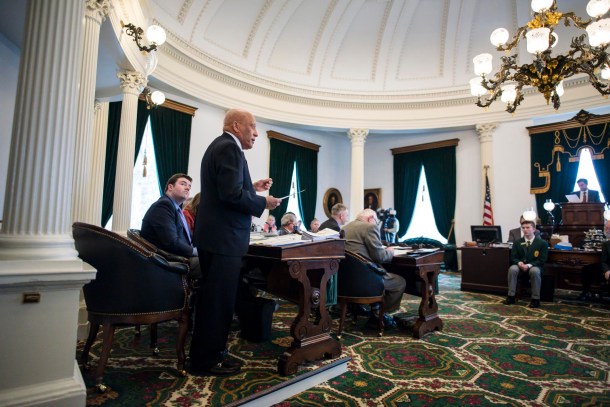
Vermont’s new remote worker incentive turns out to be a bargain, Sen. Randy Brock told his colleagues on the Senate floor Friday.
The program, which reimburses new arrivals up to $10,000 for expenses if they move to the state for a new job, is quite affordable compared to some of the economic development efforts underway in other states, Brock said, shortly before the Senate approved a new version of the initiative as part of an economic development bill.
Take New York City, which was initially willing to pay $3 billion in incentives to attract Amazon and a promised 25,000 jobs.
“If you do the math on that, that’s $120,000 a job,” said Brock, R-Franklin.
To draw a new Toyota and Mazda plant with 4,000 jobs, Alabama gave up grants and incentives worth $700 million – which comes out to $175,000 per job, Brock said. Mississippi went even further, he said. They spent $289,000 per job for a Nissan plant where 20 percent of the jobs paid $12 per hour.
Vermont’s remote worker program, which started in January, has drawn 28 new workers and their families for a total of 69 new people, Brock said. All but four of these people are under 40, and eight of them have school-age children. The cost to Vermont so far: $3,619 per job, according to the Department of Economic Development, which oversees the program.
”We have done for peanuts what other people have spent millions of dollars to do,” Brock said.
The full Senate on Friday approved S.162, an economic development bill that authorizes the state to continue with an altered form of the reimbursement program. The program would include workers who move to the state for Vermont-based – not just remote – jobs, and the reimbursement would be $5,000, or $7,500 for people moving to high-need areas of the state. To ensure that the new workers were generating income, they would only receive payment when their income tax liability reached the amount of the claim.
Brock said two of the people who have moved to the state through the remote worker program are making more than $100,000.
“What investment can you make right now in which you might spend $3,600 and get $16,000 back in the first year?” he said of their expected taxes. “Even most people who don’t make a lot of money, we still get an economic impact that is significant. And we are making sure we have sufficient controls to audit to see what we are in fact getting back.”
The Senate vote was 27 to 2. The bill also includes authorization for the Vermont Employment Growth Incentive, or VEGI, a program that Brock said has brought in 6,215 qualifying jobs at a cost of $2 million between 2007 and 2016.
“We spent $3,641 per job; again we’re doing it for peanuts,” Brock said.
The original version of the bill includes $500,000 for economic development marketing and targeted recruitment and $1.5 million for the worker relocation incentive program. The actual appropriation will be determined this year in the general fund budget.
The bill comes up for a final vote on Tuesday and if approved will then move to the House for consideration.
The remote worker program, passed by the Legislature last year, generated nearly 1,000 media stories and 10,000 new sign-ups to the Department of Commerce newsletter — publicity that the department values at $4.8 million. Vermont lawmakers came up with the program amid concerns about the state’s aging population and shrinking workforce. Many Vermont employers say that finding workers to fill jobs is their No. 1 concern.
But, Sen. Anthony Pollina, P-Washington, who voted against the measure, said the money would be better spent on helping people with student loans.
“There is obviously benefit to attracting new workers to the state no doubt, but before we invest in people from New Jersey who come here to earn six-figure salaries, I would much rather see us invest in student loan payments for Vermonters,” said Sen. Chris Pearson, P-Chittenden, who also voted against it.
Sen. Ginny Lyons, D-Chittenden, told her colleagues the program is an opportunity to raise money for broadband improvements, child care, loan repayments, and other programs needed to make Vermont’s economy stronger.
“We can’t keep doing the same things over and over again and expecting different results,” she said. “This bill will …bring economic development, new taxes, and allow for support of or childcare system. It will allow for people to buy homes and be a part of our communities.”
Like other lawmakers, Brock said his constituents have told him they would like to see more programs that help working Vermonters who are already in the state.
“We right now have 68 programs spending $50 million in federal and state funds to help Vermonters gain the skills they need for placement into jobs,” he said.
Applications for the new program would be accepted starting in January 2020.
